
A night beauty routine is a simple set of skincare, hair-care, and self-care steps you follow before going to bed. The goal is to remove the day’s buildup, support the skin barrier, keep the skin hydrated, and protect hair from unnecessary damage. A good routine doesn’t need many products—consistency and choosing steps that suit your skin and hair matter more.
What Is a Night Beauty Routine?
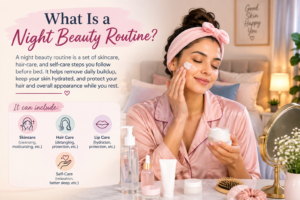
A night beauty routine is a personalized beauty routine before bed designed to care for your skin, hair, lips, and overall appearance while you rest. Unlike a morning routine, which often focuses on protection from environmental exposure, nighttime care usually focuses on cleansing, hydration, and targeted treatments.
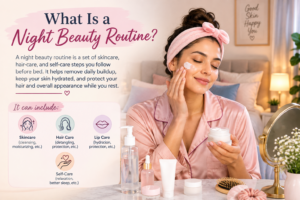
Your routine can be very simple. For example, cleansing your face, applying a moisturizer, caring for your lips, and gently preparing your hair for sleep may be enough.
The best routine depends on your:
- Skin type
- Hair type
- Age and individual concerns
- Climate and season
- Makeup habits
- Products you already use
- Personal preferences
You don’t need a long list of products to have an effective nighttime self-care routine.
Why Is a Night Beauty Routine Important?
A consistent nighttime beauty routine helps remove makeup, sunscreen, sweat, oil, and environmental debris that accumulate during the day. It also gives you an opportunity to moisturize dry areas and use suitable skincare treatments. For hair and lips, simple protective habits can reduce dryness and breakage.

The most important benefit is consistency. A basic routine that you can follow every night is usually more practical than an elaborate routine that you rarely complete.
Key benefits include:
- Removes makeup and daily buildup
- Cleanses the skin before sleep
- Helps maintain skin hydration
- Supports the skin barrier
- Allows targeted skincare products to be used at night
- Helps prevent unnecessary hair friction
- Keeps lips comfortable and moisturized
- Creates a relaxing bedtime ritual
Step-by-Step Night Beauty Routine
A useful nighttime beauty routine doesn’t have to take an hour. You can build one around a few essential steps and add treatments only when they’re appropriate for your skin.
Step 1: Remove Makeup Thoroughly
If you wear makeup, removing it should be one of the first steps in your evening routine.
Foundation, concealer, mascara, eyeliner, lipstick, and other makeup products can mix with sweat and oil throughout the day. Leaving makeup on overnight isn’t a good habit for maintaining clean, comfortable skin.
Use a gentle makeup remover or cleansing product suitable for your skin. Be especially careful around the eyes because the skin there is delicate.
Tip
Don’t scrub aggressively to remove stubborn makeup. Gentle cleansing is generally better than repeatedly rubbing the skin.
Step 2: Cleanse Your Face
After removing makeup, cleanse your face with a suitable cleanser.
Cleansing helps remove:
- Excess oil
- Sweat
- Makeup residue
- Sunscreen residue
- Dirt and environmental particles
Choose a cleanser based on how your skin behaves rather than simply choosing the strongest formula available.
For dry skin
A gentle, non-stripping cleanser may be more comfortable.
For oily skin
A cleanser that effectively removes excess oil without leaving the skin uncomfortably tight may work better.
For combination skin
You may need a balanced cleanser that cleans effectively without excessively drying the cheeks.
For sensitive skin
Look for a gentle formula and avoid unnecessary fragrance or harsh cleansing ingredients if they irritate your skin.
Important: A tight, squeaky feeling after cleansing doesn’t necessarily mean your skin is exceptionally clean. It can indicate that the cleanser is too drying for you.
Step 3: Apply a Hydrating Product
Once your face is clean, you can apply a hydrating product such as a toner, essence, or serum if it suits your routine.
This step is optional.
You don’t need several layers of products to hydrate your skin. If your moisturizer already provides enough hydration, you may be able to skip this step.
Ingredients commonly used in hydrating skincare include:
- Hyaluronic acid
- Glycerin
- Panthenol
- Ceramides
The right choice depends on your skin and the rest of your routine.
Step 4: Use a Targeted Treatment If Needed
Nighttime can be a convenient time to use targeted skincare products.
Depending on your goals, a routine may include ingredients such as:
- Retinoids
- Niacinamide
- Azelaic acid
- Exfoliating acids
- Other dermatologist-recommended treatments
However, more treatments don’t automatically produce better results.
If you’re introducing an active ingredient, start cautiously and follow the product’s instructions. Using several strong active ingredients together can increase the chance of irritation.
A simple rule
Don’t add a treatment simply because it’s popular. Add it because you have a specific reason to use it and your skin tolerates it.
Step 5: Moisturize Your Skin
Moisturizer is one of the most useful parts of a skincare routine before bed.
It helps reduce water loss from the skin and supports a comfortable skin barrier. The ideal texture depends on your skin type and personal preference.
Dry skin
A richer cream may feel more comfortable.
Oily skin
A lightweight lotion or gel-cream may be preferable.
Combination skin
You may prefer a medium-weight moisturizer or apply different amounts to different areas.
Sensitive skin
A simple moisturizer with ingredients that support the skin barrier may be a good choice.
Don’t assume that oily skin doesn’t need moisturizer. Skin can be oily and dehydrated at the same time.
Step 6: Give Your Lips Some Care
Lips often become dry because they have a relatively thin outer protective layer.
Before bed, apply a simple lip balm or ointment if your lips tend to feel dry.
Try to avoid repeatedly licking your lips, as this can make dryness worse.
For very dry or cracked lips that don’t improve with basic care, consider discussing the problem with a healthcare professional.
Step 7: Don’t Forget Your Neck and Other Dry Areas
Your face isn’t the only area that may need moisture.
If your neck feels dry, you can extend your regular moisturizer down the neck. You can also pay attention to areas such as:
- Elbows
- Knees
- Hands
- Feet
A simple body moisturizer after an evening shower can be enough.
There’s no requirement to purchase separate products for every body part unless you have a specific reason to do so.
Step 8: Take Care of Your Hands
Hands are exposed to frequent washing, cleaning products, weather changes, and friction.
Applying hand cream before bed can be an easy addition to your nighttime self-care routine.
Pay particular attention to the backs of your hands and around the nails if those areas become dry.
Step 9: Brush and Prepare Your Hair for Sleep
Your nighttime routine shouldn’t stop at skincare.
Before bed, gently detangle your hair if needed. Avoid aggressive brushing, especially when hair is wet or easily broken.
If your hair is long, a loose braid or another gentle hairstyle can help keep it manageable while you sleep.
Avoid tying hair extremely tightly because repeated tension can contribute to breakage.
For dry or textured hair
Some people find that sleeping with a satin or silk-like pillowcase or using a suitable hair-protective method helps reduce friction and tangling.
What works best depends on your hair type and styling habits.
Step 10: Keep Your Sleep Environment Clean
Beauty care isn’t only about products.
Your pillowcase comes into regular contact with your face and hair, so keeping bedding clean is a useful part of personal hygiene.
Also consider:
- Keeping your phone away from your pillow
- Keeping hair accessories clean
- Washing makeup tools regularly
- Keeping your bedroom comfortable for sleep
- Avoiding sleeping with makeup on
A clean environment complements your bedtime beauty routine without adding another complicated skincare step.
Step 11: Drink Water If You’re Thirsty
Hydration is important for overall health, but you don’t need to force yourself to drink large amounts of water immediately before bed for beauty purposes.
Drink according to your body’s needs throughout the day.
If drinking a lot right before sleeping repeatedly wakes you up to use the bathroom, shifting more of your fluid intake earlier in the day may be more comfortable.
Step 12: Make Sleep Part of Your Beauty Routine
One of the most overlooked beauty tips before bedtime is simply getting enough quality sleep.
Skincare products can’t replace healthy sleep habits.
Try to create a consistent bedtime routine by:
- Going to bed at a reasonably consistent time
- Keeping your bedroom comfortable and dark
- Reducing stimulating activities before bed
- Limiting unnecessary screen use close to bedtime
- Giving yourself enough time to sleep
A relaxing nighttime ritual can also make it easier to transition from a busy day to rest.
Simple Nighttime Skincare Routine for Glowing Skin
If you want a straightforward night skincare routine for glowing skin, start with the basics rather than using numerous products.

Beginner routine
1. Remove makeup
↓
2. Cleanse
↓
3. Hydrating serum or treatment — optional
↓
4. Moisturizer
↓
5. Lip balm
That’s enough for many beginners.
Once your basic routine is comfortable and consistent, you can consider adding a targeted treatment based on a specific skincare concern.
Night Beauty Routine Based on Skin Type
There isn’t one universal evening skincare routine that works for everyone.

For Dry Skin
Focus on gentle cleansing and moisture.
A simple routine might include:
- Gentle cleanser
- Hydrating serum, if desired
- Rich moisturizer
- Lip balm
Avoid unnecessarily frequent exfoliation if your skin is already dry or irritated.
For Oily Skin
The goal isn’t to remove every trace of oil.
Consider:
- Gentle cleanser
- Lightweight hydrating product
- Lightweight moisturizer
Over-cleansing can leave skin uncomfortable and may encourage a cycle of irritation.
For Combination Skin
You may need different approaches for different areas.
For example, your forehead and nose may become oily while your cheeks feel dry.
Use a balanced cleanser and adjust moisturizer according to how each area feels.
For Sensitive Skin
Keep things simple.
A basic routine may be:
- Gentle cleanser
- Simple moisturizer
- Lip balm
Introduce new products one at a time so you can identify what causes irritation if a reaction occurs.
Night Beauty Routine for Different Hair Types
Hair care before bed can also be personalized.
Straight Hair
Gently detangle your hair and avoid sleeping with very tight hairstyles.
Wavy Hair
A loose protective style may help reduce overnight tangling and preserve your natural texture.
Curly Hair
Reducing friction and protecting the curl pattern can be useful. Some people use a loose nighttime hairstyle or a satin/silk-like covering.
Dry or Damaged Hair
Focus on reducing friction and unnecessary mechanical stress.
Avoid repeatedly pulling, brushing, or tightly tying the hair before bed.
How Long Should a Night Beauty Routine Take?
A basic routine can take 5–10 minutes.
You don’t need to spend a long time in front of the mirror every night.
Quick routine
- Remove makeup
- Cleanse
- Moisturize
- Apply lip balm
- Gently prepare hair
Extended routine
You can add:
- Shower or bath
- Body moisturizer
- Targeted skincare treatment
- Hand cream
- Hair care
- Relaxation activities
The best routine is one that fits naturally into your lifestyle.
Night Beauty Routine for Beginners
If you’re completely new to skincare, don’t start with ten products.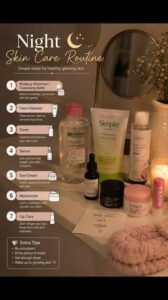
Start with three basic categories:
1. Cleanser
Choose a gentle cleanser that doesn’t leave your skin excessively dry or uncomfortable.
2. Moisturizer
Choose a moisturizer appropriate for your skin type.
3. Lip Care
Use a simple moisturizing lip product if needed.
After your skin is comfortable with these basics, you can decide whether a targeted treatment is necessary.
This approach makes it easier to identify which products your skin likes and reduces unnecessary complexity.
Common Night Beauty Routine Mistakes
Even a well-designed routine can become counterproductive when basic habits are overlooked.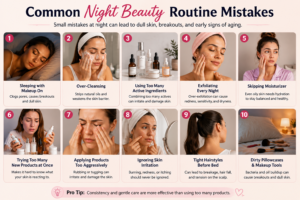
1. Sleeping With Makeup On
This is one of the easiest mistakes to avoid. Remove makeup before going to bed.
2. Over-Cleansing
Washing repeatedly or using an overly harsh cleanser can leave the skin dry and irritated.
3. Using Too Many Active Ingredients
Combining several exfoliating or treatment products can increase irritation.
4. Exfoliating Every Night
Exfoliation isn’t something everyone needs daily. The appropriate frequency depends on the product, your skin, and how well you tolerate it.
5. Skipping Moisturizer Because Your Skin Is Oily
Oily skin can still benefit from appropriate hydration.
6. Introducing Multiple New Products at Once
If irritation develops, it becomes difficult to determine which product caused it.
7. Applying Products Too Aggressively
Rubbing, scrubbing, or pulling the skin can cause unnecessary irritation.
8. Ignoring Hair Care
Tight hairstyles and rough handling before sleep can contribute to breakage.
9. Treating Every Skin Concern at Once
A focused routine is usually easier to manage than trying to address every concern simultaneously.
10. Expecting Overnight Results
Skincare generally requires patience. A nighttime routine is about consistent care, not instant transformation.
How to Make Your Nighttime Beauty Routine More Effective
You don’t necessarily need more products. You need better habits.
Keep your routine visible
Store frequently used products somewhere convenient. This makes consistency easier.
Follow the correct order
A common approach is to move from cleansing to lighter leave-on products and then moisturizer.
Introduce products gradually
Give yourself time to understand how your skin responds.
Patch-test when appropriate
For a new product, especially one containing active ingredients, follow the manufacturer’s patch-testing guidance when available.
Don’t copy someone else’s routine blindly
A routine that works beautifully for another person may not suit your skin.
Pay attention to irritation
Burning, persistent redness, swelling, or significant discomfort shouldn’t simply be ignored in the hope that a product will “work.”
What Should You Avoid Before Bed?
Some habits are best avoided as part of a beauty routine before bed.
Try not to:
- Sleep with makeup on
- Scrub your face aggressively
- Use products that consistently irritate your skin
- Tie your hair extremely tightly
- Go to bed with soaking-wet hair if that causes tangling or discomfort
- Pick at pimples or skin
- Use several strong treatments without understanding how they interact
- Introduce many new products simultaneously
Simple habits often make the biggest difference.
A 10-Minute Night Beauty Routine
If you’re short on time, try this streamlined version: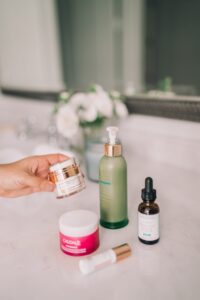
Minute 1–2: Remove makeup
Gently remove makeup, especially around the eyes and lips.
Minute 2–4: Cleanse
Wash your face with a suitable cleanser.
Minute 4–6: Treatment
Apply your usual targeted product if you have one.
Minute 6–8: Moisturize
Apply moisturizer to your face and neck as needed.
Minute 8–9: Lips and hands
Apply lip balm and hand cream.
Minute 9–10: Hair
Gently detangle and place your hair in a comfortable, loose style.
That’s it.
You don’t need a complicated routine to take good care of yourself.
Weekly Additions to Your Night Beauty Routine
Not every beauty step needs to happen every night.
Depending on your skin and hair, you might occasionally include:
- Gentle exfoliation
- A suitable face mask
- Hair conditioning treatment
- Nail care
- Body exfoliation
- Extra moisturizing for dry areas
The frequency should depend on the product instructions and your individual tolerance.
If a treatment causes persistent irritation, stop using it and reassess whether it’s appropriate for you.
Natural Night Beauty Routine: What Can You Keep Simple?
A natural-looking routine doesn’t necessarily mean using homemade ingredients.
You can keep your routine simple by focusing on:
- Gentle cleansing
- Basic hydration
- Moisturizing
- Lip care
- Gentle hair handling
- Adequate sleep
Be careful with DIY skincare recipes involving acidic juices, baking soda, essential oils, or abrasive ingredients. “Natural” doesn’t automatically mean gentle or suitable for facial skin.
When Should You Do Your Night Beauty Routine?
Ideally, complete your routine before you get into bed, especially if you wear makeup or sunscreen.
There’s no need to follow an exact clock time. What matters more is making the routine part of your normal evening schedule.
For example:
After dinner → shower → skincare → hair care → relaxing activity → bed
Creating a predictable sequence can make the routine easier to maintain.
Can You Do Your Night Beauty Routine After a Shower?
Yes. In fact, an evening shower can fit naturally into a nighttime self-care routine.
After showering:
- Gently pat your skin dry.
- Apply body moisturizer if needed.
- Complete your facial skincare routine.
- Apply lip care.
- Gently prepare your hair for sleep.
Avoid excessively hot water if it leaves your skin dry or irritated.
Key Takeaways
- A good night beauty routine doesn’t need to be complicated.
- Remove makeup before sleeping.
- Cleanse gently rather than scrubbing aggressively.
- Moisturize according to your skin type.
- Use targeted treatments only when they serve a specific purpose.
- Don’t overload your skin with multiple active ingredients.
- Protect your hair from excessive tension and friction.
- Keep lips, hands, and dry body areas moisturized when needed.
- Clean bedding and makeup tools regularly.
- Make adequate sleep part of your nighttime self-care.
- Consistency matters more than having a large collection of beauty products.
Frequently Asked Questions
1. What is the best night beauty routine for beginners?
A simple routine is usually enough: remove makeup, cleanse the face, apply moisturizer, and use lip balm if needed. Beginners can add targeted treatments later if they have a specific skincare goal.
2. What should I apply to my face before bed?
Start with a clean face, then apply any suitable treatment product followed by moisturizer. The exact products depend on your skin type and individual needs.
3. Is a nighttime skincare routine necessary?
A nighttime routine isn’t required to be complicated, but cleansing and moisturizing can be useful for maintaining clean, comfortable skin. People who wear makeup or sunscreen especially benefit from removing those products before sleep.
4. Can I use moisturizer every night?
Yes. Moisturizer can be used as part of a nightly routine when it suits your skin. Choose the texture and formulation based on your skin’s needs.
5. Should I wash my face before bed if I don’t wear makeup?
Yes, cleansing can still remove sweat, excess oil, sunscreen, and other buildup from the day. However, the best cleansing approach depends on your skin type and what you’ve applied during the day.
6. How can I get glowing skin at night?
Focus on consistent basics: gentle cleansing, adequate hydration, appropriate moisturizing, and a targeted treatment if you actually need one. Healthy sleep and sun protection during the day are also important parts of long-term skin care.
7. Should I apply skincare immediately before sleeping?
You can complete your routine during your evening rather than waiting until the exact moment you get into bed. The important thing is to cleanse and apply your usual skincare consistently before sleep.
8. Should I sleep with my hair open or tied?
There’s no single answer for everyone. A loose, comfortable style can reduce tangling for some people, while very tight ponytails or buns can create unnecessary tension.
9. How many skincare products should I use at night?
There is no ideal number for everyone. A cleanser and moisturizer can form a basic routine, while other products can be added according to specific needs and tolerance.
10. Can a night beauty routine improve my skin overnight?
You may wake up with skin that feels more comfortable or moisturized, but significant changes usually aren’t instantaneous. Long-term skin care depends on consistent habits rather than expecting dramatic overnight transformation.
Final Thoughts
A night beauty routine should make your life easier, not turn bedtime into another complicated task. Start with the essentials: remove makeup, cleanse gently, moisturize, care for your lips and hair, and give yourself enough time to rest.
Once those habits become consistent, you can add targeted skincare or hair-care steps based on your actual needs. The goal isn’t to use the most products. It’s to create a routine that your skin, hair, and lifestyle can comfortably maintain night after night.