
Rice water has become a popular DIY hair-care treatment, especially for people looking for a simple way to make their hair feel smoother and stronger. It may help reduce friction between hair strands and improve the feel and appearance of the hair, but claims that it directly speeds up hair growth are not well supported by scientific evidence.
If you’re curious about rice water for hair growth, the important thing is to understand what it can realistically do, how to use it safely, and when it may not be the right choice.
What Is Rice Water for Hair?
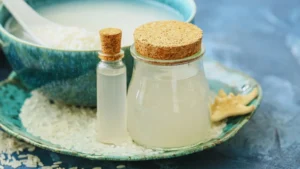
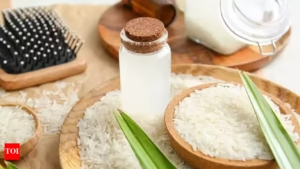
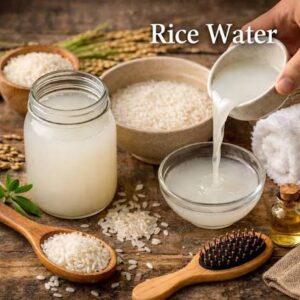
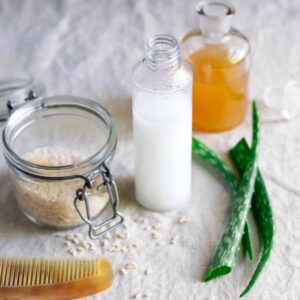
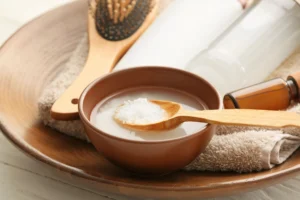
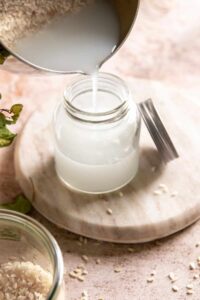
Rice water is the cloudy or slightly milky liquid left after rice is soaked or cooked in water. It contains starch released from the rice, along with small amounts of other compounds. In hair care, it is typically used as a rinse after shampooing.

The idea isn’t new. Rice-water hair care has longstanding cultural roots in parts of Asia, while social media has recently made the practice popular worldwide. However, traditional use and online popularity shouldn’t be confused with strong clinical evidence.
Why Is Rice Water Used on Hair?
The main reason people use rice water is its starch content. According to dermatologists cited by Cleveland Clinic, starch can coat the hair cuticle and reduce friction between strands, which may help hair feel smoother and potentially reduce fraying and breakage.
That is different from stimulating the hair follicle to grow new hair.
Does Rice Water Help Hair Growth?
Rice water may make hair feel stronger or easier to manage, but there is not enough scientific evidence to say that rice water directly increases hair growth.
This distinction matters. Hair growth happens at the follicle inside the scalp, while most benefits attributed to rice water relate to the hair shaft itself. Cleveland Clinic notes that the evidence supporting rice water for hair growth remains limited.
So, if you’re using rice water for hair growth and thickness, think of it as a hair-care rinse rather than a proven hair-growth treatment.
Hair shedding can also have many different causes, including genetics, hormonal changes, illness, nutritional deficiencies and certain scalp conditions. Treating the underlying cause is more important than relying on a DIY rinse.
Rice Water Benefits for Hair
The potential rice water benefits for hair are mostly related to how the hair feels and behaves rather than proven follicle stimulation.
1. May Make Hair Feel Smoother
The starch in rice water can form a temporary coating over the hair surface. This may reduce friction between strands and leave hair feeling smoother after rinsing.
This can be particularly noticeable if your hair tends to tangle easily.
2. May Help Reduce Breakage
Hair that repeatedly rubs against itself can become more prone to fraying and breakage. A temporary starch coating may reduce some of that friction.
However, rice water shouldn’t be viewed as a repair treatment for severely damaged hair. Once a strand is significantly damaged, gentle handling and conditioning are still important.
3. May Improve Hair’s Appearance
Some people notice that their hair looks shinier or feels more manageable after a rice water rinse.
This is likely to be a cosmetic effect rather than evidence that the hair has permanently become healthier.
4. May Help With Detangling
If rice water makes your strands feel smoother, it may make combing easier. Less pulling during detangling can be helpful because excessive mechanical stress can contribute to breakage.
5. Can Be an Inexpensive DIY Hair Rinse
Rice water is simple to prepare and doesn’t require expensive ingredients. That makes it an accessible addition to a basic hair-care routine if your hair tolerates it.
Rice Water for Hair Fall: Does It Work?
Rice water should not be considered a proven treatment for hair fall.
Normal shedding is part of the hair cycle, while excessive shedding or visible thinning can have many different causes.
The American Academy of Dermatology recommends identifying the cause of hair loss rather than relying on one general hair-care remedy.
Rice water might indirectly help if it reduces breakage. But hair breaking along the shaft is not the same as hair falling from the follicle.
Hair Breakage vs. Hair Loss

Hair breakage:
- Hair snaps along the length.
- You may notice shorter pieces.
- Split ends may become more visible.
- Heat, chemical treatments and rough handling can contribute.
Hair loss or excessive shedding:
- Hair comes out from the root as part of increased shedding.
- You may notice overall thinning.
- A widening part or bald patch can appear.
- The underlying cause may require medical evaluation.
If you’re experiencing persistent or significant hair loss, a dermatologist can help determine what’s causing it.
How to Use Rice Water for Hair
A simple rice water hair rinse doesn’t need to be complicated.

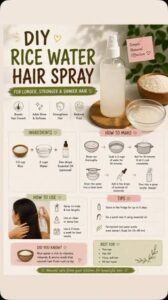
Step 1: Rinse the Rice
Place a small amount of uncooked rice in a bowl and rinse it with water.
This helps remove surface impurities before you prepare the rice water.
Step 2: Soak the Rice
Add fresh water to the rice and let it soak for about 30 minutes to two hours.
Cleveland Clinic’s dermatologist-reviewed guidance notes that a short soaking method may be preferable to prolonged fermentation because longer soaking can increase the risk of bacterial contamination.
Step 3: Strain the Water
Separate the rice from the water using a clean strainer.
You can then use the strained liquid as your hair rinse.
Step 4: Shampoo Your Hair
Wash your hair with your normal shampoo.
If your scalp is sensitive or your hair is very dry, use a gentle shampoo and avoid aggressively scrubbing the hair lengths.
Step 5: Apply the Rice Water
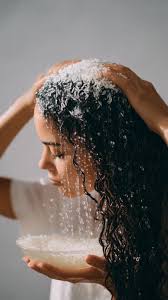
Pour or gently apply the rice water over your hair, concentrating on the lengths and ends.
You don’t need to soak your scalp excessively.
Step 6: Leave It on Briefly
Let the rice water sit for around 20 minutes.
There is no good evidence that leaving it on for hours produces better results.
Step 7: Rinse Thoroughly
Rinse your hair well with clean water.
If your hair feels dry afterward, follow with a moisturizing conditioner.
How Often Should You Use Rice Water on Hair?
There isn’t a scientifically established ideal frequency for rice water use.
A cautious approach is to start once a week or less and see how your hair responds.
If your hair becomes:
- dry,
- stiff,
- rough,
- tangled, or
- unusually brittle,
stop using it or reduce the frequency.
Hair responds differently depending on its texture, condition, chemical history and existing routine. There’s no need to use rice water frequently just because an online routine recommends it.
Fermented Rice Water for Hair: Is It Better?
Fermented rice water is made by allowing rice water to sit for a longer period, traditionally around a day or more.
However, fermentation isn’t proven to make rice water more effective for hair growth.
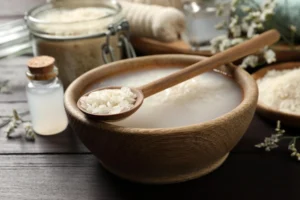
There’s also a practical concern: homemade mixtures that sit at room temperature for extended periods can become contaminated with microorganisms. Cleveland Clinic specifically notes that longer soaking may introduce bacteria.
For that reason, a short-soak preparation is a more cautious option for beginners.
Should You Use Fermented Rice Water?
If your goal is simply to condition your hair, there’s no strong evidence that fermentation is necessary.
A fresh, short-soak rice water rinse is simpler and avoids some of the hygiene concerns associated with leaving homemade mixtures sitting for a long time.
Rice Water for Damaged Hair
Rice water may make damaged hair feel smoother temporarily, but it shouldn’t replace a proper conditioning routine.
Damaged hair benefits from reducing the things that cause further stress, such as excessive heat, aggressive brushing, repeated chemical processing and tight hairstyles.
The American Academy of Dermatology recommends gentle hair care, appropriate conditioning and minimizing practices that traumatize fragile hair.
If Your Hair Is Damaged
Try combining gentle habits with occasional rice water rather than relying on rice water alone:
- Use a moisturizing conditioner after shampooing.
- Detangle gently.
- Limit high heat.
- Avoid repeatedly bleaching or chemically processing the hair.
- Don’t brush aggressively when hair is soaking wet.
- Protect fragile ends.
- Consider a leave-in conditioner if your hair tangles easily.
Rice Water for Dry Hair: Is It a Good Idea?
Rice water isn’t automatically the best choice for dry hair.
Although some people find that it makes their hair smoother, others may find frequent use leaves their strands feeling stiff or dry.
If you have naturally dry hair, prioritize moisture first. Use a gentle cleanser, a good conditioner and products suited to your hair’s texture.
You can experiment with rice water occasionally, but stop if your hair becomes rough or less manageable.
Rice Water for Curly Hair
People with curly hair can use rice water, but the response may vary.
Curly hair often benefits from careful moisture management because excessive manipulation can contribute to breakage. A rinse that leaves your curls feeling stiff or dry may not be worth continuing.
If you have curly hair:
- Start with a short-soak rice water.
- Use it infrequently.
- Rinse thoroughly.
- Follow with conditioner if needed.
- Pay attention to how your curls feel after drying.
Don’t judge the treatment only by how the hair feels while wet. Check whether your curls remain soft and manageable once completely dry.
Rice Water for Hair Growth and Thickness: What Can You Expect?
Rice water cannot be expected to suddenly make thin hair thick.
Hair thickness is influenced by genetics, age, health and the size and number of active follicles.
Hair-care practices can help protect the strands you already have, but they don’t necessarily increase the number of follicles.
If rice water reduces breakage, your hair may appear fuller over time because fewer strands are snapping. That’s different from creating new hair follicles.
This is one reason it’s important to separate realistic hair-care benefits from viral hair-growth claims.
Can Rice Water Repair Damaged Hair?
No DIY rinse can completely reverse severe structural damage to an individual hair strand.
Rice water may temporarily improve the feel or manageability of the hair because starch can coat the cuticle. But damaged hair still needs gentle handling and conditioning.
Think of rice water as a possible supportive rinse, not a permanent repair treatment.
Rice Water vs. Regular Conditioner
Rice water and conditioner serve different purposes.
| Rice Water | Conditioner |
|---|---|
| DIY hair rinse | Formulated hair-care product |
| Mainly starch-based | Designed to condition hair |
| May temporarily smooth strands | Helps reduce friction and improve manageability |
| Evidence for hair growth is limited | Commonly used to improve hair feel and reduce breakage |
| May not suit every hair type | Can be selected for specific hair needs |
If your hair is dry or damaged, don’t replace your normal conditioner with rice water unless you know your hair responds well to it.
Common Rice Water Hair-Care Mistakes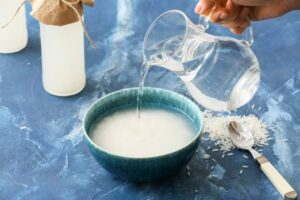
1. Leaving It on Too Long
More time doesn’t automatically mean better results.
A short application is enough to test how your hair responds.
2. Using It Too Frequently
Frequent DIY treatments can become counterproductive if your hair starts feeling dry or stiff.
3. Using Strongly Fermented Rice Water
Long fermentation isn’t necessary to get the basic potential conditioning effect and can raise hygiene concerns.
4. Skipping the Final Rinse
Leaving residue behind can make hair feel coated or uncomfortable.
5. Expecting It to Stop Hair Loss
Rice water isn’t a proven treatment for medical hair-loss conditions.
6. Ignoring Scalp Irritation
If your scalp is inflamed, itchy or irritated, adding a DIY treatment may make things worse. Cleveland Clinic advises caution with rice water when scalp inflammation is present.
7. Using It Instead of a Complete Hair Routine
Healthy hair care involves much more than one rinse. Cleansing, conditioning, gentle styling and protecting hair from damage all matter.
Is Rice Water Safe for Everyone?
Rice water is generally considered a low-risk DIY hair treatment for many people, but that doesn’t mean everyone should use it.
Be cautious if you have:
- An irritated or inflamed scalp
- Open scratches or sores
- A history of reactions to homemade hair treatments
- Very dry or brittle hair
- A scalp condition that is currently being treated
Always stop if you develop burning, itching, redness or significant irritation.
If you have a persistent scalp problem, it’s better to address the condition rather than repeatedly experimenting with DIY treatments.
Best Practices for Using Rice Water on Hair
For a simple and cautious routine:
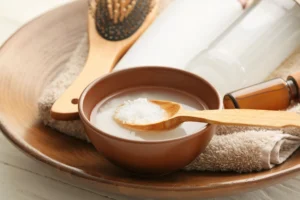
- Prepare a fresh short-soak rice water.
- Keep your preparation clean.
- Strain it before use.
- Apply after shampooing.
- Leave it on for about 20 minutes.
- Rinse thoroughly.
- Condition afterward if your hair feels dry.
- Start with occasional use.
- Stop if your hair or scalp reacts badly.
The goal is to see whether your own hair benefits—not to force a viral routine into your schedule.
Who May Want to Try Rice Water?
Rice water may be worth experimenting with if you want:

- A simple DIY hair rinse
- Smoother-feeling hair
- Easier detangling
- A low-cost addition to your routine
- A way to reduce some mechanical friction during hair care
But it may not be the right choice if you’re expecting it to treat significant hair loss, rapidly increase growth or repair severely damaged hair.
When Should You See a Dermatologist?
If you’re experiencing noticeable hair loss, don’t rely on rice water alone.
Consider seeing a dermatologist if you notice:
- Sudden or rapid shedding
- A widening part
- Bald patches
- Receding areas
- Persistent scalp itching or inflammation
- Hair loss after an illness or major health change
- Ongoing thinning despite gentle hair care
Hair loss has many possible causes, and effective treatment depends on identifying the underlying problem.
Frequently Asked Questions
1. Does rice water really help hair grow?
There isn’t enough scientific evidence to confirm that rice water directly stimulates hair growth. It may help hair feel smoother and potentially reduce friction and breakage, but that isn’t the same as stimulating new growth from the follicle.
2. How often should I use rice water for hair?
There is no scientifically established ideal frequency. Start with occasional use, such as once a week or less, and adjust based on how your hair responds.
3. Can rice water stop hair fall?
Rice water isn’t a proven treatment for hair loss. It may help reduce breakage, but persistent shedding or thinning can have medical or nutritional causes that need proper evaluation.
4. Is fermented rice water better for hair?
Not necessarily. There is no strong evidence that fermented rice water produces better hair-growth results. Longer fermentation can also introduce bacterial contamination, so a short-soak preparation is the more cautious option.
5. Can I use rice water on dry hair?
You can try it, but monitor your hair carefully. Some people may find it makes their hair feel smoother, while others may experience dryness or stiffness. Follow with a moisturizing conditioner if needed.
6. Is rice water good for curly hair?
It can be used on curly hair, but results vary. Start infrequently and rinse thoroughly. If your curls become dry, stiff or less defined, discontinue use.
7. Can rice water repair damaged hair?
It may temporarily improve the feel of damaged hair, but it cannot completely reverse severe structural damage. Gentle handling, conditioning and reducing heat or chemical damage remain important.
8. Can I leave rice water on my hair overnight?
There’s no good evidence that overnight use provides extra benefits. A short application followed by thorough rinsing is a more practical approach.
9. Does rice water make hair thicker?
Rice water hasn’t been proven to increase the number or size of hair follicles. If it reduces breakage, your existing hair may look fuller because fewer strands are snapping.
10. Can I use rice water if I have an itchy scalp?
It’s better to be cautious. If your scalp is already irritated or inflamed, a DIY rinse may cause additional irritation. Persistent scalp symptoms should be evaluated by a healthcare professional.
Key Takeaways
- Rice water may help hair feel smoother and more manageable.
- Its starch may reduce friction between hair strands.
- There isn’t strong scientific evidence that rice water directly increases hair growth.
- Rice water may help with breakage, but breakage is different from hair loss.
- Short-soak rice water is a simpler option than prolonged fermentation.
- Fermented rice water isn’t proven to be more effective.
- Dry, curly or damaged hair may respond differently, so start slowly.
- Always rinse thoroughly.
- Don’t use rice water as a replacement for treatment when you’re experiencing significant hair loss or scalp problems.
Conclusion
Rice water can be a simple, inexpensive addition to a hair-care routine, particularly if you’re interested in a rinse that may temporarily improve smoothness and manageability. Its starch content may reduce friction between strands, which could help limit some breakage. However, the popular claim that rice water dramatically speeds up hair growth isn’t supported by strong scientific evidence.
If you want to try , keep the routine simple: prepare it fresh, use a short soaking method, apply it after shampooing, leave it on briefly, and rinse thoroughly. Most importantly, pay attention to how your own hair and scalp respond.
For ongoing hair fall, thinning or scalp problems, focus on finding the underlying cause rather than depending on a DIY rinse. Dermatologists can help identify the cause and recommend evidence-based treatment when necessary.