
Creating a beauty routine on a budget doesn’t mean buying the cheapest products or following a complicated 10-step routine. A practical budget beauty routine focuses on a few products that meet your skin, hair, and personal-care needs. Start with the basics, choose products carefully, avoid unnecessary duplicates, and build your routine gradually as your needs change.
Why Create a Beauty Routine on a Budget?
Beauty products can become expensive when you buy several products for similar purposes. A cleanser, moisturizer, sunscreen, serum, mask, exfoliator, and multiple makeup products can quickly add up.
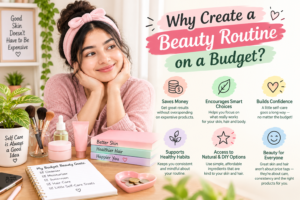
A budget-friendly approach helps you spend money where it matters most.
The goal isn’t to avoid spending money altogether. It’s to get useful results without buying more than you actually need.
A simple routine can also be easier to maintain. When you have fewer products and clear steps, you’re less likely to skip your routine or waste products that you rarely use.
What Is a Budget Beauty Routine?
A budget beauty routine is a simple, affordable approach to personal beauty care that prioritizes essential products and habits over unnecessary purchases.
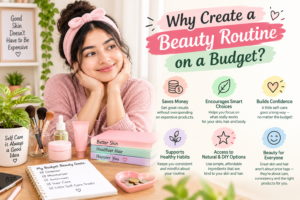
Depending on your needs, it may include:
- Basic skincare
- Hair care
- Body care
- Simple makeup
- Personal hygiene
- Sun protection
- Healthy lifestyle habits
You don’t need to include every category at once. Start with the areas that matter most to you.
How to Create a Beauty Routine on a Budget
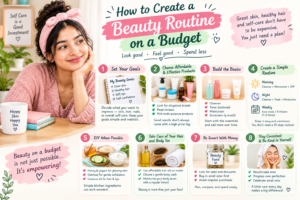
1. Identify What You Actually Need
Before buying anything, look at your current routine.
Ask yourself:
- What beauty concerns do I actually have?
- Which products do I use regularly?
- Which products are almost finished?
- Which products do I rarely use?
- Do I already own something that serves the same purpose?
This simple check can prevent unnecessary purchases.
For example, if you already have a moisturizer that works well for you, there’s usually no reason to buy another one simply because it’s marketed as a new or trending product.
2. Start With the Essentials
An affordable beauty routine should begin with the basics.
For skincare, that might mean:
- Gentle cleanser
- Moisturizer
- Sunscreen
You can add other products later if you genuinely need them.
For hair care, the essentials may be:
- Shampoo
- Conditioner
- One treatment product if needed
For makeup, a basic collection might include:
- Foundation or skin tint
- Concealer
- Mascara
- Lip product
- One multipurpose cheek product
The exact list depends on your preferences and skin or hair needs.
3. Build an Affordable Skincare Routine
Skincare is an area where people often buy too many products.
A simple affordable skincare routine can be more practical than purchasing a large collection of serums and treatments.
Morning
A basic morning routine can look like:
Cleanse → Moisturize → Sunscreen
If your skin is comfortable without a morning cleanser, rinsing with water may be enough for some people.
Evening
A simple evening routine can be:
Cleanse → Moisturize
If you have a specific concern, such as acne or dark spots, you can consider adding an appropriate treatment after establishing the basics.
There’s no need to introduce several active ingredients at the same time.
4. Choose Products Based on Your Needs, Not Trends
One of the easiest ways to overspend is to purchase products because they’re popular.
A product can be popular without being necessary for your routine.
Before buying something, ask:
What problem is this product supposed to solve for me?
If you don’t have a clear answer, you may not need it.
This approach is especially useful when shopping for:
- Face serums
- Exfoliators
- Face masks
- Hair treatments
- Makeup primers
- Specialized beauty tools
A focused routine makes it easier to identify what works and what doesn’t.
5. Compare Ingredients and Functions
Price alone doesn’t tell you whether a beauty product is right for you.
When comparing affordable beauty products, look at:
- Ingredients
- Product function
- Size
- Your skin or hair type
- How often you’ll use it
- Whether you already own a similar product
For example, two moisturizers may serve a similar purpose even if one has more attractive packaging or a longer list of marketing claims.
The goal is to find something appropriate for your needs rather than paying for unnecessary extras.
6. Don’t Buy Multiple Products for the Same Job
A common beauty-budget mistake is having several products that perform nearly the same function.
You might not need:
- Three different daily moisturizers
- Several similar cleansers
- Multiple body lotions
- Five nearly identical nude lip colors
- Several hair oils you rarely use
Before buying a new product, check your existing collection.
A useful rule is:
Use what you already have before adding something new whenever practical.
This can also reduce product waste.
7. Make Multipurpose Products Part of Your Routine
Multipurpose products can sometimes help reduce the number of items you need.
For example, depending on your preferences, you might choose:
- A lip-and-cheek product
- A tinted moisturizer with sun protection
- A moisturizer that works for both face and body, when appropriate
- A simple styling product that handles more than one hair need
However, multipurpose doesn’t automatically mean better.
Make sure the product is actually suitable for each intended use. Products formulated for the body aren’t always appropriate for facial skin, particularly if you’re prone to irritation or breakouts.
8. Use a Simple Beauty Routine
A simple beauty routine is easier to maintain and can help control spending.
Instead of constantly adding steps, divide your routine into three levels.
Daily Essentials
These are the products you use regularly.
For example:
- Cleanser
- Moisturizer
- Sunscreen
- Shampoo and conditioner according to your hair needs
Occasional Care
These might include:
- Hair masks
- Exfoliation
- Deep conditioning
- Occasional makeup looks
Optional Extras
These include products that aren’t necessary but may be enjoyable.
Keeping optional products separate from essentials can help you decide where your budget should go.
9. Set a Monthly Beauty Budget
Instead of buying beauty products whenever you see something interesting, decide how much you’re comfortable spending each month.
Your budget might cover:
- Skincare
- Hair care
- Makeup
- Body care
- Replacement products
You don’t necessarily need to spend the entire amount every month.
If you don’t need anything, save the money for products you’ll eventually need to replace.
10. Finish Products Before Replacing Them
Beauty products often accumulate because people replace them before they’re finished.
Try to avoid opening several similar products at once.
For example, if you have two moisturizers, finish one before opening another when possible.
This makes it easier to track:
- What works for you
- What causes irritation
- What you actually use
- What you should repurchase
It also makes your beauty budget easier to manage.
11. Be Careful With DIY Beauty Treatments
DIY beauty treatments may seem like an easy way to save money, but homemade doesn’t always mean safer or better.
Some kitchen ingredients can irritate the skin or cause problems when used incorrectly.
Be especially cautious with harsh ingredients or recipes involving substances that aren’t designed for cosmetic use.
If you’re trying a homemade treatment, consider whether the potential benefit is worth the risk of irritation.
For sensitive skin, keeping the routine gentle and predictable is often more useful than experimenting with numerous homemade recipes.
12. Take Advantage of What You Already Have
Before buying another product, look through your beauty collection.
You may already have:
- A nearly full moisturizer
- A hair mask you forgot about
- A lipstick that works for everyday makeup
- A body lotion
- A gentle cleanser
- A versatile makeup product
Organizing your products can make this easier.
Place frequently used items somewhere visible and separate products that need to be finished soon.
Budget Beauty Tips for Different Needs
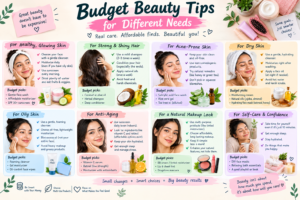
Budget Skincare Tips
For skincare, focus on:
- Gentle cleansing
- Moisturizing
- Daily sun protection
- Products suited to your skin type
- One targeted treatment when needed
You don’t need an expensive collection to maintain a consistent routine.
Low-Cost Hair Care Tips
You can simplify hair care by:
- Choosing products suited to your hair type
- Avoiding unnecessary product layering
- Using conditioner consistently
- Limiting excessive heat styling
- Keeping your scalp clean according to your needs
- Avoiding frequent impulse purchases
Affordable Makeup Tips
A small makeup collection can be surprisingly versatile.
Choose products that work with multiple looks rather than collecting every shade or formula.
For example, one neutral eyeshadow palette may provide several everyday looks, while one versatile lip color can work for both casual and more polished makeup.
How to Save Money Without Sacrificing Quality
Being budget-conscious doesn’t mean automatically choosing the cheapest product.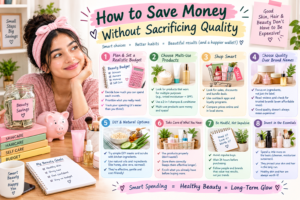
Instead, consider value.
A product may be more economical if:
- You use it regularly
- It works well for your needs
- You don’t need several additional products with it
- You can finish it before it expires
- It doesn’t cause irritation that leads to more purchases
A cheap product that doesn’t suit you can ultimately cost more than a reasonably priced product that you actually use.
Common Mistakes When Creating a Cheap Beauty Routine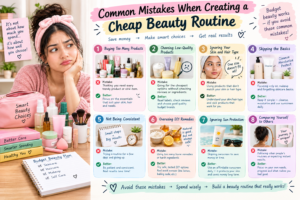
Buying Everything at Once
You don’t need to build your entire routine in one shopping trip.
Start with essentials and add products gradually.
Following Every Beauty Trend
Trends change quickly. Your basic needs usually don’t change that quickly.
Choosing Only by Price
The lowest price isn’t always the best value.
Consider suitability, ingredients, size, and how often you’ll use the product.
Using Too Many Products
More steps don’t automatically mean better results.
A routine should be manageable enough that you can follow it consistently.
Ignoring Your Skin or Hair Type
A product that works well for someone else may not work for you.
Consider your own needs before copying another person’s routine.
Buying Products Before Finishing Existing Ones
This is one of the easiest ways to waste money and create unnecessary clutter.
How to Maintain Your Beauty Routine Over Time
Creating the routine is only the first step. Maintaining it matters just as much.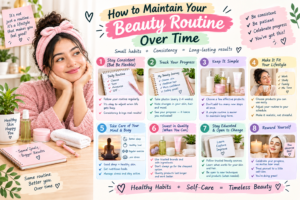
Every few months, review your products and ask:
- What am I using regularly?
- What haven’t I touched?
- What has worked well?
- What irritated my skin or hair?
- What needs replacing?
- What can I stop buying?
This simple review can gradually make your routine more efficient.
Your routine can also change with the seasons, lifestyle, age, skin condition, hair needs, or personal preferences.
Key Takeaways
- Start with essential beauty products rather than buying everything at once.
- Build your routine around your actual needs.
- A simple routine can be easier to maintain and less expensive.
- Compare products based on function, ingredients, suitability, and value.
- Avoid buying multiple products that do the same job.
- Use products you already own before purchasing replacements when practical.
- Don’t assume DIY beauty treatments are automatically safe.
- Set a realistic beauty budget and review it regularly.
- Add targeted products only when you have a genuine reason to use them.
- Remember that the cheapest product isn’t always the most economical choice.
Frequently Asked Questions
1. How can I create a beauty routine on a small budget?
Start with essential products and avoid unnecessary duplicates. For skincare, a gentle cleanser, moisturizer, and sunscreen can provide a simple foundation. Add specialized products only when you have a specific need.
2. What is the cheapest beauty routine?
There isn’t one routine that is cheapest for everyone. A low-cost routine generally uses a small number of suitable products and relies on consistent basic care rather than frequent purchases.
3. How many skincare products do I really need?
There is no fixed number. Many people can keep a basic routine relatively simple with cleansing, moisturizing, and sun protection. Additional products depend on individual skin needs.
4. Are affordable beauty products effective?
Affordable products can be effective when they contain suitable ingredients and are appropriate for your skin, hair, or intended use. Price alone doesn’t determine whether a product will work for you.
5. How can I save money on skincare?
Avoid unnecessary duplicates, finish products before replacing them, choose products based on your actual needs, and keep your routine focused on essential steps.
6. Should I buy beauty products in bulk to save money?
Only when you’re confident you’ll use them before they expire and the product suits you. Buying large quantities of something you don’t use can lead to waste rather than savings.
7. Can a simple beauty routine really be enough?
Yes. A simple routine can cover the fundamentals of personal care without requiring numerous products. More products aren’t automatically better.
8. How can I avoid wasting money on beauty products?
Create a shopping list, check what you already own, avoid impulse purchases, and ask what specific need a new product will address before buying it.
9. Should I choose the cheapest beauty products?
Not necessarily. Look for products that offer good value and are suitable for your needs. An inexpensive product that doesn’t work for you may end up being wasted.
10. Can my beauty routine change over time?
Yes. Your routine may need to change as your skin, hair, lifestyle, environment, or personal preferences change. Reviewing your routine periodically can help you avoid unnecessary products.
Conclusion
A beauty routine on a budget is less about buying cheap products and more about making thoughtful choices. Start with the basics, understand what your skin and hair actually need, use products consistently, and avoid unnecessary duplicates.
You don’t need a large collection to take good care of yourself. A small, well-planned routine can be practical, affordable, and easier to maintain over time.