
Curly hair can look beautiful and full of personality, but it often needs a little more care than straight hair. The natural bends and twists of curls can make it harder for scalp oils to travel down the hair shaft, which can contribute to dryness and frizz. The good news is that you don’t need a complicated routine. With gentle washing, regular conditioning, enough moisture, and the right styling habits, you can keep curls soft, defined, and healthy-looking.
What Is Curly Hair?
Curly hair has a naturally curved or coiled structure that causes the strands to form waves, curls, or tighter spirals. The shape of each strand can influence how easily moisture spreads through the hair and how the hair responds to products, brushing, humidity, and heat.
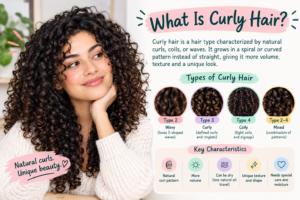
Curly hair isn’t one single type. Some people have loose waves, while others have defined spirals or very tight coils. Even two people with a similar curl pattern can have completely different needs because hair thickness, density, porosity, and scalp condition also matter.
Understanding how your hair behaves is more useful than relying on a curl category alone.
Why Does Curly Hair Need Special Care?
The bends in curly strands can make it more difficult for natural scalp oils to move from the roots toward the ends. As a result, the lengths and ends may feel dry even when the scalp becomes oily.
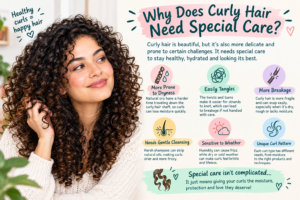
Curly hair can also be more vulnerable to tangling and mechanical damage. Frequent brushing, rough towel drying, tight hairstyles, and excessive heat can make curls look frizzy or less defined.
A good routine focuses on three basic goals:
- Keep the scalp clean and comfortable.
- Keep the lengths conditioned and moisturized.
- Minimize unnecessary manipulation and damage.
How to Care for Curly Hair: A Beginner’s Routine
If you’re new to curly hair care, start with a simple routine rather than buying many products at once.
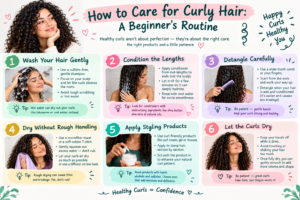
Step 1: Wash Your Hair Gently
How often you wash depends on your scalp, lifestyle, hair texture, and product use. There’s no universal schedule that works for everyone.
When washing:
- Wet the hair thoroughly.
- Apply shampoo mainly to the scalp.
- Massage gently with your fingertips.
- Let the lather move through the lengths as you rinse.
- Avoid aggressively rubbing the hair together.
- Rinse thoroughly.
If your scalp becomes oily quickly, you may need more frequent washing. If your scalp and hair remain comfortable for longer, you may prefer less frequent washing.
The important point is to keep the scalp clean without unnecessarily drying out the lengths.
Step 2: Condition the Lengths
Conditioner helps improve slip, making hair easier to detangle and helping reduce friction between strands.
Apply conditioner mainly from the mid-lengths toward the ends. If your roots become oily easily, avoid applying a heavy conditioner directly to the scalp unless the product is specifically intended for that use.
Leave the conditioner on according to the product instructions, then rinse.
For very dry or coarse curls, a deeper conditioning treatment may occasionally be useful.
Step 3: Detangle Carefully
Curly hair can become tangled easily, so aggressive brushing can cause unnecessary breakage.
A gentler approach is to detangle while the hair is wet and coated with conditioner.
Use your fingers or a wide-tooth comb and work gradually from the ends toward the roots. If you encounter a knot, loosen it rather than pulling through it.
Avoid repeatedly brushing dry curls if doing so causes your curl pattern to separate and become frizzy.
Step 4: Dry Without Rough Handling
The way you dry your hair can affect how your curls look.
Instead of rubbing your hair vigorously with a regular bath towel, gently squeeze or blot away excess water. A soft microfiber towel or smooth cotton T-shirt can be used if it works well for your hair.
Don’t twist the hair tightly while drying. Excessive manipulation while the hair is wet can contribute to tangling and breakage.
Step 5: Apply Styling Products
Styling products can help curls maintain their shape and reduce frizz.
Depending on your hair, you might use:
- Leave-in conditioner for extra moisture
- Curl cream for softness and definition
- Gel for stronger hold
- Mousse or foam for lightweight volume and definition
You don’t need all of these. Start with one product and see how your hair responds.
Apply the product evenly through wet or damp hair. Then gently scrunch the curls upward to encourage their natural shape.
Step 6: Let the Curls Dry
You can allow curls to air-dry or use a diffuser attachment on a hair dryer.
If using a diffuser, choose a gentle heat and airflow setting that works for your hair. Avoid holding very hot air against one section for too long.
Try not to touch your curls repeatedly while they’re drying. Excessive handling can disturb the curl shape and increase visible frizz.
How to Wash Curly Hair Properly
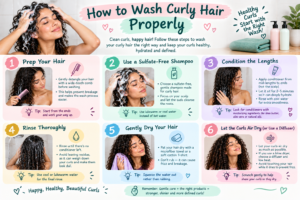
Knowing how to wash curly hair is one of the most important parts of a beginner routine.
Start by focusing shampoo on the scalp rather than scrubbing the entire length. Your scalp produces oil, sweat, and sheds skin cells, so cleansing the scalp is the main purpose of shampoo.
The lengths usually receive enough cleansing as shampoo and water run through them during rinsing.
If you use a lot of styling products, your hair may occasionally need a more thorough cleansing. However, frequent aggressive cleansing can leave some curls feeling dry.
Pay attention to how your scalp and hair feel rather than following a rigid washing schedule.
How to Moisturize Curly Hair
Moisture is important because dry curls can feel rough, become difficult to detangle, and appear frizzy.
A simple moisturizing approach includes:
- Use a suitable conditioner after shampooing.
- Add a leave-in conditioner if your hair needs additional softness.
- Use a curl cream or similar styling product when appropriate.
- Protect your hair from excessive heat.
- Avoid unnecessary washing if frequent washing leaves your hair excessively dry.
If your hair feels heavy, greasy, or coated, you may be using more product than you need.
More product doesn’t always mean more moisture. Finding the right amount is part of learning your hair’s needs.
How to Define Curly Hair
Well-defined curls usually depend on moisture, even product distribution, and minimal disturbance while drying.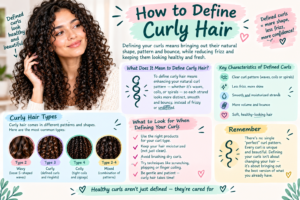
Try these curly hair styling tips:
- Apply styling products to wet or damp hair.
- Divide very thick hair into sections if necessary.
- Smooth product through the hair with your fingers.
- Scrunch upward to encourage curls.
- Avoid brushing after the curls have formed.
- Let the hair dry without excessive touching.
- Refresh curls gently between wash days if needed.
Some people find that applying products while their hair is quite wet produces better curl definition. Others prefer slightly less water. Experiment with small changes instead of changing your entire routine at once.
How to Maintain Curly Hair Between Washes
Your routine doesn’t stop after wash day.
To maintain curly hair: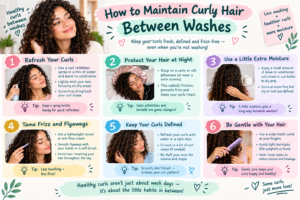
- Sleep on a smooth pillowcase or use a suitable hair covering if it helps reduce friction.
- Avoid constantly touching or rearranging the curls.
- Use a small amount of leave-in or styling product to refresh dry areas if needed.
- Loosely tie long hair at night rather than using a tight elastic.
- Protect curls during activities that cause heavy sweating or friction.
- Avoid repeatedly restyling the hair with high heat.
A simple refresh can involve lightly dampening the curls and reshaping them with your hands.
Choosing Products for Curly Hair
The best products for curly hair depend on your individual needs.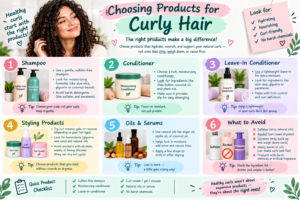
For Dry Curls
Look for conditioning products that help improve softness and reduce friction.
For Fine Curly Hair
Lightweight products may work better because heavy creams and oils can make fine hair look flat or greasy.
For Thick or Coarse Curls
Richer conditioning products may provide the softness and manageability you need.
For Frizz-Prone Hair
A combination of adequate conditioning and a styling product with hold may help keep the curl pattern together.
For an Oily Scalp
Choose cleansing and conditioning habits that keep your scalp comfortable without putting heavy products directly on the scalp.
Don’t choose products solely because they’re marketed for a particular curl type. Pay attention to how your own hair responds.
Common Curly Hair Care Mistakes
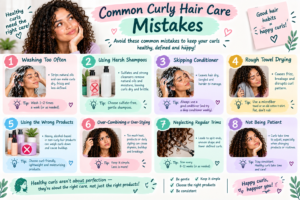
Brushing Curls Aggressively When Dry
Dry brushing can disrupt the curl pattern and may increase breakage for some hair types.
Using Too Much Product
Heavy layers of cream, oil, or styling products can leave hair weighed down or coated.
Washing With Very Hot Water
Very hot water can feel drying or irritating for some people. Comfortable, lukewarm water is generally a better choice.
Rubbing Hair With a Towel
Rough friction can increase tangling and frizz.
Using Heat Too Often
Frequent high heat can contribute to hair damage. When using hot tools, use appropriate heat protection and avoid unnecessarily high temperatures.
Wearing Very Tight Hairstyles
Repeated tension can cause stress on the hair and scalp. Looser styles are often preferable for everyday wear.
Changing Products Too Quickly
If you change several products at once, it’s difficult to know what is helping or causing a problem. Give your routine some time and make changes gradually.
How to Care for Curly Hair at Night
Nighttime care can help reduce friction and preserve your curl pattern.
Before bed, consider: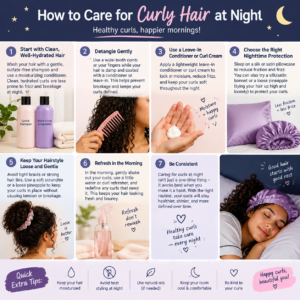
- Loosely gathering long curls on top of your head.
- Using a smooth pillowcase.
- Avoiding tight hair ties.
- Making sure hair is comfortably dry before sleeping.
- Avoiding hairstyles that pull strongly at the roots.
The best approach depends on your hair length, density, and curl pattern. Choose whatever reduces tangling without creating tension.
How Often Should You Deep Condition Curly Hair?
There’s no universal deep-conditioning schedule.
Some people with dry or coarse curls may find occasional deep conditioning helpful, while others may find their regular conditioner is enough.
Start with your normal conditioner. If your hair still feels persistently dry or difficult to manage, you can consider adding a deeper conditioning treatment occasionally.
If your hair begins to feel heavy or coated, reduce the frequency or amount of product.
How to Care for Curly Hair in Humid Weather
Humidity can make curls appear frizzier because hair interacts with moisture in the surrounding air.
During humid weather: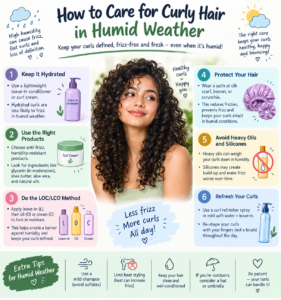
- Keep your hair well conditioned.
- Use a styling product that provides suitable hold.
- Avoid excessive touching after styling.
- Let curls dry completely before manipulating them.
- Limit unnecessary heat styling.
- Choose hairstyles that work with your natural texture instead of constantly trying to make curls perfectly smooth.
Some frizz is completely normal. The goal doesn’t have to be perfectly frizz-free hair.
When Should You Change Your Curly Hair Routine?
Your routine may need adjustment when your hair or scalp consistently behaves differently.
For example, you may need to reconsider your routine if: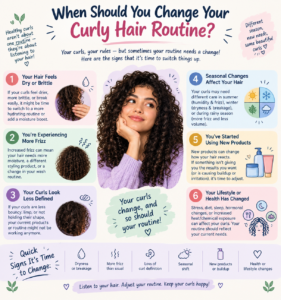
- Hair suddenly feels unusually dry.
- Curls lose definition repeatedly.
- Your scalp becomes persistently oily.
- Your hair feels coated or heavy.
- Detangling becomes unusually difficult.
- Breakage increases.
- A product causes irritation or discomfort.
Changes in weather, styling habits, hair length, chemical treatments, and product buildup can all affect how your hair behaves.
If your scalp is persistently itchy, painful, inflamed, or affected by unusual shedding, consider speaking with a dermatologist or another qualified healthcare professional.
Expert Tips for Better-Looking Curls
A few simple habits can make a noticeable difference:
Start simple. You don’t need a shelf full of products to establish a good routine.
Learn your hair’s behavior. Notice how your curls respond to moisture, cleansing, styling products, and weather.
Be gentle when wet. Wet hair can be more vulnerable to mechanical damage, so handle it carefully.
Focus on the scalp. Healthy hair care starts with keeping the scalp clean and comfortable.
Protect your ends. The ends are the oldest part of the hair and can be more prone to dryness and damage.
Give your routine time. Make one change at a time so you can understand its effect.
Don’t chase perfection. Healthy curls don’t need to look identical every day.
Frequently Asked Questions
1. How often should curly hair be washed?
There is no fixed schedule for everyone. Washing frequency depends on scalp oiliness, hair texture, lifestyle, sweating, and product use. Wash often enough to keep your scalp clean and comfortable without making your hair excessively dry.
2. Should you brush curly hair?
You can detangle curly hair, but technique matters. Many people find it easier to detangle wet hair with conditioner using their fingers or a wide-tooth comb.
3. How can I reduce frizz in curly hair?
Regular conditioning, gentle drying, suitable styling products, and reduced manipulation can help. Some frizz is natural and doesn’t necessarily indicate unhealthy hair.
4. How do I make my curls more defined?
Apply styling products evenly to wet or damp hair, then gently scrunch the curls. Allow them to dry with minimal touching.
5. Can I use hair oil on curly hair?
Hair oils can be useful for some people, particularly for reducing friction and improving the feel of dry hair. However, too much oil can make curls feel heavy or greasy. Start with a small amount.
6. Should I sleep with wet curly hair?
Sleeping with wet hair can increase friction and tangling, especially if you move around during sleep. If possible, allow the hair to dry before bed.
7. What is the best routine for curly hair?
A basic routine usually includes gentle cleansing, conditioning, careful detangling, gentle drying, and suitable styling. The exact routine should be adjusted according to your scalp and hair needs.
8. How can I maintain curly hair between washes?
You can lightly dampen curls and reshape them with your hands. A small amount of leave-in conditioner or styling product may also help refresh areas that have lost their shape.
9. Why does my curly hair feel dry after washing?
Possible reasons include frequent cleansing, harsh cleansing products, insufficient conditioning, heat exposure, or environmental factors. Consider whether your routine is removing too much moisture and adjust gradually.
10. How long does it take to see improvement in curly hair?
Some changes, such as improved softness or easier detangling, can be noticeable after a few washes. Longer-term improvements depend on reducing damage and maintaining consistent care as new hair grows.
Key Takeaways
Learning how to care for curly hair doesn’t require a complicated routine. Start by keeping the scalp clean, conditioning the lengths, detangling gently, and minimizing unnecessary friction and heat.
Use styling products according to your hair’s needs, apply them evenly, and avoid constantly touching curls while they dry. Over time, you’ll learn how much moisture, cleansing, and hold your particular hair responds to best.
The most useful curly hair care routine is one that’s simple enough to maintain and gentle enough to protect your natural texture.
Final Thoughts
Curly hair has its own characteristics, and finding the right routine can take some experimentation. What works beautifully for one person may leave another person’s curls feeling heavy, dry, or undefined.
Start with the basics: gentle cleansing, good conditioning, careful detangling, and thoughtful styling. Then make small adjustments based on how your hair and scalp respond.
With consistent care and less unnecessary manipulation, you can support healthier-looking, softer, and more manageable curls without making your routine complicated.