
Sweating is a normal part of exercise, hot weather, and daily activity. But leaving sweat, oil, dirt, and bacteria on your skin for too long can contribute to irritation, clogged pores, body breakouts, and discomfort. The best skin care after sweating is simple: gently cleanse your skin as soon as practical, change out of damp clothes, pat rather than rub sweat away, moisturize when needed, and protect your skin from further irritation.
Whether you’ve just finished a workout, spent time outdoors, or had a particularly sweaty day, a few simple habits can help keep your skin clean, comfortable, and healthy.
Why Does Sweating Affect Your Skin?
Sweat itself isn’t necessarily bad for your skin. It’s one of the body’s natural ways to regulate temperature. The problem can come from what happens when sweat stays on the skin, especially during exercise or in hot, humid conditions.
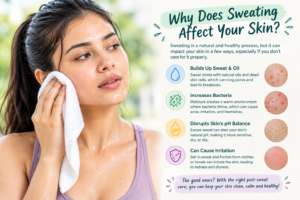
Sweat can mix with oil, dead skin cells, makeup, dirt, and bacteria on the skin. Clothing and equipment can also trap moisture and create friction.
For people who are prone to acne, these conditions may contribute to clogged pores and breakouts. Heat, moisture, friction, and bacteria can also aggravate irritation or certain existing skin conditions.
That doesn’t mean you need to avoid sweating or exercise. Instead, good hygiene before, during, and after activity can reduce many of these problems.
Skin Care After Sweating: Why It Matters
A simple post-sweat routine helps remove sweat and buildup from the skin while reducing unnecessary irritation.
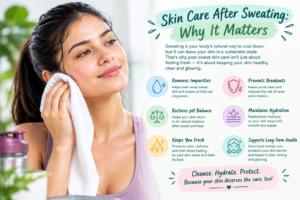
The American Academy of Dermatology recommends washing your face after activities that cause sweating and using a gentle, non-abrasive cleanser.
Post-workout skin care is especially useful if you:
- Exercise regularly
- Have oily or acne-prone skin
- Spend a lot of time outdoors
- Live in a hot or humid climate
- Wear makeup while exercising
- Sweat heavily around your face, chest, or back
- Wear tight clothing during physical activity
The goal isn’t to make your skin feel extremely “squeaky clean.” Healthy skin still needs its natural protective barrier.
How to Care for Your Skin After Sweating
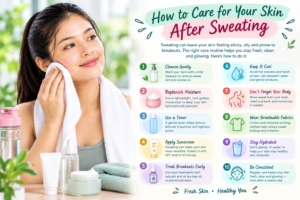
1. Clean Your Skin as Soon as Practical
One of the simplest skincare after sweating habits is to wash your skin after heavy exercise or prolonged sweating.
If you can shower soon after your workout, gently cleanse the areas that became sweaty. Pay attention to your face, neck, chest, back, underarms, and other areas where sweat tends to collect.
If a full shower isn’t possible, wash your face and other sweaty areas when you can and change out of damp clothing.
Dermatologists recommend showering as soon as possible after exercising to help remove sweat, oil, and bacteria from the skin.
2. Use a Gentle Cleanser
You don’t need a harsh soap to clean sweaty skin.
Choose a gentle cleanser appropriate for your skin type. For your face, look for products described as:
- Gentle
- Non-abrasive
- Oil-free
- Non-comedogenic, especially if you’re acne-prone
Apply the cleanser with your fingertips and rinse with lukewarm water.
Avoid aggressive scrubbing. Scrubbing can irritate the skin and may make acne or inflammation worse.
3. Don’t Scrub Away Sweat
It can be tempting to rub your face with a towel after a workout, especially when you’re dripping with sweat.
Try not to.
Instead, gently pat the sweat away with a clean towel. Repeated rubbing can irritate the skin, particularly if you’re already dealing with acne or sensitive skin.
A clean towel is important because a damp, repeatedly used towel can accumulate oils, bacteria, and other debris.
4. Take Off Sweaty Clothes
Your skin care routine shouldn’t stop at your face.
Sweaty workout clothes hold moisture against the skin and may contribute to irritation, clogged pores, and friction.
After exercising:
- Change out of sweaty clothes.
- Shower when possible.
- Put on clean, dry clothing.
- Wash your workout clothes before wearing them again.
If you regularly experience back or chest breakouts, changing clothes quickly after exercise can be particularly helpful.
5. Moisturize After Cleansing
Sweating doesn’t mean your skin has enough moisture.
Cleansing can leave some people with dry or tight-feeling skin, particularly if they use harsh cleansers or hot water. A suitable moisturizer can help maintain the skin’s moisture barrier.
If you’re acne-prone, consider a lightweight moisturizer labeled non-comedogenic or oil-free.
If your skin is dry or sensitive, you may prefer a richer moisturizer.
The right choice depends on how your skin feels after cleansing rather than simply whether you sweat a lot.
6. Use Sunscreen for Outdoor Activities
If your exercise takes place outdoors during the day, sunscreen remains important even when you’re sweating.
Choose a broad-spectrum sunscreen with SPF 30 or higher. For activities that involve sweating or water, a water-resistant formula can be useful. If you’re prone to breakouts, a non-comedogenic option may be more comfortable.
Remember that sunscreen can wear away with sweating, swimming, or towel drying, so follow the product’s directions for reapplication.
7. Pay Attention to Acne-Prone Areas
Sweat can be particularly troublesome when combined with oil, friction, tight clothing, helmets, hats, or sports equipment.
Common areas include:
- Forehead
- Hairline
- Chin
- Chest
- Shoulders
- Upper back
If you regularly develop breakouts after exercise, consider whether sweat is being trapped under clothing or equipment.
Washing your skin after exercise and keeping workout clothing clean can help reduce these triggers.
How to Prevent Breakouts After Sweating
If you’re wondering how to prevent acne after sweating, focus on simple hygiene rather than aggressive treatments.
Before Exercise
- Remove makeup before working out.
- Start with clean workout clothes.
- If exercising outdoors, apply suitable sunscreen.
- Clean shared equipment before using it.
Heavy makeup combined with sweat can contribute to clogged pores, particularly for acne-prone skin.
During Exercise
Keep a clean towel nearby and gently pat sweat from your face rather than rubbing it.
Avoid touching your face with unwashed hands, especially after handling shared equipment.
If you use gym equipment, clean it before use when possible.
After Exercise
Try to:
- Shower or cleanse your skin soon after exercising.
- Change into clean clothes.
- Gently cleanse your face.
- Apply moisturizer if needed.
- Continue your regular acne treatment if you use one.
If you’re unable to shower immediately, changing out of sweaty clothing and gently cleansing acne-prone areas can still be useful.
Should You Wash Your Face After Sweating?
Yes, especially after heavy sweating.
The American Academy of Dermatology recommends washing your face after sweating, in addition to your normal cleansing routine. The important point is to avoid repeatedly washing your face throughout the day simply because you notice a little sweat. Excessive cleansing can irritate the skin.
For most people, a gentle cleanser and lukewarm water are enough.
If your skin becomes tight, dry, flaky, or irritated after cleansing, consider using a gentler cleanser and moisturizer.
What If You Can’t Shower After a Workout?
Sometimes you’re leaving the gym for work, traveling, or heading somewhere without access to a shower.
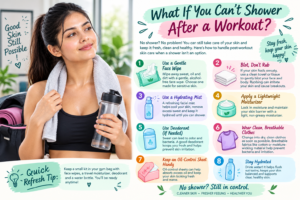
You can still follow a basic post-workout skincare routine.
Try This:
Step 1: Pat away sweat with a clean towel.
Step 2: Change out of sweaty clothes as soon as possible.
Step 3: Cleanse your face with a gentle cleanser if you have access to one.
Step 4: Clean sweaty areas of the body when possible.
Step 5: Apply a suitable moisturizer if your skin feels dry.
Step 6: Put on clean clothing.
For acne-prone skin, the AAD notes that acne-prone areas can also be gently cleaned with appropriate cleansing products when a shower isn’t immediately available.
Post-Workout Skincare Routine for Different Skin Types
Your skin may need a slightly different approach depending on whether it’s dry, oily, combination, or sensitive.
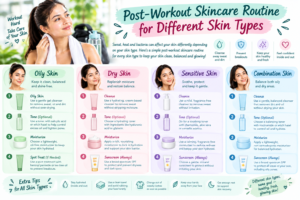
For Oily Skin
Focus on gentle cleansing rather than trying to remove every trace of oil.
A mild, non-comedogenic cleanser can help remove sweat and excess oil without unnecessary irritation. The AAD recommends cleansing oily skin up to twice daily and after sweating.
For Dry Skin
Avoid very hot water and harsh cleansers.
After washing, apply a moisturizer while the skin still feels comfortable. If cleansing after exercise leaves your skin tight, you may need a more moisturizing cleanser or richer moisturizer.
For Sensitive Skin
Keep your routine simple.
Avoid:
- Harsh scrubs
- Strong fragrances
- Very hot water
- Excessive cleansing
- Multiple new active ingredients at once
A gentle cleanser and suitable moisturizer may be all you need after sweating.
For Combination Skin
You may notice that your forehead, nose, and chin become oily while your cheeks remain normal or dry.
Use a gentle cleanser across the face rather than aggressively treating only oily areas. Your moisturizer can also be adjusted based on how different areas of your skin feel.
How to Care for Your Body Skin After Sweating
Face care after sweating gets most of the attention, but your body needs care too.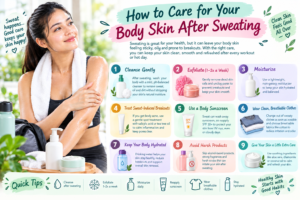
Focus on Sweat-Prone Areas
Pay attention to:
- Underarms
- Chest
- Back
- Neck
- Under the breasts
- Groin area
- Inner thighs
- Feet
These areas can remain warm and damp after exercise.
Showering, drying thoroughly, and changing into clean clothing can help reduce prolonged moisture and friction.
Don’t Forget Your Feet
Feet spend a lot of time inside shoes, which can create a warm, damp environment.
After exercising:
- Remove sweaty socks.
- Let your feet dry.
- Put on clean socks.
- Keep shoes clean and dry.
- Avoid walking barefoot in public gym showers or locker rooms.
Dermatologists recommend wearing shower shoes in public locker rooms and showers to reduce exposure to certain skin infections.
Sweating and Skin Chafing
Sweating can make friction-related irritation worse.
This is especially common between the thighs, around the underarms, under the breasts, or anywhere clothing repeatedly rubs against damp skin.
To reduce chafing:
- Wear comfortable clothing.
- Choose moisture-wicking fabrics for exercise.
- Avoid clothing that creates excessive friction.
- Change out of wet clothing.
- Keep affected areas clean and dry.
- Use an appropriate barrier product if needed.
If an area becomes very painful, swollen, increasingly red, or develops signs of infection, seek medical advice.
Common Skin Care Mistakes After Sweating
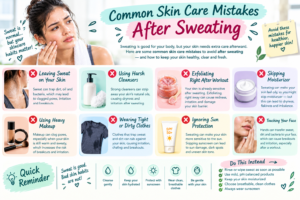
Mistake 1: Scrubbing Your Face
More scrubbing doesn’t necessarily mean cleaner skin.
In fact, aggressive scrubbing can irritate the skin and worsen acne.
Mistake 2: Waiting Too Long to Change Clothes
Sitting around in sweaty clothing keeps moisture against your skin.
Change into clean clothes as soon as practical after exercise.
Mistake 3: Using Very Hot Water
A very hot shower may feel relaxing after exercise, but it can be drying and irritating.
Lukewarm water is generally a better choice for cleansing the skin.
Mistake 4: Washing Your Face Too Many Times
If you sweat several times a day, you might feel tempted to cleanse your face repeatedly.
That can cause dryness and irritation.
Instead, focus on cleansing after significant sweating and maintain a balanced routine.
Mistake 5: Using Strong Products Immediately
Sweaty skin may already be warm and irritated.
Adding several strong exfoliants or acne treatments immediately after exercise can be uncomfortable, particularly for sensitive skin.
Keep your post-workout routine simple unless you have a specific treatment plan from a dermatologist.
Mistake 6: Reusing a Dirty Towel
A towel that has already been used several times isn’t ideal for wiping your face.
Use a clean towel and wash it regularly.
Mistake 7: Staying in Damp Workout Clothes
This is especially important if you experience body acne, irritation, or chafing.
Change clothes and shower as soon as practical.
Should You Use Salicylic Acid or Benzoyl Peroxide After Sweating?
These ingredients can be useful for some people with acne, but they aren’t necessary for everyone.
Salicylic acid can help unclog pores and is commonly used in acne products.
Benzoyl peroxide can help reduce acne-causing bacteria and is also used in acne treatment.
The American Academy of Dermatology notes that these ingredients may be useful in post-workout cleansing for people with acne, but benzoyl peroxide can be irritating for some people.
If your skin is sensitive, dry, or already irritated, don’t automatically add strong acne products just because you sweat.
If you’re unsure which treatment is appropriate, a dermatologist can help you choose one.
A Simple 5-Minute Post-Sweat Skin Care Routine
You don’t need a complicated routine.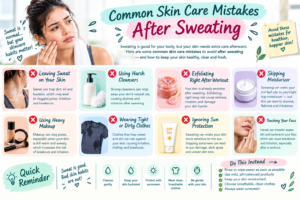
Step 1: Cool Down
Allow your body temperature and breathing to settle after exercise.
Step 2: Pat Away Excess Sweat
Use a clean towel and gently pat your face and body.
Step 3: Cleanse
Take a shower or wash your face and sweaty areas with a gentle cleanser and lukewarm water.
Step 4: Dry Gently
Pat your skin dry rather than rubbing it aggressively.
Step 5: Moisturize
Apply a suitable moisturizer if your skin feels dry or tight.
Step 6: Change Clothes
Put on clean, dry clothing.
That’s enough for a basic post-workout skincare routine.
Sweaty Skin Care Tips for Hot and Humid Weather
Hot, humid weather can make sweating more frequent, so your routine may need a few adjustments.
- Keep your cleanser gentle.
- Shower after heavy sweating.
- Change damp clothing.
- Choose breathable clothing.
- Keep your face towel clean.
- Use non-comedogenic skincare products if you’re acne-prone.
- Protect exposed skin from the sun.
- Avoid excessive scrubbing.
- Keep areas prone to chafing dry and comfortable.
- Drink enough fluids according to your body’s needs.
If your skin becomes irritated despite these habits, simplify your routine rather than adding more products.
When Should You See a Dermatologist?
Occasional sweat-related breakouts or mild irritation can often be managed with basic skin care.
However, consider professional advice if you have:
- Persistent or worsening acne
- Painful or deep breakouts
- A rash that doesn’t improve
- Significant itching or burning
- Swelling
- Pus or drainage
- Increasing redness
- Repeated skin infections
- Severe or persistent chafing
Signs such as increased pain, swelling, pus, or persistent redness can indicate a skin infection and should be evaluated by a healthcare professional.
Frequently Asked Questions
1. Is it good to wash your face after sweating?
Yes. Washing your face after heavy sweating can help remove sweat, oil, dirt, and other buildup. Use a gentle cleanser and lukewarm water, and avoid scrubbing.
2. Should I shower immediately after sweating?
You don’t need to panic if you can’t shower immediately, but showering as soon as practical after heavy exercise is a useful habit. It helps remove sweat, oil, bacteria, and other buildup from your skin.
3. Can sweating cause acne?
Sweat itself isn’t necessarily the direct cause of acne. Heat, moisture, oil, bacteria, friction, makeup, clothing, and equipment can work together to contribute to breakouts, particularly in acne-prone skin.
4. How can I prevent acne after sweating?
Cleanse your skin after heavy sweating, change out of sweaty clothing, avoid touching your face with dirty hands, clean shared equipment, and choose non-comedogenic skincare products if you’re acne-prone.
5. Should I wash my face every time I sweat?
If you’ve been sweating heavily, washing your face afterward can be helpful. But repeatedly washing your face throughout the day can cause irritation. Use a gentle cleanser and avoid unnecessary over-cleansing.
6. Is cold water better for your skin after exercise?
There’s no need to use very cold water for routine cleansing. Lukewarm water is generally recommended for washing the face because it cleans effectively without the potential irritation associated with very hot water.
7. Can I moisturize after sweating?
Yes. If cleansing leaves your skin dry or tight, apply a suitable moisturizer. If you’re acne-prone, consider a non-comedogenic formula.
8. What should I do if I can’t shower after exercising?
Pat away sweat with a clean towel, change into clean clothes, and cleanse your face or other sweaty areas when possible. A full shower can follow when you have access to one.
9. Can sweating cause body acne?
Sweating can contribute to body breakouts when combined with factors such as heat, friction, oil, bacteria, tight clothing, or equipment. Showering and changing clothes after exercise can help reduce these triggers.
10. What is the best skincare after sweating?
For most people, the basics are enough: gently cleanse sweaty skin, rinse with lukewarm water, pat dry, moisturize if needed, and change into clean clothes. People with acne or sensitive skin may need a more specific routine.
Key Takeaways
Good skin care after sweating doesn’t have to be complicated.
The most important habits are to cleanse your skin after heavy sweating, avoid harsh scrubbing, change out of damp clothing, use clean towels, moisturize when needed, and protect your skin from the sun during outdoor activities.
If you’re prone to acne, pay particular attention to your face, chest, and back. Non-comedogenic products, clean workout clothing, and prompt cleansing can help reduce some common triggers.
Most importantly, don’t try to “scrub away” sweat. Healthy skin benefits from gentle, consistent care rather than an aggressive routine.
Final Thoughts
Sweating is a normal and healthy response to exercise and heat, but the skin can become uncomfortable when sweat, moisture, oil, friction, and dirt remain on it for too long.
A simple post-sweat routine is usually enough: cleanse gently, pat your skin dry, moisturize when needed, change into clean clothes, and give extra attention to acne-prone or friction-prone areas.
If you continue experiencing persistent breakouts, rashes, severe irritation, or signs of infection despite good skin care, it’s worth speaking with a dermatologist rather than continually adding new products to your routine.