
A DIY yogurt face mask can be a simple way to give your skin a short-term boost of softness and mild exfoliation. Plain yogurt contains lactic acid, an alpha hydroxy acid (AHA) that can help loosen dead skin cells. However, homemade yogurt masks are not a proven treatment for acne, pigmentation, or other skin conditions, and they can irritate sensitive skin if used incorrectly.
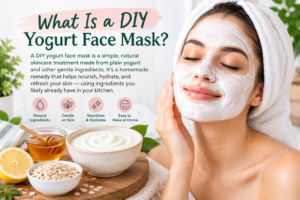
What Is a DIY Yogurt Face Mask?
A DIY yogurt face mask is a homemade facial treatment made primarily with plain yogurt. Some people use it alone, while others combine yogurt with ingredients such as oatmeal or aloe vera.
The reason yogurt is used in skincare is mainly its lactic acid content. Lactic acid is an AHA that can help exfoliate the outer layer of the skin. Dermatology sources also recognize lactic acid as an exfoliating ingredient used in skincare products.
However, homemade yogurt isn’t equivalent to a professionally formulated lactic acid product. The concentration, pH, and consistency aren’t standardized, so the effect can vary.
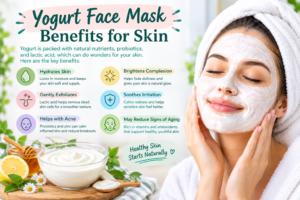
Yogurt Face Mask Benefits for Skin
A yogurt mask may offer a few simple skincare benefits, but it’s important to keep expectations realistic.
1. Gently Exfoliates the Skin
One of the main reasons people use yogurt on their face is its lactic acid.
Lactic acid belongs to the AHA family. AHAs can help loosen dead skin cells from the skin’s surface, which may leave the skin feeling smoother.
Because homemade yogurt doesn’t provide a standardized amount of lactic acid, however, you shouldn’t expect the same predictable exfoliation you’d get from a formulated skincare product.
2. May Make Skin Feel Softer
Removing some surface buildup can make the skin feel smoother and softer.
This is one reason a yogurt face mask may be appealing before an occasion when you want your skin to look fresh. The effect should be considered temporary rather than a permanent change in skin texture.
3. May Give Skin a Fresher Appearance
The mild exfoliating effect of lactic acid can make dull-looking skin appear more refreshed.
This doesn’t mean yogurt can permanently brighten pigmentation or remove dark spots. A temporary improvement in surface smoothness and brightness is different from treating hyperpigmentation.
4. Can Provide a Simple At-Home Masking Experience
A basic yogurt mask is inexpensive and requires very few ingredients.
Still, “natural” doesn’t automatically mean “safe for everyone.” Dermatologists note that even natural or clean skincare products can cause irritation or allergic reactions in some people.
What Does Yogurt Do to Your Skin?
The most relevant skincare component in yogurt is lactic acid.
Lactic acid is an AHA that can exfoliate the skin’s surface. In professionally formulated skincare, lactic acid is used to improve rough texture and support smoother-looking skin.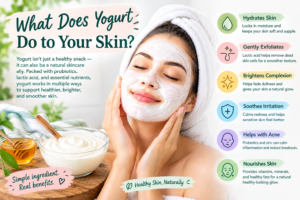
When yogurt is used as a face mask, though, the situation is less controlled. The amount of lactic acid that reaches your skin depends on the yogurt and how it’s prepared and used.
So, it’s more accurate to say that yogurt may provide mild exfoliating benefits rather than claiming that it works like a clinical exfoliating treatment.
How to Make a DIY Yogurt Face Mask
A simple recipe is usually the safest place to start.
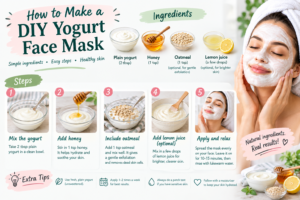
What You Need
- 1–2 tablespoons of plain, unsweetened yogurt
- A clean bowl
- Clean fingertips or a clean facial applicator
Step-by-Step Instructions
1. Clean your face.
Wash with a gentle cleanser and pat your skin dry.
2. Apply a thin layer.
Spread a small amount of plain yogurt over your face. Avoid your eyes, lips, and any cuts or irritated areas.
3. Keep it simple.
If you’re trying yogurt on your skin for the first time, don’t mix it with several other ingredients.
4. Leave it on briefly.
Start with a short application rather than leaving it on for a long period.
5. Rinse gently.
Use lukewarm water and your fingertips. Don’t scrub your skin while removing the mask.
6. Moisturize.
Apply your usual gentle moisturizer afterward.
7. Use sunscreen during the day.
Because exfoliation can make skin more sensitive to environmental exposure, daily sun protection remains important.
Dermatologists recommend that facial masks complement—not replace—a regular skincare routine that includes cleansing, moisturizing, and sun protection.
Which Yogurt Is Best for a Face Mask?
If you want to try a yogurt mask, choose plain, unsweetened yogurt with a short ingredient list.
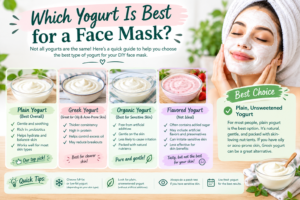
Avoid flavored yogurt because it can contain added sugar, flavorings, fruit ingredients, or other substances that aren’t necessary for a facial mask.
A simple product is easier to evaluate if your skin reacts.
Look for
- Plain yogurt
- Unsweetened yogurt
- Minimal ingredients
- No added fragrance or unnecessary flavoring
Avoid
- Fruit-flavored yogurt
- Sweetened yogurt
- Yogurt with added flavorings
- Products containing ingredients you already know irritate your skin
Remember that the goal is a simple experiment, not to create a complicated homemade skincare formula.
Yogurt Face Mask for Glowing Skin
If your goal is more radiant-looking skin, yogurt may help temporarily improve the appearance of dullness through its mild exfoliating action.
Dead skin cells can contribute to a rough or dull surface. Gentle exfoliation can make the skin appear smoother.
However, a yogurt mask isn’t a reliable treatment for persistent pigmentation, melasma, or significant sun damage.
For ongoing dullness or uneven pigmentation, a consistent skincare routine and appropriate dermatologist-recommended ingredients are generally more predictable than DIY masks.
Yogurt Face Mask for Dry Skin
People with dry skin may be interested in yogurt because the mask can leave the skin feeling soft.
But dry skin needs more than exfoliation.
If your skin is already dry, over-exfoliating can make it feel tighter, rougher, or more irritated. Dermatologists caution that facial masks with irritating or overly active ingredients can contribute to dryness and barrier problems.
If you have dry skin:
- Use a small amount.
- Keep the application brief.
- Don’t scrub while rinsing.
- Follow with a gentle moisturizer.
- Don’t combine the mask with several exfoliating ingredients.
- Stop if your skin burns or becomes uncomfortable.
If your skin is very dry, flaky, cracked, or irritated, it’s usually better to focus on barrier-supporting skincare rather than adding more exfoliation.
Yogurt Face Mask for Oily Skin
Yogurt isn’t a dedicated oil-control treatment.
Although exfoliation may help remove some surface buildup, a homemade yogurt mask won’t replace ingredients specifically designed for oily or acne-prone skin.
Dermatologists commonly recommend ingredients such as salicylic acid, certain AHAs, niacinamide, or clay depending on the individual’s skin concerns.
If you have oily skin, avoid assuming that a stronger or more frequent yogurt mask will produce better results. Too much exfoliation can irritate the skin and potentially make your routine harder to tolerate.
Yogurt Face Mask for Acne: Does It Work?
A yogurt face mask should not be considered an acne treatment.
Lactic acid can provide exfoliation, and exfoliating ingredients may have a role in skincare for acne-prone skin. But a homemade yogurt mask isn’t a standardized acne medication and shouldn’t replace proven acne treatments.
If you have persistent acne, painful pimples, cysts, or acne that is leaving scars or dark marks, consider speaking with a dermatologist.
Also, don’t assume that because yogurt is safe to eat, it will necessarily improve acne when applied to the skin. Those are different questions.
Interestingly, the American Academy of Dermatology notes that studies have not found yogurt or cheese to increase acne breakouts when eaten, although diet and acne can be complicated.
Can Yogurt Help With Dark Spots?
A yogurt mask may make skin appear temporarily brighter by removing some surface dead skin cells, but that isn’t the same as treating dark spots.
Dark spots can have many causes, including:
- Acne-related pigmentation
- Sun exposure
- Hormonal changes
- Skin inflammation
- Certain medications
- Other skin conditions
If pigmentation persists, it’s better to identify the cause rather than repeatedly exfoliating the area.
Aggressive DIY treatments can actually irritate the skin, and inflammation may make some pigmentation problems more noticeable.
Precautions Before Using a Yogurt Face Mask
DIY skincare deserves the same caution as any other skincare product.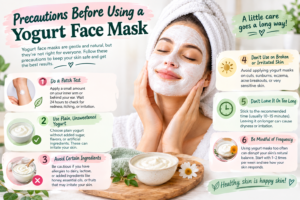
1. Patch Test First
Before applying yogurt across your face, test it on a small area of skin.
The American Academy of Dermatology recommends testing skincare products on small areas before adding them to a routine because reactions can include redness, itching, swelling, or other irritation.
2. Don’t Use It on Broken Skin
Avoid applying yogurt to:
- Cuts
- Open wounds
- Sunburn
- Severe irritation
- Areas with an active rash
- Skin that is peeling from a strong treatment
3. Avoid the Eye Area
The skin around the eyes is particularly delicate and more susceptible to irritation.
Keep the mask away from the eyelids and lash line.
4. Don’t Add Lemon Juice
A common DIY mistake is mixing yogurt with lemon juice.
This isn’t necessary, and acidic homemade ingredients can irritate the skin. Cleveland Clinic specifically advises avoiding acidic DIY ingredients such as lemon or lime juice and apple cider vinegar in homemade face masks.
5. Don’t Scrub Your Face
A yogurt mask already provides some exfoliating action from lactic acid.
Rubbing aggressively while removing it can add unnecessary physical irritation.
6. Don’t Use It Too Often
More exfoliation isn’t necessarily better.
Dermatologists warn that using exfoliating masks too often can lead to irritation, dryness, and damage to the skin barrier.
7. Stop If Your Skin Reacts
Wash the mask off immediately if you experience:
- Burning
- Strong stinging
- Intense itching
- Swelling
- Significant redness
- New irritation
If a reaction continues or becomes severe, seek medical advice.
Who Should Be Careful With Yogurt Face Masks?
A yogurt mask may not be appropriate for everyone.
Take extra care if you have:
- Very sensitive skin
- Eczema
- Rosacea
- A damaged skin barrier
- Active dermatitis
- Recently sunburned skin
- Skin irritation from retinoids or exfoliating acids
- An allergy or known sensitivity to ingredients in the yogurt
If you’re already using retinol, exfoliating acids, or other potentially irritating products, adding another exfoliating treatment may increase the chance of irritation. The AAD recommends avoiding overlapping active ingredients in masks and other skincare products when this could cause irritation.
Can You Use Yogurt With Other Natural Ingredients?
You can find many DIY recipes that combine yogurt with honey, oatmeal, turmeric, lemon, or other kitchen ingredients.
But adding more ingredients doesn’t automatically make a mask more effective.
In fact, it makes it harder to determine what caused a reaction if your skin becomes irritated.
A safer approach
Start with plain yogurt alone.
If your skin tolerates it, you can decide whether a simple, well-tolerated ingredient such as colloidal oatmeal or aloe-based product makes sense for your skin needs. Dermatologists commonly recommend gentle ingredients such as colloidal oatmeal for dry or sensitive skin.
Avoid experimenting with several acidic or abrasive ingredients at once.
Common DIY Yogurt Face Mask Mistakes
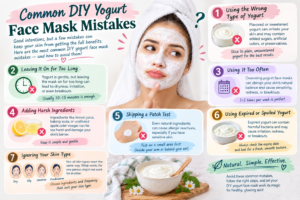
Leaving the Mask on Too Long
A longer application doesn’t necessarily mean greater benefits.
Start conservatively and pay attention to how your skin responds.
Using Flavored Yogurt
Flavored yogurt adds unnecessary ingredients to a skincare experiment.
Plain yogurt is a simpler option.
Adding Lemon Juice
Lemon juice can irritate facial skin and isn’t needed to make a yogurt mask effective.
Scrubbing While Rinsing
Scrubbing can increase irritation, especially when the mask already provides mild chemical exfoliation.
Applying It Every Day
Daily use can be excessive, particularly for sensitive or dry skin.
Expecting It to Cure Acne
A yogurt mask isn’t a substitute for evidence-based acne treatment. Facial masks may complement skincare, but they don’t replace treatment for conditions such as acne or eczema.
Ignoring a Skin Reaction
If your skin burns, itches, or becomes noticeably red, don’t try to “push through” the reaction.
Wash it off and allow your skin to recover.
How Often Can You Use a Yogurt Face Mask?
There isn’t a standardized dermatological schedule for homemade yogurt masks because the lactic acid concentration and formulation aren’t controlled like a commercial skincare product.
A cautious approach is to start infrequently and see how your skin responds.
If your skin becomes dry, tight, itchy, or irritated, reduce use or stop altogether.
People who already use retinoids, AHAs, BHAs, or other exfoliating products should be particularly careful about adding another exfoliating step.
DIY Yogurt Face Mask vs. Formulated Lactic Acid Products
These two options aren’t interchangeable.
| DIY Yogurt Mask | Formulated Lactic Acid Product |
|---|---|
| Uses food-grade yogurt | Designed specifically for skincare |
| Lactic acid amount isn’t standardized | Active ingredient concentration is controlled |
| Results can vary | More predictable performance |
| Simple and inexpensive | Usually includes supporting ingredients |
| Can be difficult to control pH | Formulated for a specific pH range |
| May be suitable as an occasional DIY option | Designed for regular skincare use according to directions |
If your goal is consistent exfoliation, a properly formulated skincare product may be easier to control than a homemade mask.
Does Yogurt Make Skin Whiter?
No. A yogurt face mask shouldn’t be described as a skin-whitening treatment.
It may temporarily make dull skin look fresher or smoother because of mild surface exfoliation, but that isn’t the same as changing your natural skin color.
Be especially cautious with DIY recipes that promise dramatic skin-lightening effects. Irritating the skin can make discoloration more noticeable rather than less noticeable.
Best Practices for Using a Yogurt Face Mask
For a simple and cautious approach:
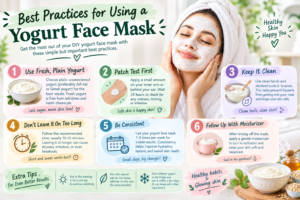
- Choose plain, unsweetened yogurt.
- Start with clean skin.
- Patch test first.
- Apply a thin layer.
- Keep it away from the eyes and lips.
- Don’t add lemon juice or harsh DIY acids.
- Don’t scrub while removing it.
- Rinse gently with lukewarm water.
- Apply a moisturizer afterward.
- Use sunscreen during the day.
- Stop if your skin becomes irritated.
- Don’t use it as a replacement for acne or other medical treatment.
These precautions follow the broader dermatology guidance that facial masks should be used appropriately, tested before use, and treated as an addition to—not a replacement for—a regular skincare routine.
Frequently Asked Questions
1. Is a yogurt face mask good for your skin?
A yogurt face mask may provide mild exfoliation because yogurt contains lactic acid. It can temporarily leave skin feeling smoother and softer. However, results vary, and homemade yogurt masks aren’t a replacement for treatments designed for specific skin conditions.
2. Can I use yogurt on my face every day?
Daily use isn’t recommended as a starting point. Yogurt contains lactic acid, so frequent application could contribute to irritation or dryness, particularly if you’re already using exfoliating skincare products.
3. Which yogurt is best for a face mask?
Plain, unsweetened yogurt with minimal ingredients is the simplest option. Avoid flavored or heavily sweetened varieties because they add unnecessary ingredients.
4. Can yogurt help acne?
Yogurt isn’t a proven standalone acne treatment. Although lactic acid can exfoliate the skin, persistent or moderate-to-severe acne generally requires a more targeted skincare or medical approach.
5. Can yogurt make skin glow?
It may temporarily make dull skin look fresher or smoother because of its mild exfoliating effect. However, “glowing skin” is not a guaranteed result, and yogurt shouldn’t be considered a treatment for pigmentation.
6. Is yogurt good for dry skin?
It may leave skin feeling soft, but dry skin needs adequate moisturization and barrier support. If your skin is already very dry or irritated, exfoliation may make the problem worse.
7. Can I mix honey with yogurt for a face mask?
Some people combine the two, but adding multiple ingredients increases the number of substances your skin is exposed to. If you’re new to DIY skincare, testing plain yogurt alone first makes it easier to identify whether your skin tolerates it.
8. Can I add lemon juice to a yogurt face mask?
It’s better not to. Lemon and lime juice can irritate facial skin, and Cleveland Clinic specifically advises against using these acidic ingredients in homemade masks.
9. Should I moisturize after a yogurt face mask?
Yes. After gently rinsing the mask, apply a moisturizer that suits your skin type. A face mask should complement your normal skincare routine rather than replace it.
10. What should I do if a yogurt mask irritates my skin?
Wash it off gently and stop using it. Avoid other potentially irritating skincare products until your skin settles. If you develop persistent redness, swelling, itching, or a rash, consult a healthcare professional.
Key Takeaways
A DIY yogurt face mask can be a simple occasional skincare treatment, mainly because yogurt contains lactic acid, an AHA with exfoliating properties. It may help skin feel temporarily smoother and give dull-looking skin a fresher appearance.
But homemade skincare has limitations. The concentration and pH of yogurt aren’t standardized, and individual skin types respond differently. A yogurt mask also shouldn’t be used as a substitute for proven treatments for acne, eczema, pigmentation, or other skin conditions.
If you decide to try one, keep the recipe simple: plain yogurt, a short application, gentle rinsing, and moisturizer afterward. Patch testing is important, and you should stop immediately if you experience burning, itching, or significant irritation.
Final Thoughts
Yogurt can be an interesting natural skincare ingredient, but simple doesn’t always mean risk-free. Its lactic acid content explains why it may provide mild exfoliation, yet homemade yogurt isn’t a precisely formulated skincare treatment.
The best approach is to treat a yogurt face mask as an optional occasional addition to a basic skincare routine—not a miracle remedy. If your skin is sensitive, already irritated, or you’re treating a specific skin condition, a dermatologist can help you choose ingredients that are more appropriate for your needs.