
Rose water is a fragrant liquid made from rose petals, commonly used as a gentle facial mist, toner, or ingredient in skincare products. Rose water for skin may help refresh the skin, provide light hydration, and offer soothing benefits, although the strength of the evidence varies depending on the type and formulation. It shouldn’t be treated as a cure for acne, eczema, or other skin conditions.

For centuries, rose preparations have been used in traditional beauty and personal care. Today, rose water remains popular because it’s simple to use and can fit into many skincare routines. But not every bottle labeled “rose water” is the same, and natural doesn’t automatically mean irritation-free.
This guide explains what rose water is, its potential skin benefits, how to use it correctly, who should be cautious, and the common mistakes worth avoiding.
Key Takeaways
- Rose water is usually a hydrosol produced by distilling rose petals with water.
- It can be used as a facial mist, toner, or refreshing step in a skincare routine.
- Rose water may provide light hydration and a soothing, refreshing feel.
- Laboratory research has found antioxidant and antimicrobial activity in some rose preparations, but these findings don’t automatically prove the same effects from every commercial rose-water product.
- Rose water isn’t a substitute for sunscreen, moisturizer, acne treatment, or medical care.
- Fragrance components in rose preparations may bother people with sensitive or reactive skin.
- A patch test is sensible before applying a new rose-water product over the entire face.
- Product quality, preservation, ingredients, and concentration matter.
What Is Rose Water?
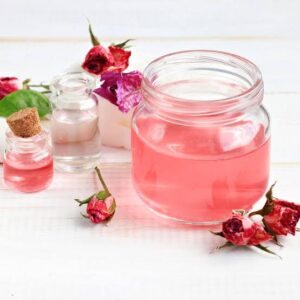
Rose water is a water-based preparation made from rose petals. One common method is steam distillation, which produces rose hydrosol, also called rose water. During distillation, aromatic compounds from the petals become part of the resulting water. Research on Rosa damascena hydrosol has identified compounds such as phenyl ethyl alcohol, citronellol, and geraniol.
Rose water should not be confused with rose essential oil.
Rose essential oil is highly concentrated and contains a much larger amount of aromatic compounds. Rose water is far more diluted because it is primarily water.
You’ll also find products marketed as rose water that contain additional ingredients, such as:
- Preservatives
- Fragrance
- Humectants
- Botanical extracts
- Alcohol
- Other floral waters
That’s why it’s useful to read the ingredient list rather than assuming every rose-water product has the same composition.
Rose Water vs. Rose Oil
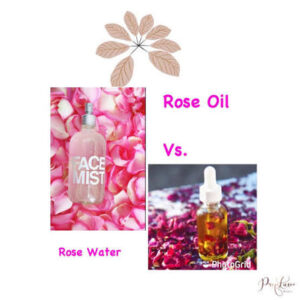
| Feature | Rose Water | Rose Essential Oil |
|---|---|---|
| Form | Water-based | Highly concentrated oil |
| Typical use | Mist, toner, skincare ingredient | Fragrance and cosmetic formulations |
| Concentration | Much more diluted | Highly concentrated |
| Direct facial use | Often formulated for this purpose | Should not be used undiluted |
| Skin sensitivity | Can still cause irritation in some people | Greater potential for irritation when improperly used |
What Does Rose Water Do for Skin?
Rose water primarily works as a refreshing, water-based skincare step. Depending on the formulation, it can help the skin feel more comfortable and lightly hydrated.
Rose preparations also contain aromatic and plant-derived compounds that have demonstrated antioxidant or antimicrobial activity in laboratory research. However, laboratory findings should be interpreted carefully: they don’t mean that spraying rose water on your face will treat an infection or prevent aging.
The practical benefits are more modest.
For many people, rose water can be useful as:
- A refreshing facial mist
- A lightweight hydrating step
- A soothing addition to a basic skincare routine
- A way to make skincare feel more pleasant
- An ingredient in cosmetic formulations
Benefits of Rose Water for Skin
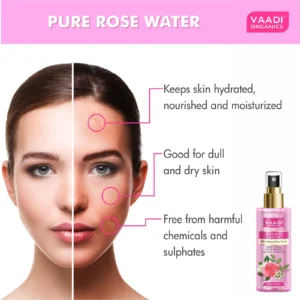
1. It Can Help Refresh the Skin
One of the simplest benefits of rose water is its refreshing feel.
A light mist can be especially pleasant after cleansing, exercising, or spending time outdoors. The water itself temporarily adds moisture to the skin’s surface, while evaporation can create a cooling sensation.
Keep in mind that refreshing isn’t the same as moisturizing deeply. If your skin is dry, you’ll still need a moisturizer to help reduce water loss.
2. It May Provide Light Hydration
Rose water is primarily water, so applying it can temporarily increase the water content at the skin’s surface.
However, water alone isn’t enough to provide lasting hydration.
For better results, apply rose water to clean skin and follow it with a moisturizer while the skin is still slightly damp. A moisturizer helps support the skin barrier and reduce moisture loss.
A simple routine
- Cleanse your face gently.
- Apply rose water by misting or with clean hands.
- Don’t aggressively rub the skin.
- Follow with a moisturizer.
- Apply sunscreen during the daytime.
This approach is more useful than treating rose water as a complete moisturizer.
3. It May Have Soothing Properties
Rose hydrosol has traditionally been used for skin discomfort, and research has investigated anti-inflammatory and related biological effects of rose preparations.
That doesn’t mean rose water can treat inflammatory skin diseases.
If your skin feels mildly tight or uncomfortable, a simple rose-water product may feel soothing. But if your face is burning, intensely itchy, swollen, or developing a persistent rash, it’s better to stop the product rather than repeatedly applying it.
4. It Contains Plant-Derived Compounds With Antioxidant Potential
Rose species contain a variety of plant compounds, including phenolic compounds and flavonoids. Research on Rosa damascena extracts has demonstrated antioxidant activity in laboratory testing.
Antioxidants are substances that can help counter oxidative processes in biological systems.
Still, there’s an important distinction between antioxidant activity in a laboratory extract and a proven anti-aging effect from facial rose water.
Evidence for rose water specifically is not strong enough to claim that it removes wrinkles, reverses skin aging, or replaces established photoprotection.
5. Some Rose Preparations Show Antimicrobial Activity
Research has found antimicrobial activity from certain rose extracts and preparations under laboratory conditions.
But this is where skincare claims can become misleading.
A study examining Rosa damascena hydrosol used on hands found that rose hydrosol did not significantly reduce bacterial colony counts, unlike an alcohol-based hand antiseptic.
So rose water should not be used as a hand sanitizer, wound disinfectant, or replacement for proven acne or infection treatments.
6. It Can Be a Pleasant Addition to a Simple Skincare Routine
Not every useful skincare ingredient needs to perform a dramatic biological transformation.
Sometimes the value of rose water is practical: it’s lightweight, easy to apply, and can make a basic routine feel refreshing.
If you enjoy using it and your skin tolerates it, rose water can be an optional step between cleansing and moisturizing.
You don’t need it to have healthy skin, though.
Does Rose Water Help Acne?
Rose water may be a comfortable addition to an acne-prone skin routine, but evidence isn’t strong enough to consider it an acne treatment.
Some research on rose-derived extracts has found antimicrobial activity in laboratory settings. However, this doesn’t establish that ordinary rose water can clear acne in real-world use.

Acne involves several factors, including:
- Excess sebum
- Clogged pores
- Inflammation
- Changes involving Cutibacterium acnes
- Hormonal influences
If you’re dealing with persistent acne, ingredients with stronger evidence for acne management are more appropriate than relying on rose water alone.
Rose water can be an optional cosmetic step, but it shouldn’t replace an effective acne routine.
Can Rose Water Brighten Skin?
Rose water can make skin feel fresh and temporarily more comfortable, but there isn’t strong evidence that ordinary rose water significantly lightens dark spots or permanently brightens skin.

Some laboratory research has investigated rose extracts for effects related to melanin production and other skin-care properties. A 2024 in-vitro study reported effects from specific Rosa damascena preparations, but laboratory results don’t establish that a typical rose-water mist will produce the same outcome on human skin.
If your goal is to fade hyperpigmentation, daily broad-spectrum sunscreen and appropriately selected ingredients are much more important.
Is Rose Water Good for Dry Skin?
Rose water can be useful for dry skin as a light hydrating step, but it shouldn’t be the main treatment for dryness.
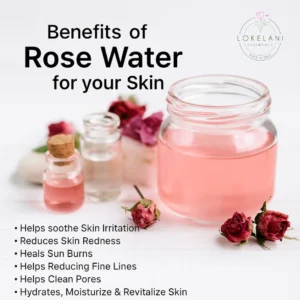
Dry skin often benefits from a routine that combines:
- Gentle cleansing
- Water-based hydration
- A barrier-supporting moisturizer
- Sun protection
Look for moisturizers containing ingredients such as glycerin, ceramides, or other well-established moisturizing agents.
You can apply rose water first and moisturizer afterward.
For very dry skin
A simple routine could look like:
Morning:
Gentle cleanser → rose water → moisturizer → sunscreen
Evening:
Gentle cleanser → rose water → richer moisturizer
If rose water stings or makes your skin feel tighter, remove it from the routine.
Is Rose Water Good for Oily Skin?
Rose water may feel comfortable on oily skin because it is lightweight and doesn’t leave the heavy residue associated with some creams or oils.
But it doesn’t reliably control excess oil production.
If your main concern is oily skin, focus on:
- Gentle cleansing
- Non-comedogenic moisturization
- Sunscreen
- Proven acne or oil-control ingredients when needed
Rose water can remain an optional step.
Is Rose Water Good for Sensitive Skin?
This depends heavily on the individual product.
The word “natural” doesn’t guarantee that something is suitable for sensitive skin. Rose water contains naturally occurring aromatic compounds, and some commercial products also contain added fragrance.

If your skin is easily irritated, choose a simple formulation and test it before regular use.
A useful approach is:
- Apply a small amount to a limited area.
- Leave it alone rather than repeatedly testing it.
- Watch for redness, itching, burning, or swelling.
- Stop if irritation develops.
If you’ve previously reacted to fragranced skincare, be particularly cautious with aromatic botanical products.
How to Use Rose Water on Your Face
There isn’t one mandatory method. The best approach depends on your routine and the product’s instructions.
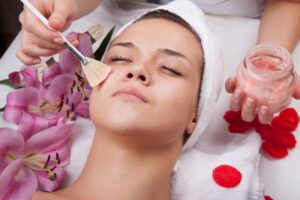
Method 1: Use Rose Water as a Facial Mist
This is probably the easiest method.
Steps
- Cleanse your face.
- Pat gently with a clean towel.
- Mist rose water lightly over the face.
- Allow it to settle.
- Apply moisturizer.
- Use sunscreen during the day.
Avoid spraying it into your eyes.
Method 2: Apply It With Clean Hands
If you don’t have a spray bottle, you can apply a small amount with clean hands.
Steps
- Wash your hands.
- Pour a small amount into your palm.
- Gently press it onto clean skin.
- Follow with moisturizer.
This can be preferable to using a cotton pad if you’re trying to minimize unnecessary rubbing.
Method 3: Use It After Cleansing
Rose water can serve as a simple post-cleansing step.
For example:
Cleanser → Rose water → Treatment serum → Moisturizer → Sunscreen
If you’re using active ingredients such as vitamin C, retinoids, salicylic acid, or exfoliating acids, rose water isn’t essential. Your treatment products and moisturizer matter more.
How Often Should You Use Rose Water?
For a well-tolerated product, once or twice a day is generally a reasonable routine, depending on the product directions and how your skin responds.

You don’t need to apply it repeatedly throughout the day to get better skin.
If your skin becomes:
- Dry
- Tight
- Red
- Itchy
- Burning
reduce use or stop it.
Skincare should make your skin feel comfortable, not constantly irritated.
When Should You Apply Rose Water?
Rose water can be used in either your morning or evening routine.

Morning
Cleanser → Rose water → Serum → Moisturizer → Sunscreen
Evening
Cleanser → Rose water → Treatment → Moisturizer
If your routine already contains several products, don’t feel pressured to add rose water simply because it’s popular.
How to Choose Rose Water for Skin
The ingredient list matters more than attractive packaging or claims on the front label.
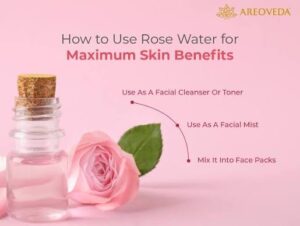
Look for a product where the ingredients clearly identify the rose-derived component and avoid unnecessary ingredients if your skin is sensitive.
Consider these factors:
1. Ingredient transparency
Choose products that clearly list their ingredients.
2. Added fragrance
A product can contain rose water and additional fragrance. If fragrance irritates your skin, check the label carefully.
3. Preservatives
Water-based products can require preservation to remain safe and stable. A preservative isn’t automatically a bad ingredient.
4. Packaging
Choose packaging that reduces unnecessary contamination.
5. Intended use
Use a product formulated for topical skincare rather than assuming a culinary rose-water product is suitable for your face.
6. Storage instructions
Follow the manufacturer’s storage guidance and discard products that change noticeably in smell, appearance, or texture.
Homemade Rose Water: Is It Safe for the Face?
Homemade rose water may sound appealing, but there is an important issue: preservation and contamination.
A homemade preparation made with fresh petals and water generally doesn’t have the same preservation controls as a professionally manufactured cosmetic product.
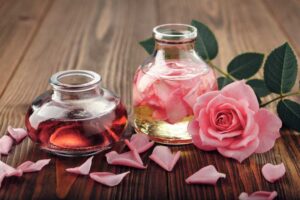
Water-based homemade skincare can become contaminated even if it initially looks and smells fine.
If you decide to make rose water at home, don’t assume that boiling or refrigeration makes it permanently safe. Make only a small amount, use clean equipment, store it appropriately, and discard it if there are signs of spoilage.
For people with sensitive or compromised skin, a properly formulated cosmetic product may be a more predictable option.
Common Mistakes When Using Rose Water
1. Assuming Natural Means Safe for Everyone
Natural ingredients can still cause irritation or allergic reactions.
Your skin’s response matters more than whether an ingredient comes from a plant.
2. Using Rose Water Instead of Moisturizer
Rose water provides water, but it isn’t a complete moisturizing product.
If your skin is dry, follow it with a suitable moisturizer.
3. Expecting It to Treat Acne
Rose water isn’t a proven substitute for acne medication.
Don’t delay effective treatment because a botanical ingredient sounds gentler.
4. Using It as Sunscreen
Rose water provides no reliable replacement for sunscreen.
For daytime protection, use a broad-spectrum sunscreen appropriate for your skin.
5. Applying It to Broken or Severely Irritated Skin
If your skin barrier is damaged, even normally comfortable products may sting.
Give irritated skin a chance to recover and avoid experimenting with multiple new products at once.
6. Using Rose Essential Oil Directly on the Face
Rose essential oil is much more concentrated than rose water.
Never assume that because rose water is gentle, undiluted rose oil will be equally gentle.
7. Keeping Homemade Rose Water for Too Long
A homemade water-based preparation can become contaminated.
Freshness and safe storage matter.
Possible Side Effects of Rose Water
Most people who tolerate a properly formulated rose-water product can use it without major problems, but reactions are possible.

Potential problems include:
- Redness
- Burning
- Itching
- Dryness
- Irritation
- Contact dermatitis
- Sensitivity to fragrance components
Stop using the product if you develop a persistent or significant reaction.
If you experience marked swelling, difficulty breathing, or another severe allergic-type reaction, seek urgent medical attention.
Rose Water and Skin Barrier Health
The skin barrier is the outer protective layer that helps keep moisture inside the skin and protects against environmental irritants.

When the barrier is disrupted, skin may become:
- Dry
- Tight
- Flaky
- Sensitive
- Easily irritated
Rose water doesn’t repair a damaged barrier by itself.
A barrier-focused routine is usually much simpler:
Gentle cleanser + moisturizer + sunscreen
Rose water can be added if your skin likes it, but it shouldn’t replace the basics.
Can You Use Rose Water Every Day?
Yes, if your skin tolerates the particular product.

Daily use isn’t necessary for everyone, though. There is no special benefit to forcing an extra skincare step into your routine if it doesn’t address one of your concerns.
For some people, using rose water once a day feels pleasant. Others may prefer it only occasionally.
The goal is a routine that supports your skin without creating unnecessary irritation.
Can You Use Rose Water With Other Skincare Ingredients?
Rose water generally doesn’t need to be treated like a strong active ingredient.

It can usually fit into a routine containing common products such as:
- Hyaluronic acid
- Niacinamide
- Vitamin C
- Moisturizers
- Sunscreen
The bigger issue is the complete formulation, not rose water itself.
For example, if a rose-water product contains alcohol, fragrance, essential oils, or other potentially irritating ingredients, the overall product may be less suitable for sensitive skin.
Rose Water With Vitamin C
You can generally use rose water as a hydrating step before a vitamin C product if your skin tolerates both.
A simple order is:
Cleanser → Rose water → Vitamin C → Moisturizer → Sunscreen
You don’t need rose water for vitamin C to work.
Rose Water With Niacinamide
Rose water and niacinamide can fit comfortably into the same routine.
For example:
Cleanser → Rose water → Niacinamide serum → Moisturizer
Again, rose water is optional. Niacinamide is the treatment ingredient in this example; rose water mainly provides a lightweight water-based step.
Rose Water With Hyaluronic Acid
This combination can work well in a hydration-focused routine.
Apply rose water first, then a hyaluronic-acid product, followed by moisturizer.
The important part is finishing with a moisturizer so that the hydration step isn’t left on the skin without a barrier-supporting product.
Can Rose Water Remove Dark Circles?
There’s no good reason to expect ordinary rose water to remove dark circles.
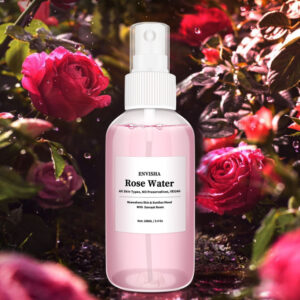
Dark circles can have different causes, including genetics, pigmentation, shadows from facial anatomy, thin skin, and lifestyle factors.
A cool mist may feel refreshing around the eyes, but it isn’t a proven treatment for the underlying causes of dark circles.
Avoid getting rose water directly into your eyes.
Can Rose Water Reduce Wrinkles?
Rose water may contribute to a pleasant, hydrated appearance, but there isn’t strong clinical evidence that ordinary rose water removes wrinkles.
For long-term skin-aging prevention, sun protection is much more important.
A sensible anti-aging routine usually focuses on:
- Daily sunscreen
- Moisturizer
- Proven active ingredients suited to your skin
- Gentle cleansing
- Consistent use
Rose water can be an optional cosmetic addition rather than the foundation of the routine.
What Does the Research Say About Rose Water?
Research on Rosa damascena is interesting, but it needs to be interpreted carefully.
Studies have investigated rose hydrosols and rose extracts for antioxidant, antimicrobial, anti-inflammatory, and other biological properties. Some findings are promising, particularly in laboratory studies.
However, rose water is not a single standardized substance. Its chemical composition can vary according to the rose variety, growing conditions, processing methods, and production techniques.
That means results from a concentrated extract or laboratory preparation cannot automatically be applied to every bottle of rose water.
There is also limited high-quality clinical evidence for many of the popular cosmetic claims surrounding rose water. A systematic review of Rosa damascena studies, for example, found that evidence quality varied and called for better research.
The sensible takeaway is simple: rose water can be a useful cosmetic skincare step, but its benefits shouldn’t be exaggerated.
Who Should Be Careful With Rose Water?
Consider extra caution if you have:
- Very sensitive skin
- A history of fragrance reactions
- Active dermatitis
- A damaged skin barrier
- A known allergy to rose or fragrance ingredients
- Significant facial irritation
If you’re experiencing a diagnosed skin condition, ask a dermatologist whether a fragranced botanical product is appropriate.
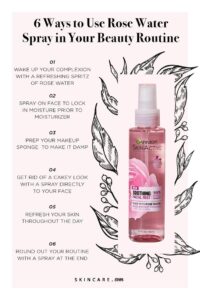
A Simple Rose Water Skincare Routine for Beginners
If you’re new to rose water, keep things simple.
Morning
Step 1: Gentle cleanser
Step 2: Rose water
Step 3: Moisturizer
Step 4: Broad-spectrum sunscreen
Evening
Step 1: Gentle cleanser
Step 2: Rose water
Step 3: Treatment product, if needed
Step 4: Moisturizer
You don’t need a complicated routine to benefit from basic skincare.
Expert Tips for Using Rose Water
Choose simple formulas
If your skin is sensitive, fewer unnecessary ingredients can make it easier to identify what causes a reaction.
Don’t chase the strongest scent
A powerful rose fragrance doesn’t necessarily mean the product is more effective.
Patch test new products
Especially when you’re trying a botanical or fragranced product for the first time.
Moisturize afterward
Rose water alone isn’t a substitute for a proper moisturizer.
Protect your skin from the sun
No rose-water routine can compensate for inadequate sun protection.
Introduce one new product at a time
If you start three new products together and develop irritation, it’ll be difficult to know which one caused it.
Frequently Asked Questions
1. Is rose water good for skin?
Rose water can be a useful cosmetic skincare step for refreshing the skin and providing light, temporary hydration. Some rose preparations also show antioxidant and antimicrobial activity in laboratory research, but evidence for specific skincare benefits from ordinary rose water is limited.
2. Can I use rose water on my face every day?
Yes, if your skin tolerates the product. Once or twice daily is reasonable for many people, but daily use isn’t essential. Stop if you develop burning, itching, redness, or irritation.
3. Can rose water remove pimples?
Rose water shouldn’t be considered a proven acne treatment. Although some rose-derived extracts show antimicrobial activity in laboratory research, ordinary rose water hasn’t been established as a replacement for evidence-based acne treatments.
4. Does rose water lighten dark spots?
There’s insufficient evidence to say that ordinary rose water significantly fades dark spots. If pigmentation is your concern, consistent sunscreen use and appropriate treatment ingredients are more important.
5. Can rose water hydrate dry skin?
It can provide temporary surface hydration, but it isn’t a replacement for moisturizer. Apply rose water and then use a moisturizer to help maintain hydration.
6. Is rose water suitable for sensitive skin?
It can be, but not everyone will tolerate it. Rose products can contain naturally occurring aromatic compounds or added fragrance that may irritate sensitive individuals. Patch testing is a sensible precaution.
7. Can I use rose water before moisturizer?
Yes. A simple routine is cleanser → rose water → moisturizer. If you’re using a treatment serum, it can usually be placed between rose water and moisturizer according to the product directions.
8. Can I use rose water with vitamin C?
Generally, yes. Rose water can be used as a preliminary hydrating step before vitamin C. The combination isn’t necessary, though; vitamin C doesn’t require rose water to work.
9. Is homemade rose water safe for the face?
It can carry a greater contamination risk because homemade water-based preparations usually lack the controlled preservation and manufacturing conditions of cosmetic products. If you make it, use clean equipment, keep the batch small, store it properly, and don’t keep it indefinitely.
10. Is rose water the same as rose oil?
No. Rose water is a dilute, water-based preparation, while rose essential oil is highly concentrated. They shouldn’t be treated as interchangeable skincare ingredients.
Key Takeaways
- Rose water for skin is best viewed as an optional, refreshing skincare step rather than a miracle treatment.
- It can provide light, temporary hydration and a pleasant soothing sensation.
- Some rose-derived preparations show antioxidant and antimicrobial activity in laboratory studies, but these results don’t prove that every rose-water product provides the same benefits.
- Rose water isn’t a replacement for moisturizer, sunscreen, acne treatment, or medical care.
- Sensitive skin may react to naturally occurring or added fragrance components.
- Read the ingredient list and choose products appropriate for topical use.
- Patch testing can help identify irritation before full-face application.
- Homemade rose water requires particular attention to hygiene, storage, and spoilage.
- Consistency with basic skincare matters more than adding unnecessary products.
Final Thoughts
Rose water has earned its place in beauty routines for a reason: it’s simple, lightweight, refreshing, and easy to incorporate into everyday skincare. Its traditional use is supported by interesting research into rose-derived compounds, but the scientific evidence doesn’t justify many of the dramatic claims sometimes made about it.
The most realistic way to use rose water is to treat it as an optional supporting step. Apply it after cleansing, follow with a moisturizer, and use sunscreen during the day. If your skin feels comfortable and you enjoy the ritual, there’s no reason it can’t be part of your routine.
Just remember that good skincare doesn’t have to be complicated. A gentle cleanser, effective moisturizer, daily sun protection, and targeted treatments when necessary will do far more for long-term skin health than any single botanical ingredient.