
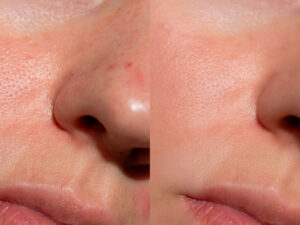
Large or visible pores are a normal part of healthy skin, and you can’t permanently shrink them. However, you can make pores look smaller by keeping them clear, controlling excess oil, protecting your skin from sun damage, and using ingredients such as salicylic acid, niacinamide, and retinoids appropriately. A consistent routine usually works better than aggressive treatments.
What Are Large Pores?
Pores are tiny openings in the skin that allow oil (sebum) and sweat to reach the surface. Each pore is connected to a hair follicle and, in many areas, a sebaceous gland.
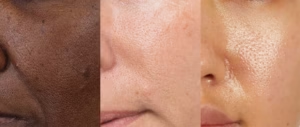
When people talk about “large pores,” they’re usually referring to pores that are more noticeable, particularly around the nose, cheeks, forehead, and chin.
Pore size varies naturally from person to person. Genetics, skin type, age, oil production, and sun exposure can all influence how visible pores appear.
Can You Actually Shrink Your Pores?
Not permanently.
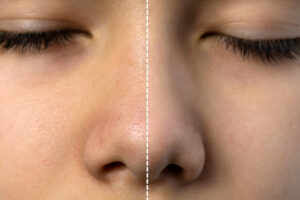
Pores don’t have muscles that allow them to open and close like doors. Products marketed as “pore-shrinking” treatments generally work by reducing the factors that make pores look larger rather than physically changing their permanent structure.
You can, however, improve their appearance considerably.
Why Do Pores Look Larger?
Several factors can make pores more noticeable. Often, more than one is involved.
1. Genetics
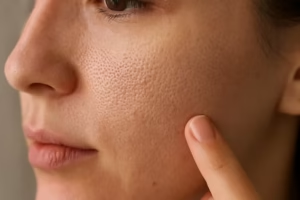
Genetics play an important role in determining pore size and skin characteristics. If visible pores are common in your family, you may naturally have more noticeable pores.
This isn’t something you need to “fix.” Skincare can improve their appearance, but it can’t completely override your natural skin structure.
2. Excess Sebum
Oily skin tends to have more active sebaceous glands. When excess oil mixes with dead skin cells inside a pore, the opening can appear more prominent.
This is why pores are often especially noticeable around the nose and T-zone.
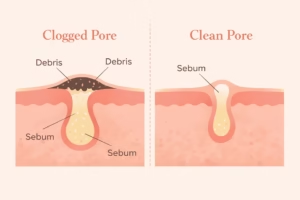
3. Clogged Pores
Oil, dead skin cells, makeup residue, and other debris can accumulate inside pores.
A clogged pore may look darker or wider, making the surrounding skin appear uneven.
4. Loss of Skin Elasticity With Age
As skin ages, it gradually loses collagen and elasticity. Reduced firmness can make pores appear more stretched or pronounced.
This is one reason pores that weren’t particularly noticeable when you were younger may become more visible over time.
5. Sun Exposure
Repeated ultraviolet (UV) exposure can contribute to collagen and elastin damage. As the skin loses structural support, pores may become more noticeable.
Daily sun protection is therefore important if you’re trying to improve the appearance of enlarged pores.
6. Hormonal Changes
Hormonal fluctuations can affect oil production. This can make pores more noticeable during periods when the skin becomes oilier.
How to Reduce the Appearance of Large Pores
The most effective approach is to combine gentle cleansing, appropriate exfoliation, oil control, hydration, retinoids when suitable, and consistent sun protection.
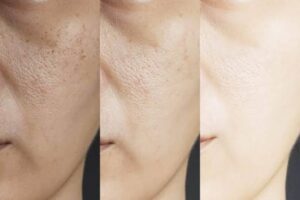
Here are the practical steps that can make the biggest difference.
1. Cleanse Your Skin Gently
A good cleanser removes excess oil, sunscreen, makeup, sweat, and surface debris without excessively stripping the skin.
Wash your face with a gentle cleanser appropriate for your skin type. For most people, cleansing twice daily is sufficient, although very dry or sensitive skin may tolerate less frequent cleansing.
What to avoid
Don’t scrub your face aggressively in an attempt to “clean out” pores. Harsh scrubbing can irritate the skin and damage its protective barrier, potentially making redness and texture more noticeable.
2. Try Salicylic Acid for Clogged Pores
Salicylic acid is a beta hydroxy acid (BHA) that can help remove excess oil and dead skin cells.
Because it is oil-soluble, salicylic acid can work inside the pore, making it particularly useful for oily or congestion-prone skin.
It may help improve the appearance of:
- Clogged pores
- Blackheads
- Excess oil
- Uneven skin texture
How to use it
If you’re new to salicylic acid, start with a lower-frequency product rather than applying it aggressively every day.
For example, you might begin with a salicylic-acid cleanser or leave-on product a few times per week and adjust according to how your skin responds.
If your skin becomes persistently dry, burning, or irritated, reduce use or stop.
3. Consider Niacinamide
Niacinamide, a form of vitamin B3, is a versatile skincare ingredient that can support the skin barrier and help regulate excess oil.
For people with oily or combination skin, it may help make pores appear less prominent by reducing the oily appearance that can emphasize them.
Niacinamide can also be useful when you’re trying to build a simple routine because it’s generally compatible with many other skincare ingredients.
You don’t necessarily need a very high concentration. More isn’t automatically better.
4. Use a Retinoid if It’s Appropriate for You
Retinoids are vitamin A derivatives commonly used to improve skin cell turnover and overall texture. They can also help with clogged pores and acne.
With consistent use, a retinoid may make the skin look smoother and help reduce the appearance of enlarged pores.
Start slowly
Retinoids can cause dryness, peeling, and irritation, especially when you first begin.
A practical approach is to:
- Apply a small amount to clean, dry skin.
- Start a few nights per week.
- Use moisturizer to reduce dryness.
- Increase frequency gradually if your skin tolerates it.
- Wear sunscreen during the day.
If you’re pregnant, trying to become pregnant, or breastfeeding, ask your healthcare professional whether a retinoid is appropriate for you.
5. Don’t Skip Moisturizer
It might seem logical to avoid moisturizer when you have visible pores or oily skin, but over-drying your skin isn’t a good strategy.
When the skin barrier becomes dry or irritated, texture can become more noticeable.
Look for a moisturizer that feels comfortable on your skin. If you’re oily, a lightweight lotion or gel-cream may feel better than a heavy cream. If you’re dry, you may prefer a richer moisturizer.
The goal isn’t to make your skin feel tight. Healthy-looking skin usually benefits from adequate hydration.
6. Wear Sunscreen Every Day
Sun protection is one of the most important long-term steps for maintaining skin texture.
UV exposure contributes to collagen and elastin breakdown, which can make pores appear more noticeable as the skin loses firmness.
Choose a broad-spectrum sunscreen with an SPF appropriate for your needs and apply enough to provide the labeled protection.
Reapply when needed, especially during prolonged outdoor exposure, sweating, or swimming.
A Simple Skincare Routine for Visible Pores
You don’t need a complicated 10-step routine.
A consistent routine can be much more useful.
Morning
Step 1: Cleanser
Use a gentle cleanser if your skin needs morning cleansing.
Step 2: Niacinamide
If you use a niacinamide serum, apply it after cleansing.
Step 3: Moisturizer
Choose one suitable for your skin type.
Step 4: Sunscreen
Finish with broad-spectrum sunscreen.
Evening
Step 1: Remove Makeup and Sunscreen
If you’ve worn makeup or water-resistant sunscreen, make sure it’s thoroughly removed.
Step 2: Cleanser
Gently cleanse the skin.
Step 3: Treatment
Depending on your routine, this could be salicylic acid or a retinoid. Don’t introduce several strong treatments at once.
Step 4: Moisturizer
Apply moisturizer to support the skin barrier.
Don’t use every active ingredient at once
More products don’t necessarily mean better results.
For example, combining a strong exfoliant, retinoid, scrub, and several acidic products can easily cause irritation. A simpler routine is often easier to maintain and troubleshoot.
Best Ingredients for the Appearance of Large Pores
| Ingredient | What It Can Do | Best For |
|---|---|---|
| Salicylic acid | Helps remove oil and dead skin cells from pores | Oily, congested skin |
| Niacinamide | Supports the skin barrier and helps with excess oil | Oily, combination, sensitive skin |
| Retinoids | Improve cell turnover and skin texture | Clogged pores, uneven texture, aging skin |
| Sunscreen | Helps protect collagen from UV damage | Everyone |
| Moisturizers | Support hydration and the skin barrier | All skin types |
No single ingredient works for everyone. Your skin type, sensitivity, existing products, and the cause of visible pores all matter.
What About Clay Masks?
Clay masks can temporarily make oily skin feel cleaner and less greasy because clay can absorb surface oil.
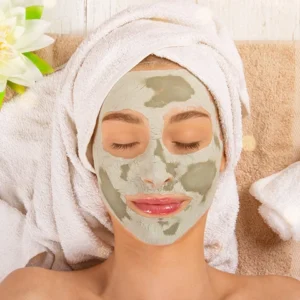
They may be useful occasionally, particularly for oily skin.
But a clay mask won’t permanently shrink your pores.
If your skin feels tight, flaky, or uncomfortable after using one, you’re probably using it too frequently or choosing a formula that’s too drying for your skin.
Do Pore Strips Shrink Pores?
No.
Pore strips can temporarily remove some material from the surface of clogged pores, particularly around the nose. However, they don’t permanently reduce pore size.
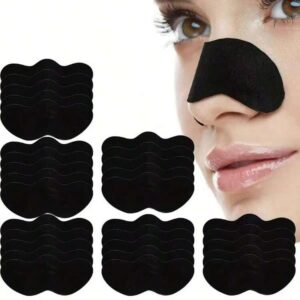
They can also irritate sensitive skin if used too often.
If recurring blackheads or congestion are your main concern, a consistent routine containing an appropriate exfoliant may be more useful than repeatedly using pore strips.
Do Cold Water or Ice Close Pores?
You may have heard that cold water or ice can “close” pores.
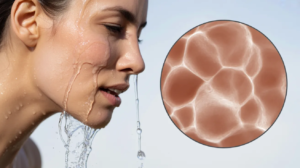
That’s misleading.
Cold temperatures can temporarily affect blood vessels and make skin appear tighter, but they don’t permanently change pore size.
There’s also no need to rub ice directly on your face. Direct exposure to extreme cold can irritate or injure skin.
Can Steam Open Your Pores?
Steam doesn’t literally open and close pores like doors.

Warmth can soften surface oil and make cleansing feel easier, which is probably why steaming is often associated with “opening” pores.
If you enjoy facial steam, keep it gentle and avoid excessive heat. People with sensitive or redness-prone skin may find that heat makes their skin uncomfortable.
How Makeup Can Make Pores Look Smaller
Skincare isn’t the only way to improve the appearance of pores.
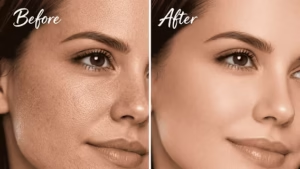
Makeup can temporarily create a smoother-looking surface.
Helpful techniques
- Start with moisturized skin.
- Use a suitable primer if you like wearing one.
- Apply foundation in thin layers.
- Avoid piling makeup into textured areas.
- Use a damp makeup sponge or suitable brush to blend.
- Set makeup lightly if excess oil causes separation.
Heavy layers of foundation don’t necessarily hide texture better. In some cases, they can make pores more obvious.
Common Mistakes That Can Make Pores Look Worse
Over-Exfoliating
Using acids or scrubs too frequently can damage the skin barrier and cause dryness and irritation.
More exfoliation isn’t necessarily more effective.
Using Harsh Scrubs
Physical scrubs with rough particles can be irritating, especially when used aggressively.
If you want exfoliation, a well-formulated chemical exfoliant may be easier to control.
Picking at Pores
Squeezing blackheads or clogged pores can cause inflammation and potentially lead to skin damage or scarring.
If a pore repeatedly becomes clogged, it’s better to address the underlying congestion.
Skipping Sunscreen
UV damage can contribute to loss of skin firmness over time.
Skipping sunscreen can undermine other efforts to improve skin texture.
Using Too Many Active Ingredients
A routine containing multiple acids, retinoids, scrubs, and strong treatments can become irritating quickly.
Introduce one major active at a time so you can see how your skin responds.
Expecting Overnight Results
Pore appearance doesn’t usually change dramatically after one treatment.
Consistency matters more than constantly switching products.
When Should You See a Dermatologist?
If visible pores are your only concern, a basic skincare routine may be enough.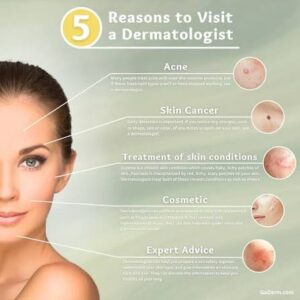
However, consider speaking with a dermatologist if you also have:
- Persistent acne
- Deep or painful breakouts
- Significant blackheads
- Acne scars
- Severe irritation
- Sudden changes in skin texture
- Persistent redness or inflammation
A dermatologist can determine whether acne, oil production, scarring, sun damage, or another skin condition is contributing to the appearance of your pores.
Professional treatments such as chemical peels, microneedling, or certain laser procedures may be considered for some people. These treatments have risks and aren’t appropriate for every skin type, so professional assessment is important.
How Long Does It Take to See Results?
There isn’t one universal timeline.
Some changes, such as reduced surface oil, may be noticeable relatively quickly. Improvements in clogged pores and skin texture generally require consistent use over time.
Retinoids and exfoliating ingredients typically need patience and regular use.
If a product causes persistent burning, swelling, severe redness, or significant peeling, don’t continue using it simply because you’re waiting for results.
Expert Tips for Less Visible Pores
Keep your routine simple
A cleanser, moisturizer, sunscreen, and one appropriate treatment can be enough to start.
Focus on your skin type
Oily skin may benefit more from salicylic acid, while sensitive skin may need a gentler approach.
Treat the cause, not the pore itself
If oil and congestion are making pores noticeable, manage those factors instead of trying to physically “close” the pores.
Protect your skin from UV exposure
Long-term sun protection supports healthier-looking skin and helps preserve its structure.
Give products time
Changing your routine every few days makes it difficult to know what actually works.
Don’t chase perfection
Visible pores are normal. Healthy skin doesn’t have to look poreless.
Frequently Asked Questions
Can you permanently shrink large pores?
No. You can’t permanently change the natural size of your pores with skincare. However, you can reduce the factors that make them look larger, such as excess oil, clogged pores, uneven texture, and loss of skin firmness.
What is the best ingredient for large pores?
There isn’t one best ingredient for everyone. Salicylic acid can be particularly useful for clogged or oily pores, while niacinamide may help with excess oil and skin-barrier support. Retinoids can improve cell turnover and skin texture.
Does niacinamide make pores smaller?
Niacinamide doesn’t physically shrink pores. It may help reduce excess oil and improve the overall appearance and texture of the skin, which can make pores look less noticeable.
Does salicylic acid reduce pore size?
Salicylic acid doesn’t permanently reduce pore size. It can help clear excess oil and dead skin cells from pores, making them appear less noticeable.
Is retinol good for large pores?
Retinol may help improve the appearance of pores by supporting skin cell turnover and improving overall texture. It can also be useful for acne-prone skin. Start slowly because irritation is common when retinoids are introduced too quickly.
Does drinking more water shrink pores?
Drinking enough water is important for overall health, but there isn’t good evidence that simply drinking extra water permanently shrinks pores. Skin hydration depends on several factors, including the skin barrier and skincare routine.
Are large pores more common with oily skin?
They can be more noticeable in oily skin because increased sebum production can make pores appear larger, particularly when oil mixes with dead skin cells and causes congestion. Genetics also play a significant role.
Can moisturizer make pores look bigger?
A moisturizer doesn’t inherently enlarge pores. However, a product that’s too heavy or occlusive for your skin may feel greasy and make pores appear more noticeable. Choosing a formula suited to your skin type can help.
Are pore strips safe?
Pore strips can temporarily remove some material from clogged pores, but they don’t permanently shrink pores. Frequent use may irritate some people’s skin, so they’re best treated as an occasional cosmetic option rather than a long-term pore-care strategy.
Why do my pores look bigger as I get older?
With age, the skin gradually loses collagen and elasticity. Reduced firmness can make pores appear more stretched or noticeable. Sun exposure can contribute to this process, which is one reason daily sun protection matters.
Key Takeaways
- You can’t permanently shrink your natural pore size.
- Genetics, oil production, clogged pores, aging, and UV exposure can all affect how visible pores look.
- Salicylic acid can help with oil and congestion.
- Niacinamide may help manage excess oil and support the skin barrier.
- Retinoids can improve skin texture and help with clogged pores when used appropriately.
- Daily sunscreen helps protect the collagen and elasticity that support smoother-looking skin.
- Avoid aggressive scrubbing, frequent picking, and excessive exfoliation.
- A simple, consistent skincare routine is usually more useful than a complicated one.
- Professional treatments may help with persistent texture concerns, but they should be selected with a qualified dermatologist.
- Most importantly, visible pores are normal skin—not a flaw that needs to be eliminated.
Conclusion
Learning how to reduce the appearance of large pores is really about improving overall skin texture rather than trying to make pores disappear. Gentle cleansing, appropriate exfoliation, ingredients such as salicylic acid or niacinamide, a suitable retinoid when appropriate, and consistent sun protection can all help.
Give your routine time to work, introduce active ingredients gradually, and avoid harsh treatments that leave your skin irritated. With realistic expectations and consistent care, pores can look smoother and less noticeable—even though they’ll always remain a natural part of healthy skin.