
Foot hygiene mistakes can cause unpleasant odors, even when you wash your feet regularly. Sweat mixing with bacteria is a common cause, especially when your feet stay warm and damp inside shoes. Avoiding common foot hygiene mistakes, drying your feet properly, and wearing clean, breathable socks can help keep your feet fresh and healthy.
If you’ve ever taken off your shoes and noticed a bad smell, you’re not alone. Feet contain many sweat glands, and enclosed shoes can trap heat and moisture throughout the day. Fortunately, a few simple daily care habits can help prevent smelly feet and reduce unwanted odors.
What Causes Unpleasant Foot Odor?
Foot odor, medically known as bromodosis, is an unpleasant smell that develops when sweat, bacteria, and sometimes fungal infections affect the feet. Sweat itself usually has little odor. The smell often develops when bacteria break down sweat and other substances on the skin. Warm, damp shoes can make the problem worse.
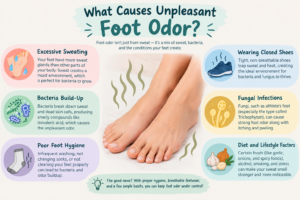
Several factors can contribute to smelly feet:
-
Excessive sweating: Some people naturally sweat more than others.
-
Hot, humid weather: Warm conditions can leave feet damp inside closed shoes.
-
Enclosed footwear: Shoes that don’t allow moisture to escape can encourage odor.
-
Poor drying habits: Moisture can collect between the toes after bathing.
-
Skin infections: Conditions such as athlete’s foot may cause odor along with itching, peeling, or cracked skin.
Understanding the cause helps you choose the right solution instead of simply covering the smell with perfume or foot spray.
6 Foot Hygiene Mistakes That Can Cause Unpleasant Odors
1. Not Washing Your Feet Properly

One of the most common foot hygiene mistakes is assuming that water running over your feet during a shower is enough. It may not remove all the sweat, oil, and dirt that collect on your soles, heels, and around your toes.
When these substances build up, bacteria can contribute to unpleasant odors. This is especially noticeable after a long day spent walking, exercising, or wearing closed shoes.
How to avoid this mistake:
-
Wash your feet daily with lukewarm water and a gentle cleanser.
-
Clean the soles, heels, sides of your feet, and spaces between your toes.
-
Gently clean around your toenails without digging into the skin.
-
Rinse away soap and dry your feet thoroughly.
You don’t need harsh antibacterial products for everyday foot care. A gentle cleanser and consistent washing are usually a sensible starting point. If odor continues despite good hygiene, another cause may need attention.
2. Leaving Your Feet Damp After Bathing

Washing your feet is only half the job. Leaving them damp, particularly between the toes, creates a warm, moist environment that can encourage fungal growth and skin irritation.
This mistake is easy to make when you’re in a hurry. You might dry the tops and soles of your feet but overlook the narrow spaces between your toes.
How to avoid this mistake:
-
Pat your feet dry with a clean towel after bathing.
-
Carefully dry between every toe.
-
Give your feet a little time to air-dry before putting on socks.
-
Change into dry socks if your feet become sweaty during the day.
Avoid rubbing vigorously, especially if your skin is sensitive or already cracked. If the skin between your toes becomes persistently white, soggy, itchy, or starts peeling, consider whether a fungal infection could be involved.
3. Wearing the Same Socks for Too Long

Socks absorb sweat and collect skin debris throughout the day. Rewearing damp or dirty socks can bring that moisture and odor back into your shoes, even when your feet are otherwise clean.
This can be a particular problem during hot weather, exercise, long work shifts, or other activities that make your feet sweat heavily.
How to avoid this mistake:
-
Put on a clean pair of socks every day.
-
Change them sooner if they become damp or heavily sweaty.
-
Choose socks that fit comfortably and help manage moisture.
-
Carry a spare pair if you’re likely to sweat throughout the day.
-
Wash reusable socks regularly and let them dry completely before wearing them again.
Cotton socks work well for some people, but cotton can also retain moisture when heavily wet. If your feet sweat a lot, try moisture-wicking socks and see which material keeps your feet drier. The best choice depends on your activity level, footwear, and personal comfort.
4. Wearing Shoes That Haven’t Dried Completely

Even clean feet can develop an unpleasant smell when placed inside damp shoes. Sweat accumulates in the lining and insoles, and shoes may remain moist long after you take them off.
Putting on the same pair of shoes every day can make the problem worse if they don’t have enough time to dry between uses.
How to avoid this mistake:
-
Alternate between two pairs of everyday shoes when possible.
-
Remove insoles if the manufacturer allows it, and let them dry separately.
-
Air out shoes in a well-ventilated area after wearing them.
-
Follow the manufacturer’s cleaning instructions.
-
Avoid wearing shoes that remain wet or damp inside.
Breathable footwear can help reduce trapped moisture, but the fit matters too. Shoes that are too tight may increase discomfort and contribute to sweaty feet.
If your shoes still smell after cleaning and drying, consider whether the insoles need replacing or whether a persistent skin condition is contributing to the odor.
5. Neglecting Toenails and Rough Skin

Foot hygiene isn’t limited to washing your skin. Dirt and debris can collect around toenails, while thickened or damaged skin may make it harder to keep your feet comfortable and clean.
Long toenails can also trap debris underneath them. However, rough skin or nail changes aren’t automatically signs of poor hygiene; they may have other causes, including fungal infections or repeated pressure from footwear.
How to avoid this mistake:
-
Trim toenails regularly and avoid cutting them too short.
-
Clean gently around the nails.
-
Avoid cutting cuticles or digging sharp tools under the nails.
-
Use a foot file gently on areas of thickened skin, but don’t cut calluses yourself.
-
Apply moisturizer to dry heels and soles, avoiding excess cream between the toes.
If a toenail becomes thick, yellow, painful, or starts separating from the nail bed, seek advice from a healthcare professional rather than trying to remove the affected part yourself.
6. Ignoring Excessive Sweating or Signs of Infection

Sometimes, unpleasant foot odor continues despite regular washing, clean socks, and suitable footwear. In these cases, repeatedly washing your feet or applying fragrance may not solve the underlying problem.
Excessive sweating, known as hyperhidrosis, can make feet persistently damp. Athlete’s foot, a fungal infection, can also cause itching, scaling, peeling, and sometimes an unpleasant smell.
How to avoid this mistake:
-
Notice whether your feet sweat heavily even when you’re resting.
-
Check for itching, peeling, cracks, redness, or other skin changes.
-
Keep your feet clean and dry, and avoid sharing socks or shoes.
-
Ask a pharmacist about suitable foot-care treatments if sweating is the main issue.
-
Seek medical advice if the odor persists or you suspect an infection.
Don’t assume every case of foot odor is caused by fungus. The right treatment depends on the cause, and unnecessary antifungal products may not help if an infection isn’t present.
How to Prevent Smelly Feet: A Simple Daily Routine
Good foot hygiene doesn’t have to be complicated. A few consistent habits can help reduce sweat buildup, limit unpleasant odors, and keep your feet comfortable throughout the day.

Morning: Wash and dry
Wash your feet if needed, dry them carefully, and put on a clean pair of socks. Apply a foot antiperspirant if sweating is a concern and the product is suitable for you.

During the day: Manage moisture
Change damp socks promptly, particularly after exercise or walking in hot weather. If possible, give your feet a break from enclosed shoes.

Evening: Let your shoes dry
Air out your shoes, remove removable insoles when appropriate, and avoid putting damp footwear back on the next day.

Weekly: Check your feet
Inspect your skin and toenails for changes. Trim nails carefully and moisturize dry heels, keeping the spaces between your toes dry.
These habits follow established foot-care guidance from the NHS and Cleveland Cl
Bad Foot Odor Remedies: What Actually Helps?
When you’re looking for ways to get rid of foot odor, start with simple measures that address moisture and hygiene rather than trying every home remedy you find online.
| Remedy | How it may help |
|---|---|
| Daily washing | Removes sweat, dirt, and skin debris. |
| Thorough drying | Reduces lingering moisture between the toes. |
| Moisture-wicking socks | Help move sweat away from the skin. |
| Rotating shoes | Gives footwear more time to dry. |
| Foot powder | May absorb moisture when used as directed. |
| Foot antiperspirant | Helps reduce sweating when appropriately formulated for feet. |
Are home foot soaks necessary?
No. Regular washing and thorough drying are often enough for routine foot care. A foot soak isn’t essential for preventing odor, and prolonged soaking may irritate or soften the skin.
Avoid applying bleach, undiluted vinegar, strong disinfectants, or other harsh household chemicals to your feet. These can irritate or injure the skin. If you have cuts, cracked skin, diabetes, or reduced sensation in your feet, avoid experimenting with foot soaks without professional advice.
If odor persists, focus on identifying the cause instead of adding more remedies to your routine.
When Should You See a Doctor About Smelly Feet?
Occasional foot odor is usually harmless. However, persistent odor can sometimes indicate a condition that needs treatment.
Consider seeking medical advice if:
-
Your feet continue to smell despite consistent hygiene and footwear changes.
-
You have persistent itching, peeling, scaling, or cracks between your toes.
-
Your feet sweat excessively and the problem interferes with daily activities.
-
Your skin develops painful sores or unusual changes.
Seek prompt medical care if your foot becomes swollen, hot, increasingly painful, or starts producing pus, especially if you also have a fever. If you have diabetes, a foot wound or suspected infection deserves particular attention.
Frequently Asked Questions
1. Why do my feet smell so bad even after washing?
Your feet may continue to smell because of excessive sweating, damp socks, odor trapped in shoes, or a skin infection. Make sure you dry between your toes, change damp socks, and allow footwear to dry fully. Persistent odor may need medical assessment.
2. How often should I wash my feet to prevent odor?
Washing your feet at least once a day is a reasonable starting point. You may need to wash them again after heavy sweating or exercise. Dry them thoroughly after each wash.
3. Can sweaty feet cause fungal infections?
Sweat alone doesn’t cause every fungal infection, but warm, damp conditions can encourage fungal growth. Keeping your feet dry and wearing footwear in communal showers and changing rooms can help reduce your risk.
4. Which socks are best for smelly feet?
Choose comfortable socks that manage moisture effectively. Moisture-wicking synthetic fabrics and some wool socks can work well. Cotton may be comfortable for everyday use, but it can hold moisture when soaked with sweat.
5. Does foot powder help with unpleasant odors?
Foot powder may help absorb moisture and keep feet drier. Follow the product instructions and avoid breathing in airborne powder. If you have a rash, broken skin, or persistent odor, consider getting advice about the underlying cause.
6. Can I use deodorant on my feet?
A product specifically designed for feet may help control odor. An antiperspirant is different: it helps reduce sweat production. Use products according to their labels, and stop if irritation develops.
7. How can I keep my feet fresh all day in hot weather?
Wear breathable footwear, start with clean and dry feet, and use moisture-managing socks. Carry spare socks if you sweat heavily, and let shoes air out after wearing them. These steps are particularly useful in hot, humid weather.
8. Is foot odor a sign of athlete’s foot?
Not necessarily. Athlete’s foot may cause odor, but it commonly produces itching, scaling, peeling, or cracked skin. If you suspect a fungal infection, ask a pharmacist or healthcare professional about appropriate treatment.
9. Why do my feet smell worse in closed shoes?
Closed shoes can trap heat and sweat, creating a moist environment where odor-producing bacteria thrive. Shoes that fit poorly or don’t dry between uses may make the problem worse.
10. When should I worry about foot odor?
Seek medical advice if the smell persists despite good hygiene, occurs with a rash or damaged skin, or is accompanied by unusual sweating. Pain, swelling, warmth, pus, or fever may indicate an infection requiring prompt attention.
Key Takeaways
The six foot hygiene mistakes that can cause unpleasant odors are failing to wash your feet properly, leaving them damp, wearing socks for too long, rewearing damp shoes, neglecting toenail and skin care, and ignoring excessive sweating or possible infections.
You don’t need an elaborate foot-care routine to address most everyday odor. Wash your feet gently, dry between your toes, wear clean socks, and let your shoes dry completely. If the smell doesn’t improve or you notice other symptoms, seek appropriate medical advice rather than relying on stronger home remedies.
Healthy feet start with consistent care, not harsh products.