
Ice facial benefits include temporarily reducing facial puffiness and giving your skin a refreshed appearance. Ice facials for glowing skin are a popular at-home beauty trend, but they also come with risks if used incorrectly. Learn how to do an ice facial safely, understand its possible side effects, and avoid common mistakes for healthier-looking skin.
What Is an Ice Facial?
An ice facial is a skincare technique that uses cold water, a cool compress, or ice wrapped in a soft cloth to cool the face. Some people also dip their faces briefly into cold water. The goal is usually to reduce puffiness and create a temporarily refreshed appearance.
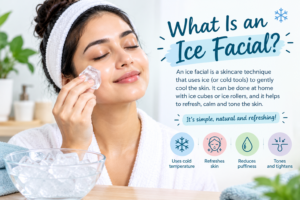
Unlike professional cosmetic procedures, an at-home ice facial doesn’t require special equipment. Still, the method matters. Direct contact with ice can injure the skin, and prolonged exposure to cold isn’t necessary to get a refreshing effect.
How Does an Ice Facial Work?
Cold exposure temporarily narrows small blood vessels near the skin’s surface, a process called vasoconstriction. This can reduce the appearance of mild swelling and redness in some situations.
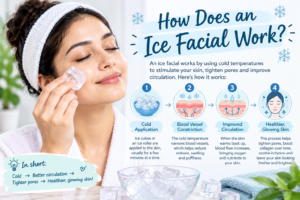
The effect is temporary. Once the skin warms up, blood vessels gradually return toward their usual state. There’s no strong clinical evidence that rubbing ice on the face produces lasting improvements in skin texture, acne, or signs of aging.
Ice Facial Benefits for Glowing Skin
The main attraction of facial icing is that it can make the skin look fresher without a complicated routine. However, the results depend on the cause of puffiness, your skin’s sensitivity, and how you apply the cold.

1. May Reduce Facial Puffiness
One of the most commonly reported benefits of an ice facial is temporary relief from mild puffiness, especially after waking up.
Fluid can collect around the eyes and other parts of the face during sleep. A cool compress may help reduce the appearance of this swelling for a while.
For example, if your eyes look puffy after a night of poor sleep, a clean, cool washcloth may help you look more refreshed. It won’t necessarily help with under-eye bags caused by genetics, changes in facial structure, or other underlying issues.
2. Gives Skin a Temporarily Refreshed Appearance
Cold exposure can temporarily change the appearance of the skin by affecting superficial blood vessels and reducing mild swelling.
This may make your face look less puffy and more awake. Some people describe the effect as a natural glow.
Keep in mind that a refreshed appearance isn’t the same as improved skin health. An ice facial doesn’t provide the lasting hydration, sun protection, or barrier support that a good skincare routine offers.
3. May Temporarily Reduce the Appearance of Redness
Cooling may help some forms of mild, temporary redness. However, it isn’t a reliable treatment for persistent facial redness or inflammatory skin conditions.
People with rosacea should be particularly careful. Cold can trigger flare-ups in some individuals, so an ice facial may make redness, burning, or stinging worse rather than better.
4. May Soothe Some Inflamed Acne Spots
Cold can temporarily numb an area and reduce discomfort associated with swelling. This may make an inflamed acne spot feel less tender.
But ice doesn’t treat the underlying causes of acne. It doesn’t reliably clear clogged pores, remove acne-causing bacteria, or prevent new breakouts.
If you have recurring acne, a suitable acne treatment is more useful than relying on facial icing alone. Avoid squeezing pimples or pressing ice directly onto painful spots.
5. Creates a Quick, Simple Skincare Step
A cool compress can be an easy addition to a morning routine when your face feels puffy or warm. You don’t need expensive products or complicated tools.
The important thing is to keep the process gentle. If your skin feels uncomfortable, starts burning, or becomes increasingly red, stop.
6. May Temporarily Make Pores Look Less Noticeable
Some people feel that their pores look smaller after an ice facial. This effect, if noticeable, is temporary.
Pore visibility depends on factors such as genetics, oil production, clogged pores, and skin elasticity. Ice doesn’t permanently shrink pores or remove the material inside them.
For more consistent improvement in the appearance of pores, gentle cleansing, suitable skincare ingredients, and daily sun protection are more useful long-term strategies.
Does Icing Your Face Really Work?
Yes, facial icing may help with temporary puffiness and a refreshed appearance, but many popular claims go beyond the available evidence. It doesn’t permanently tighten skin, erase wrinkles, eliminate dark spots, or cure acne. Research specifically examining at-home ice facials is limited, so the results shouldn’t be treated as guaranteed.
Here’s a realistic look at common claims.
| Popular claim | What to expect |
|---|---|
| Reduces morning puffiness | May help temporarily |
| Makes skin look refreshed | Possible short-term effect |
| Permanently shrinks pores | Not supported |
| Removes dark spots | Not supported |
| Cures acne | No |
| Erases wrinkles | No established benefit |
| Improves long-term skin health | Not established |
The bottom line is simple: an ice facial can be an occasional cosmetic trick, but it isn’t a substitute for evidence-based skincare.
How to Do an Ice Facial Safely at Home
A gentler alternative to rubbing bare ice directly on your face
You can try a cool compress at home without exposing your skin to extreme cold. This is generally a more cautious approach than moving an ice cube directly across your face.

Step 1: Clean your face and hands
Wash your hands, then gently cleanse your face with a mild cleanser. Remove makeup, sunscreen, and surface dirt before beginning.

Step 2: Prepare a cool compress
Wet a clean, soft washcloth with cool water. Wring out the excess water so it doesn’t drip. You don’t need freezing water to achieve a refreshing sensation.

Step 3: Apply it gently
Rest the cloth lightly against a puffy area for a short period, then lift it away. Never press hard, scrub, or keep the same cold area in prolonged contact with your skin.

Step 4: Pat your skin dry
Use a clean towel and avoid rubbing. If your skin feels dry, apply a gentle moisturizer that suits your skin type.

Step 5: Finish with your regular skincare
In the morning, apply broad-spectrum sunscreen with SPF 30 or higher. Continue using products that already work well for your skin.
These steps are a cautious way to use cooling for comfort, not a clinically proven ice-facial protocol. Avoid direct ice contact, and don’t continue if you experience discomfort. The American Academy of Dermatology also warns that intense cold exposure can cause skin injuries.
How Often Should You Do an Ice Facial?
There isn’t a well-established, research-based frequency for at-home ice facials. You don’t need to do one every day to maintain healthy skin.
If you enjoy the temporary effect, occasional use of a cool compress may be enough. Stop if your skin becomes dry, irritated, unusually red, numb, or painful.
People with sensitive skin or medical conditions affected by cold should avoid experimenting without appropriate medical advice.
Ice Facial Before and After Results: What Can You Expect?
Results from an ice facial are usually subtle and temporary. They depend on your skin type, the reason for puffiness, and the method you use.

Before
Your face may look slightly puffy after sleep, and the under-eye area may appear tired. Skin texture, pores, and pigmentation remain influenced by your usual skin condition.

After
Mild puffiness may look less noticeable, and your face may appear temporarily refreshed. Your pores, acne, wrinkles, and dark spots won’t disappear because of icing.
Don’t judge results from heavily edited social media photos. Lighting, camera angles, makeup, facial expression, and other skincare steps can all affect how the skin looks.
If puffiness is persistent, severe, painful, or accompanied by other symptoms, it’s better to investigate the cause than to keep repeating an ice facial.
Ice Facial Side Effects on Skin
Although a cool compress may be comfortable for many people, applying ice to the face isn’t risk-free. The danger increases when ice is placed directly on the skin, held in one spot, or used on skin that’s already irritated.
1. Redness and Irritation
Cold exposure can cause discomfort, redness, or irritation, especially if your skin is sensitive. If redness persists after you stop, avoid repeating the treatment until your skin has recovered.
2. Ice Burns and Cold Injury
Direct or prolonged ice contact can injure skin tissue. Severe exposure can cause a cold burn or frostbite-like injury, potentially leading to blisters and longer-lasting skin changes.
Don’t assume that numbness means the treatment is working. Numbness can be a warning sign of cold injury.
3. Dryness and Skin Barrier Irritation
Frequent cold exposure may aggravate discomfort in skin that’s already dry or irritated. Repeatedly experimenting with ice, scrubs, acids, and other strong skincare treatments can make it harder to identify what’s causing a reaction.
If your skin feels tight, flaky, or sore, stop facial icing and return to a gentle cleansing and moisturizing routine.
4. Worsening Rosacea Symptoms
Rosacea can make facial skin unusually sensitive. Although some people find gentle cooling soothing, cold exposure can trigger flushing, burning, or other symptoms in others.
If you have rosacea, avoid direct ice application and follow your dermatologist’s guidance about temperature-related triggers.
5. Hives or Other Cold Reactions
Some people have a condition called cold urticaria, which causes itchy welts or swelling after exposure to cold temperatures.
If cold water or cold objects have previously caused a rash, swelling, or dizziness, don’t try an ice facial. Lip or throat swelling, breathing difficulty, or faintness after cold exposure requires urgent medical attention.
Common Ice Facial Mistakes to Avoid
A few simple mistakes can turn a refreshing skincare step into an irritating experience.

1. Rubbing Ice Directly on Your Face
Bare ice can become cold enough to injure skin, particularly with prolonged contact. Use a cool, damp cloth instead of pressing an ice cube against your cheeks or forehead.

2. Keeping Ice in One Spot
Concentrated cold exposure increases the risk of injury. Don’t hold an ice cube against a pimple, under-eye area, or any other spot for an extended period.

3. Ignoring Sensitive Skin
Stinging, burning, and persistent redness are reasons to stop. Don’t push through discomfort in the hope of getting a better glow.

4. Combining Too Many Treatments
Avoid experimenting with icing immediately alongside harsh exfoliation or other irritating treatments. If your skin is already inflamed, let it settle before introducing anything new.

5. Expecting Ice to Cure Acne or Dark Spots
Ice may temporarily ease discomfort or swelling, but it won’t address the underlying causes of persistent acne or pigmentation. Use appropriate skincare treatments instead.

6. Using an Unclean Cloth or Tool
Dirty cloths and facial tools can transfer dirt and microorganisms to the skin. Wash reusable items after use and keep your skincare tools clean.
Is an Ice Facial Good for Acne-Prone Skin?
An ice facial isn’t automatically good or bad for acne-prone skin. The main consideration is whether cooling helps your comfort without causing irritation.
A cool compress may temporarily ease tenderness around an inflamed pimple. However, it won’t unclog pores, prevent all new breakouts, or replace acne medication.
If you have acne-prone skin, keep these points in mind:
-
Choose gentle cleansing products that don’t leave your skin feeling stripped.
-
Avoid rubbing, squeezing, or aggressively massaging active breakouts.
-
Don’t apply bare ice directly to pimples.
-
Use a non-comedogenic moisturizer if your skin needs hydration.
-
Consider evidence-based acne treatments, such as benzoyl peroxide or salicylic acid, when appropriate for your skin.
-
Seek advice from a dermatologist if acne is painful, deep, scarring, or persistent.
If a pimple becomes more painful or the surrounding skin grows increasingly red after icing, stop the treatment. Ice should never be used to delay appropriate care for severe or worsening acne.
Who Should Avoid Ice Facials?
Facial icing isn’t suitable for everyone. Avoid it or seek medical advice before trying it if you have:
-
Rosacea or highly sensitive skin: Cold may trigger redness, burning, or irritation.
-
Cold urticaria: Exposure can cause hives or swelling.
-
Raynaud phenomenon or circulation problems: Cold may trigger symptoms or pose additional risks.
-
Reduced skin sensation or nerve problems: You may not notice early signs of a cold injury.
-
Broken capillaries or fragile facial skin: Ice may aggravate visible redness in some people.
-
Open wounds or irritated skin: Cold exposure can add discomfort and complicate recovery.
-
Recent facial procedures: After peels, laser treatments, surgery, or other procedures, follow the treating professional’s aftercare instructions.
People with diabetes or other conditions that affect sensation or circulation should also check with a healthcare professional before using ice on their skin.
Better Alternatives for a Natural Glow
If your goal is healthy-looking, hydrated skin, you don’t need an ice facial. A simple routine often provides more reliable long-term benefits.
| Skincare habit | How it helps |
|---|---|
| Gentle cleansing | Removes dirt, sweat, excess oil, and makeup |
| Moisturizing | Supports the skin barrier and reduces dryness |
| Daily sunscreen | Helps protect against sun damage and uneven pigmentation |
| Consistent sleep | Supports overall health and may reduce tired-looking eyes |
| Appropriate acne care | Targets breakouts more directly than ice |
| Gentle exfoliation, when suitable | Can help improve some forms of rough texture and clogged pores |
If you enjoy the refreshing feeling of cold water, a cool washcloth is a reasonable alternative to rubbing ice directly onto your face. For lasting changes in acne, pigmentation, or skin texture, choose treatments based on the actual concern rather than relying on a temporary cooling effect.
Frequently Asked Questions About Ice Facials
1. Can I do an ice facial every day?
Daily facial icing isn’t necessary, and there’s no established evidence-based schedule for it. Frequent or prolonged exposure may irritate your skin. If you want a refreshing morning treatment, a cool washcloth is a gentler option.
2. Should I apply ice before or after my skincare routine?
If you’re using a cool compress, apply it after gentle cleansing and before moisturizer. Pat your face dry, then continue with your usual skincare. In the morning, finish with sunscreen. Avoid applying ice directly to your skin at any stage.
3. Can an ice facial remove dark spots?
No. Ice doesn’t remove hyperpigmentation or permanently fade dark spots. Daily sunscreen and suitable ingredients, such as azelaic acid or vitamin C, may help address some forms of uneven pigmentation over time.
4. Does an ice facial help with under-eye bags?
It may temporarily reduce mild puffiness around the eyes. However, it won’t remove under-eye bags caused by genetics, facial structure, or other underlying factors. Use a cool compress gently and never press ice against your eyelids.
5. Is an ice facial good for oily skin?
Cooling may temporarily change how oily or shiny your skin looks, but it doesn’t reliably control oil production over the long term. Gentle cleansing, a suitable moisturizer, and non-comedogenic products are more useful for managing oily skin.
6. Can I use an ice facial to treat pimples?
A cool compress may temporarily soothe a swollen, tender pimple. It doesn’t cure acne or prevent future breakouts. Avoid direct ice contact and use appropriate acne treatments for ongoing concerns.
7. Can an ice facial make my skin glow instantly?
Your face may look temporarily fresher or less puffy after cooling. However, the effect varies from person to person and doesn’t mean your skin has undergone lasting improvement.
8. Is ice water better than a cool washcloth?
Not necessarily. Both provide cooling, but ice water can expose the skin to more intense cold. A clean washcloth dampened with cool water is a gentler choice for most people who simply want to refresh their face.
9. What should I do if my skin becomes red after an ice facial?
Stop immediately and let your skin return to its normal temperature naturally. Avoid rubbing the area or applying more ice. If redness persists, or you develop pain, numbness, blistering, or unusual discoloration, seek medical advice. Severe symptoms need prompt assessment.
10. Can I use an ice facial before applying makeup?
You can use a cool compress before makeup if your skin tolerates it. Pat your face dry and apply moisturizer and sunscreen as appropriate before makeup. Remember that any reduction in puffiness is temporary, and icing isn’t required for a smooth makeup finish.
Final Thoughts
Ice facials for glowing skin can be a simple way to refresh your face and temporarily reduce mild puffiness. However, the benefits are limited, and results vary. Ice won’t permanently shrink pores, eliminate acne, or erase dark spots and wrinkles.
If you want to try facial cooling, choose a clean, cool washcloth instead of rubbing bare ice directly onto your skin. Keep the process gentle, stop if irritation develops, and avoid cold treatments if you have a condition that makes your skin sensitive to cold.
For a healthier-looking complexion, focus on the basics: gentle cleansing, regular moisturizing, daily sunscreen, and skincare products suited to your needs. These habits are more important than any quick beauty trend.