
Have you ever used the same shampoo, conditioner, serum, or styling product for months and suddenly wondered, “Why isn’t this working anymore?” In many cases, the product hasn’t necessarily stopped working. Changes in your hair, scalp, routine, product buildup, environmental conditions, or the way you use the product can make the results feel very different.
The good news is that you usually don’t need to replace your entire hair-care routine. Understanding why hair products stop working can help you identify the problem and make a smarter adjustment.
- Hair products don’t usually become permanently ineffective simply because you’ve used them for a long time.
- Product buildup on hair can prevent shampoo, conditioner, and styling products from performing as expected.
- Hair and scalp needs can change because of weather, chemical treatments, heat styling, age, hormones, and changes in routine.
- Using too much product can sometimes create the very problem you’re trying to solve.
- Shampoo and conditioner may need to be adjusted when your scalp or hair condition changes.
- A clarifying shampoo can help with some types of buildup, but it shouldn’t necessarily replace your regular shampoo.
- If sudden or significant hair changes persist, especially with scalp symptoms or unusual hair loss, professional advice may be appropriate.
Why Do Hair Products Suddenly Stop Working?
Hair products may seem less effective because of product buildup, changes in your hair or scalp, environmental conditions, overuse, or a mismatch between your current needs and your routine. Hair isn’t static. Its texture, porosity, oiliness, moisture balance, and condition can change, so a routine that worked well previously may eventually need adjustment.

Let’s look at the five most common reasons.
1. You Have Product Buildup on Your Hair
One of the most common explanations for hair products not working anymore is buildup.
Hair products can leave behind ingredients that accumulate on the hair, particularly when you regularly use conditioners, oils, leave-in products, creams, gels, mousses, dry shampoo, or other styling products.
When residue accumulates, your hair may feel coated instead of clean and responsive.
What Does Hair Product Buildup Look Like?
Common signs include:
- Hair feels heavy or coated
- Hair looks dull instead of shiny
- Roots become greasy quickly
- Hair feels waxy or sticky
- Products seem to sit on the surface
- Conditioner doesn’t seem to absorb well
- Hair becomes difficult to style
- Your usual shampoo doesn’t seem to clean as effectively
- Hair loses its natural movement
The important point is that buildup doesn’t always mean your products are bad. The issue may simply be that there’s too much residue on the hair.
What Causes Hair Buildup?
Several things can contribute to buildup:
- Frequent use of styling products
- Heavy leave-in conditioners
- Hair oils and butters
- Silicone-containing products
- Dry shampoo
- Inadequate cleansing
- Hard-water minerals
- Layering several products together
The exact cause varies depending on your routine and hair type.
How to Remove Hair Product Buildup
If you suspect buildup, consider temporarily simplifying your routine.
A clarifying shampoo for product buildup may help remove certain types of residue more thoroughly than a gentle everyday cleanser. However, clarifying products aren’t automatically better for everyone or for every wash.
After clarifying, your hair may benefit from a suitable conditioner, particularly if it feels dry.
Tip: Don’t assume every rough or greasy hair problem is buildup. Dryness, damage, scalp conditions, and unsuitable products can produce similar symptoms.
2. Your Hair Has Changed Over Time
Your hair isn’t exactly the same throughout your life.
This is one reason a product that worked beautifully several months or years ago may no longer give you the same results.
Why Does Hair Change?
Your hair and scalp can be affected by:
- Age
- Hormonal changes
- Pregnancy and postpartum changes
- Menopause
- Hair coloring
- Bleaching
- Chemical treatments
- Heat styling
- Changes in washing frequency
- Weather
- Water quality
- Changes in diet or general health
- New medications or treatments
Not every change means something is wrong. Sometimes your hair simply has different needs now.
For example, someone who previously had relatively balanced hair may start experiencing drier lengths after repeated coloring or heat styling. Their old shampoo and conditioner may suddenly feel inadequate.
Hair Changes Can Affect Product Performance
Imagine you’ve been using a lightweight conditioner for years.
It worked perfectly when your hair was relatively healthy and untreated.
After repeated coloring, however, your hair may become more porous and prone to dryness. The same conditioner may no longer provide the level of conditioning you want.
The conditioner didn’t necessarily “stop working.”
Your hair changed.
That distinction matters because buying more and more of the same type of product may not solve the problem.
3. Your Scalp or Hair Needs Have Changed
Sometimes the problem isn’t the hair itself—it’s the scalp.
Your scalp produces natural oils, and the amount of oiliness can vary. Seasonal weather, lifestyle, washing habits, and other factors can affect how your scalp feels.
This can make you wonder, “Why does my shampoo stop working?”
Signs Your Shampoo May No Longer Suit Your Needs
You might notice:
- Your scalp becomes oily much faster
- Your scalp feels dry or tight
- Your hair looks greasy shortly after washing
- Your scalp feels uncomfortable
- Your hair feels excessively dry after shampooing
- You have more visible flakes than usual
- Your hair doesn’t feel clean after washing
These symptoms don’t necessarily mean your shampoo has become ineffective.
Instead, the shampoo may no longer match your current scalp needs.
Why Conditioner May Stop Working
The same principle applies when you ask, “Why does my conditioner stop working?”
Conditioner is designed to improve the feel and manageability of the hair, but your needs can change.
For example:
Before:
Your hair is healthy and relatively smooth → lightweight conditioner works well.
Later:
Your hair becomes dry or chemically treated → the same conditioner may feel insufficient.
Or the opposite can happen.
Before:
Your hair is very dry → rich conditioner works well.
Later:
Your hair becomes less dry or you’re using several leave-in products → the same conditioner may make it feel heavy.
Your routine should respond to your hair’s current condition rather than staying exactly the same forever.
4. You’re Using Too Much Product
More product doesn’t always mean better results.
This is particularly easy to do with products such as:
- Hair oils
- Leave-in conditioners
- Styling creams
- Serums
- Hair masks
- Curl creams
- Gels
- Dry shampoo
When you like a product, it can be tempting to apply more when the results aren’t as noticeable.
Unfortunately, this can create a cycle:
Product seems less effective → you use more → residue increases → hair becomes heavy → product works even less effectively.
That’s one possible reason hair products suddenly seem to stop working.
How Much Product Should You Use?
There’s no universal amount because it depends on:
- Hair length
- Hair density
- Hair thickness
- Hair texture
- Product concentration
- Whether your hair is wet or dry
- The purpose of the product
Start with a small amount and add more only when necessary.
For many leave-in and styling products, applying too much can make fine hair look flat or greasy. Thicker or highly textured hair may tolerate or require more product.
Don’t Copy Someone Else’s Hair Routine Exactly
A product that requires a large amount for one person’s thick, long hair may be far too much for someone with fine, shorter hair.
Your hair’s needs should determine the amount—not someone else’s routine.
5. Your Environment Has Changed
Sometimes your hair-care products haven’t changed at all.
Your environment has.
Weather and water conditions can significantly affect how your hair feels and behaves.
Humidity
High humidity can make some hair types more prone to frizz and changes in texture.
A routine that works beautifully during a dry season may produce different results during humid weather.
Dry Weather
Cold or dry conditions can make hair feel rougher or less flexible, particularly if your routine isn’t providing enough conditioning.
Hard Water
Water quality can also matter.
Hard water contains higher levels of minerals such as calcium and magnesium. Mineral deposits can accumulate on surfaces, including hair, and may affect how clean or manageable hair feels.
If you’ve moved to a different home or city and your hair suddenly behaves differently, water quality is one factor worth considering.
Seasonal Changes
Your routine may need small adjustments throughout the year.
For example:
Humid season:
You may focus more on lightweight products and managing frizz.
Dry season:
You may need more attention to conditioning and minimizing unnecessary heat.
This doesn’t mean you need an entirely new hair-care routine every season. Small changes may be enough.
How to Tell Why Your Hair Products Aren’t Working
Before replacing everything in your bathroom, look at what has actually changed.

Ask yourself these questions:
1. Does my hair feel coated?
If yes, product buildup could be involved.
2. Has my hair been colored, bleached, or chemically treated?
If yes, its condition may have changed.
3. Is my scalp oilier or drier than before?
Your cleansing routine may no longer match your scalp.
4. Have I started using more products?
Layering several products can contribute to residue and heaviness.
5. Has the weather changed?
Humidity and dry conditions can alter how products perform.
6. Has my water source changed?
A move can mean different water chemistry.
7. Am I applying more product because the results aren’t obvious?
If so, you may be creating additional buildup.
This simple check can help you identify the most likely cause before making major changes.
How to Reset Your Hair Care Routine
If your routine isn’t giving you the results it once did, don’t change everything at once.
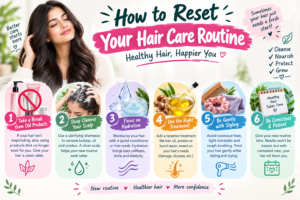
A gradual reset is easier to understand.
Step 1: Simplify Your Routine
For a short period, use only the essentials:
- Shampoo
- Conditioner
- One necessary leave-in or styling product
This makes it easier to see how your hair responds.
Step 2: Examine Your Scalp
Ask whether your scalp is:
- Oily
- Dry
- Flaky
- Comfortable
- Itchy
- Becoming greasy quickly
Your scalp condition can help determine whether your current cleansing routine makes sense.
Step 3: Look for Buildup
If your hair feels coated, heavy, sticky, or unusually dull, buildup may be contributing to the problem.
Depending on your routine, an occasional clarifying wash may be worth considering.
Step 4: Check Your Product Amounts
Try using less rather than more.
Pay particular attention to oils, leave-ins, styling creams, and masks.
Step 5: Consider Recent Hair Changes
Think about anything you’ve changed recently:
- Hair color
- Heat styling
- New products
- Washing frequency
- Hair length
- Water source
- Weather
- Styling habits
Even a small change can affect how your hair behaves.
Step 6: Reintroduce Products Gradually
If you’ve simplified your routine, add products back one at a time.
This helps you identify which products are genuinely useful and which may be unnecessary.
Clarifying Shampoo vs Regular Shampoo
A common mistake is assuming that everyone needs frequent clarifying.
That’s not necessarily true.
Regular Shampoo
Regular shampoos are generally designed for routine cleansing and can be used according to your hair and scalp needs.
Clarifying Shampoo
Clarifying shampoos are typically formulated to provide a stronger cleansing effect and can be useful when residue or buildup is a concern.
However, using a stronger cleanser too frequently may leave some hair types feeling dry or stripped.
The right frequency depends on your hair, scalp, styling routine, and the specific product.
Bottom line: If your hair feels coated, a clarifying wash may help. If your hair is simply dry or damaged, more cleansing isn’t necessarily the answer.
Common Mistakes That Make Hair Products Seem Ineffective
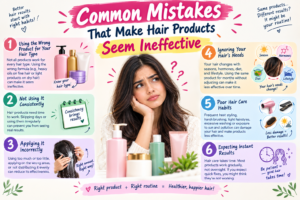
Using Too Many Products
Layering multiple products can make it difficult to determine what your hair actually needs.
Changing Products Too Quickly
If you change shampoo, conditioner, mask, serum, and styling products at the same time, you won’t know what caused the improvement—or the problem.
Applying Products to the Wrong Area
Some products are designed mainly for the lengths and ends rather than the scalp.
Always follow the product’s intended use.
Using Excessive Amounts
More isn’t automatically better.
Start small and adjust according to your hair.
Ignoring the Scalp
Healthy-looking hair begins with paying attention to the scalp as well as the lengths.
Treating Every Problem as Buildup
Not every rough, dry, greasy, or dull hair problem is caused by buildup.
Sometimes the issue is damage, dryness, environmental exposure, or an unsuitable product.
What If Your Hair Still Doesn’t Respond?
If you’ve simplified your routine, considered buildup, adjusted product amounts, and accounted for environmental changes but your hair still seems significantly different, there may be another reason.
Pay attention to persistent symptoms such as:
- Sudden or substantial hair loss
- Noticeable thinning
- Persistent scalp itching
- Pain or burning
- Significant flaking
- Sores or inflammation
- Major changes in hair texture without an obvious explanation
These aren’t problems that should automatically be blamed on shampoo or conditioner.
A dermatologist or other qualified healthcare professional can help determine whether an underlying scalp or health issue needs attention.
Frequently Asked Questions
1. Why do hair products stop working?
Hair products may seem less effective because of buildup, changes in hair condition, scalp changes, product overuse, weather, water quality, or changes in your routine. The product itself may not have suddenly become ineffective.
2. Can hair get used to shampoo?
Hair doesn’t become “immune” to shampoo in the way people sometimes suggest. However, your hair and scalp can change, and buildup or environmental factors can alter how your shampoo performs.
3. Why does my shampoo stop working after a while?
If shampoo suddenly seems less effective, consider buildup, changes in scalp oiliness, product layering, water quality, or changes in your hair-care routine.
4. Why is my conditioner not working anymore?
Your hair may have become drier, more damaged, more porous, or simply different in texture or condition. Product buildup can also interfere with how conditioner feels on the hair.
5. How do I know if I have product buildup?
Hair that feels coated, heavy, waxy, sticky, dull, or unusually difficult to manage may have buildup. However, these symptoms can have other causes too.
6. Does clarifying shampoo remove product buildup?
A clarifying shampoo can help remove certain types of product residue. Its effectiveness depends on the type of buildup and the formulation of the shampoo.
7. How often should I use clarifying shampoo?
There isn’t one correct frequency for everyone. It depends on your hair type, scalp, styling routine, water quality, and the specific clarifying product. Using it too often may leave some hair feeling dry.
8. Can weather make hair products stop working?
Yes. Humidity, dry air, temperature, and seasonal changes can affect hair texture and how products behave on the hair.
9. Can hard water affect hair?
Hard water contains minerals that can deposit on surfaces, including hair. Some people notice changes in hair feel, manageability, or appearance after prolonged exposure.
10. Should I replace all my hair products if they stop working?
Usually, there’s no need to replace everything immediately. First investigate buildup, product quantity, changes in your hair or scalp, environmental conditions, and recent changes to your routine.
Key Takeaways
When your favorite hair products suddenly stop giving you the same results, don’t assume they’re automatically bad.
The most common explanations are:
- Product buildup is interfering with your routine.
- Your hair has changed over time.
- Your scalp or hair has different needs now.
- You’re using too much product.
- Your environment has changed.
The best approach is to identify the change before buying or adding more products. Simplify your routine, check for buildup, adjust product amounts, and pay attention to your hair and scalp’s current condition.
Final Thoughts
Hair care isn’t a one-time formula. What works for your hair today may need adjustment later, and that’s completely normal.
Instead of constantly searching for a new shampoo or conditioner whenever something stops working, take a step back and ask why your hair has changed. A buildup issue may need better cleansing. Dry or damaged hair may need more conditioning. An oily scalp may need a different cleansing approach. Weather or water changes may also explain the difference.
The goal isn’t to use more products. It’s to understand what your hair actually needs right now.