
Onion juice for hair growth is one of the most popular natural remedies for hair fall and thinning. But does it actually work? The short answer is possibly, but the evidence is limited. One small clinical study found that topical onion juice helped hair regrow in people with patchy alopecia areata, but there isn’t strong evidence showing that onion juice can treat every type of hair loss or make healthy hair grow faster.

If you’re thinking about trying onion juice for your hair, it’s worth understanding what the research actually shows, what it may help with, how to use it carefully, and when hair loss needs medical attention.
Key Takeaways
- Onion juice has some clinical evidence for patchy alopecia areata, but the evidence base is small.
- It hasn’t been proven to treat all common causes of hair loss.
- The best-known clinical study was published in 2002 and involved only 38 people.
- Onion juice can irritate the scalp and may cause burning, itching, redness, or dermatitis.
- A patch test is sensible before applying it more widely.
- Sudden, severe, or persistent hair loss should be evaluated to identify the underlying cause.
- Onion juice shouldn’t replace a dermatologist’s treatment when a medical hair-loss condition is present.
What Is Onion Juice for Hair Growth?
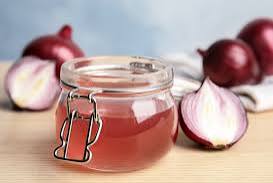
Onion juice is a homemade topical treatment made by extracting juice from raw onions and applying it directly to the scalp. It’s commonly promoted as a natural way to reduce hair fall, support the scalp, and encourage hair regrowth.
The interest in onion juice comes partly from its sulfur-containing compounds and partly from a small clinical study involving people with alopecia areata, an autoimmune condition that can cause smooth, round or oval patches of hair loss.

However, there’s an important distinction between hair regrowth in patchy alopecia areata and ordinary hair shedding or thinning.
A remedy that shows potential in one specific type of hair loss doesn’t automatically work for genetic hair thinning, stress-related shedding, nutritional deficiencies, thyroid problems, traction alopecia, or scalp disorders.
Does Onion Juice Really Help Hair Growth?
Onion juice may help hair regrow in some people with patchy alopecia areata, but there isn’t enough evidence to call it a proven treatment for general hair growth. The strongest human evidence comes from a small controlled study published in The Journal of Dermatology, while broader reviews still point out that natural remedies for hair loss need larger, better-designed studies.
That’s why claims such as “onion juice will make your hair grow faster” are too broad.
A more accurate statement is:
Onion juice has shown potential for hair regrowth in patchy alopecia areata, but its effectiveness for other forms of hair loss remains uncertain.
What Does the Research Say?
The most frequently cited study on onion juice and hair growth was published in 2002.
Researchers studied 38 people with patchy alopecia areata. Twenty-three participants applied crude onion juice, while 15 people in the control group applied tap water. Both groups were instructed to apply their assigned treatment twice a day for two months.

The researchers reported:
- Hair regrowth was observed in 17 of 23 people in the onion-juice group after four weeks.
- By six weeks, regrowth was observed in 20 of 23 people.
- The tap-water control group had visible regrowth in only two people by eight weeks.
- The study reported a statistically significant difference between the groups.
Those findings are interesting, but they need context.
Why the study doesn’t prove onion juice works for everyone
The study was:
- Small
- Focused specifically on patchy alopecia areata
- Conducted more than two decades ago
- Based on a relatively short treatment period
A 2025 review of herbal remedies for hair loss also noted that research on natural treatments often has limitations such as small sample sizes, short treatment periods, and insufficient long-term follow-up. The authors called for better-designed randomized trials.
So, while the study is worth knowing about, it shouldn’t be used as proof that onion juice treats every kind of hair loss.
What Is Alopecia Areata?
Alopecia areata is an autoimmune form of hair loss that commonly causes sudden, smooth, round or oval bald patches. It occurs when the immune system attacks hair follicles. Hair can regrow on its own in some people, while others need medical treatment.

Common signs can include:
- A sudden bald patch
- Smooth skin where hair has fallen out
- Round or oval areas of hair loss
- Itching, tingling, or burning in some cases
- Changes to the nails in some people
- Loss of eyebrow or eyelash hair in more extensive cases
If you’re experiencing this type of hair loss, don’t assume that ordinary hair fall is the cause.
A dermatologist can help determine whether the pattern is actually alopecia areata or another condition.
How Might Onion Juice Help Hair?
The exact reason onion juice appeared to help in the small alopecia areata study isn’t fully established.

Onions contain sulfur-containing compounds and other plant compounds that have attracted scientific interest. However, it’s important not to turn these observations into claims that have not been proven in human clinical studies.
1. Sulfur-containing compounds
Sulfur is associated with the structure of keratin, the protein that makes up much of the hair shaft.
This has led to theories that onion-derived compounds could have a role in supporting hair or scalp health. However, simply containing sulfur doesn’t prove that applying onion juice to the scalp will increase hair growth.
2. Possible effects on the scalp environment
Researchers have proposed several possible biological explanations for onion juice’s effects, but these mechanisms remain less certain than the clinical observation from the small alopecia areata study.
It’s therefore better to say that onion juice has potential, rather than claiming that its mechanism of action has been definitively established.
3. The evidence is condition-specific
This is perhaps the most important point.
The clinical evidence is specifically connected to patchy alopecia areata. It does not establish onion juice as a treatment for:
- Female pattern hair loss
- Male pattern hair loss
- Telogen effluvium
- Hair breakage
- Traction alopecia
- Hair loss caused by nutritional deficiencies
- Thyroid-related hair loss
- Scarring alopecia
Different causes require different approaches.
Benefits of Onion Juice for Hair
The potential benefits of onion juice should be described carefully because research is limited.
1. It May Support Hair Regrowth in Patchy Alopecia Areata
This is the most important potential benefit because it’s the area with direct human clinical evidence.
The 2002 controlled study reported significantly greater regrowth among participants using onion juice than those using tap water.
That doesn’t mean everyone with alopecia areata will respond, but it provides a reason for continued scientific interest.
2. It’s Easy to Prepare
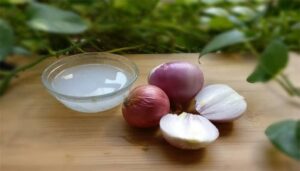
Onion juice can be prepared at home using fresh onions and basic kitchen equipment.
That makes it inexpensive and accessible compared with many specialized hair treatments.
However, easy to prepare doesn’t mean risk-free.
3. It May Be Interesting as a Complementary Home Practice
For someone without a diagnosed scalp disorder, onion juice may be considered a home-care experiment if their skin tolerates it.
But it should remain a complementary approach, not a substitute for diagnosing unexplained hair loss.
How to Make Onion Juice for Hair
If you decide to try onion juice, keeping the preparation simple is best.

What you’ll need
- 1 small fresh onion
- A clean blender or grater
- A clean strainer or cheesecloth
- A small clean container
Step 1: Peel the onion
Remove the outer skin and wash the onion.
Step 2: Chop it
Cut the onion into small pieces.
Step 3: Extract the juice
Blend or grate the onion, then strain the pulp through clean cheesecloth or a fine strainer.
Step 4: Use it fresh
Freshly prepared juice is preferable to keeping homemade onion juice around for long periods.
If you prepare more than you need, store it hygienically and avoid using anything that looks or smells spoiled.
How to Apply Onion Juice to the Scalp
There isn’t a universally established medical dosing schedule for onion juice because it isn’t an approved standardized hair-loss treatment.
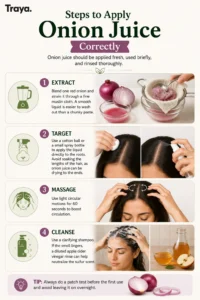
The 2002 alopecia areata study used crude onion juice twice daily for two months, but that study should not be interpreted as a universal recommendation for everyone.
If you choose to experiment with it:
- Start with a small amount.
- Perform a patch test first.
- Apply it only to intact scalp skin.
- Avoid the eyes.
- Stop if you experience significant burning, redness, itching, or swelling.
- Wash the scalp if irritation develops.
More isn’t necessarily better. Applying onion juice repeatedly to an irritated scalp can create more problems than benefits.
Should You Dilute Onion Juice?
There’s no standardized, evidence-based dilution ratio established for treating hair loss.
Some online hair-care routines recommend mixing onion juice with water or other ingredients, but these recipes haven’t been adequately tested in clinical trials.
If your scalp is sensitive, using concentrated raw onion juice may be particularly uncomfortable.
It’s also worth remembering that adding ingredients such as essential oils can introduce additional risks of irritation or allergic reactions.
Onion Juice Side Effects
Natural remedies aren’t automatically gentle.
Raw onion juice can irritate the skin. Some people may experience:
- Burning
- Stinging
- Redness
- Itching
- Dryness
- Rash
- Contact dermatitis
It can also cause significant eye irritation if it gets into the eyes.
What should you do if onion juice burns your scalp?
Stop using it and rinse your scalp thoroughly with water.
If the reaction is severe, persistent, or accompanied by significant swelling or a widespread rash, seek medical advice.
Who Should Avoid Onion Juice?
Be particularly cautious if you have:
- A known onion allergy
- A very sensitive scalp
- Broken or scratched skin
- An active scalp rash
- Significant scalp inflammation
- A history of contact dermatitis
If you already have a diagnosed scalp condition, treating the underlying condition is usually more important than adding a home remedy.
How to Patch Test Onion Juice
A patch test can help you find out whether your skin reacts badly before you apply onion juice to a larger area.
Simple approach
- Apply a small amount to a small area of intact skin.
- Leave it alone and monitor the area.
- Watch for redness, itching, burning, swelling, or rash.
- Don’t use it on your scalp if you develop a reaction.
A patch test doesn’t guarantee that you’ll never react when using a substance more widely, but it can provide an additional safety check.
Common Onion Juice Hair-Care Mistakes
1. Applying it to an irritated scalp
If your scalp is already itchy, inflamed, or scratched, adding a potentially irritating substance isn’t a good idea.
2. Leaving it on despite burning
A strong burning sensation isn’t a sign that the treatment is “working.”
If your scalp is reacting, wash it off.
3. Using it every day without monitoring your skin
Frequent exposure can be problematic if your scalp doesn’t tolerate the ingredient.
4. Assuming all hair loss is the same
Hair loss can have many causes. The American Academy of Dermatology notes that identifying the cause is an important part of effective treatment.
5. Expecting overnight results
Hair growth is a gradual biological process.
Even when a treatment is effective, visible improvement generally takes time.
6. Replacing medical treatment with onion juice
This is one of the biggest mistakes.
If you have significant or persistent hair loss, delaying diagnosis can mean delaying appropriate treatment.
Onion Juice vs. Different Types of Hair Loss
| Type of Hair Loss | Is Onion Juice Proven to Work? |
|---|---|
| Patchy alopecia areata | Limited evidence of potential benefit |
| Female pattern hair loss | Not established |
| Male pattern hair loss | Not established |
| Stress-related shedding | Not established |
| Hair breakage | Not established as a treatment |
| Traction alopecia | Not established |
| Nutritional-deficiency-related hair loss | Does not address the underlying deficiency |
| Scarring alopecia | Not an appropriate substitute for medical care |
The key takeaway is simple: the cause of hair loss matters more than the popularity of a home remedy.
When Should You See a Dermatologist?
Consider professional evaluation if you notice:
- Sudden hair loss
- Round or oval bald patches
- Rapidly increasing thinning
- Loss of eyebrows or eyelashes
- Scalp pain or significant itching
- Redness, scaling, or inflammation
- Hair loss that continues for weeks or months
- Visible scalp scarring
- Hair loss after starting a medication
- Hair loss accompanied by other unexplained symptoms
The American Academy of Dermatology recommends finding the cause of hair loss because different conditions require different treatments.
For alopecia areata specifically, dermatologists can evaluate the pattern of hair loss and discuss appropriate treatment options.
What Are the Medical Treatments for Alopecia Areata?
If your hair loss is actually caused by alopecia areata, onion juice shouldn’t be your only consideration.
Depending on the amount and pattern of hair loss, dermatologists may use treatments such as:
- Corticosteroids
- Minoxidil in certain treatment plans
- Contact immunotherapy
- JAK inhibitors for appropriate patients with more extensive disease
- Other treatments depending on the individual’s situation
The appropriate treatment depends on factors such as age, amount of hair loss, duration, location, and disease severity.
How to Build a Better Hair-Growth Routine
If your goal is healthier-looking hair, don’t focus on one ingredient alone.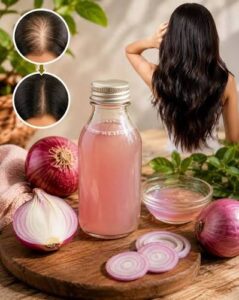
A practical routine can include:
1. Be gentle with your scalp
Avoid excessive scratching and harsh treatments.
2. Avoid tight hairstyles
Repeated tension from tight ponytails, braids, or similar styles can contribute to hair loss.
3. Limit unnecessary heat
Frequent high heat can contribute to hair damage and breakage.
4. Handle wet hair carefully
Hair is more vulnerable to mechanical damage when wet, so avoid aggressive brushing or pulling.
5. Pay attention to your overall health
Adequate nutrition and addressing underlying health problems are more important than relying on a single DIY treatment.
6. Investigate persistent hair loss
If shedding or thinning continues, finding the cause is more useful than repeatedly switching between home remedies.
Is Onion Juice Better Than Regular Hair Oil?
Not necessarily.
Hair oils and onion juice serve different purposes, and neither should automatically be considered a treatment for every form of hair loss.
Oils can help with lubrication, softness, and reducing friction-related hair damage. Onion juice has limited clinical evidence related specifically to patchy alopecia areata.
So the better choice depends on what you’re trying to address.
If your main concern is dry, rough hair, improving conditioning and reducing mechanical damage may be more useful.
If you’re developing bald patches, the priority should be determining the cause.
Can Onion Juice Make Hair Grow Faster?
There isn’t enough evidence to say that onion juice makes normal hair grow faster. The strongest clinical evidence relates to regrowth in patchy alopecia areata, not an increase in the normal growth rate of healthy scalp hair.
This distinction is important because “hair growth” can mean several different things:
- Growing new hair in a bald area
- Reducing shedding
- Making existing hair look thicker
- Increasing the speed of the hair-growth cycle
- Preventing breakage
A study showing regrowth in one condition doesn’t prove all of these effects.
How Long Does Onion Juice Take to Work?
There is no reliable universal timeline.
In the 2002 study of patchy alopecia areata, some participants showed regrowth within several weeks, with the study reporting visible regrowth in 73.9% of the onion-juice group at four weeks and 86.9% at six weeks.
However, those results shouldn’t be used to promise that everyone will see growth within four or six weeks.
Your underlying condition, severity, treatment approach, and individual biology can all affect the outcome.
Frequently Asked Questions
Does onion juice really work for hair growth?
Onion juice may help some people with patchy alopecia areata, but evidence is limited. A small controlled study found greater hair regrowth with onion juice than tap water, but this doesn’t prove that onion juice treats all forms of hair loss.
Can onion juice stop hair fall?
There isn’t enough evidence to say that onion juice can stop general hair shedding. Hair fall has many possible causes, so identifying the underlying problem is more important than relying on one home remedy.
Can onion juice regrow bald patches?
It may help with some cases of patchy alopecia areata. The most frequently cited study found significant regrowth among participants with this specific condition.
How often should you use onion juice on your hair?
There isn’t a universally established medical schedule for onion juice. The 2002 study used it twice daily for two months, but that was within a specific research protocol for patchy alopecia areata and shouldn’t automatically be treated as a general recommendation.
Can I leave onion juice on my scalp overnight?
There’s no strong clinical evidence showing that leaving onion juice overnight provides additional hair-growth benefits. Longer exposure may increase irritation, particularly if your scalp is sensitive.
Can onion juice damage hair?
The bigger concern is usually scalp irritation rather than proven direct damage to the hair shaft. Burning, itching, redness, or dermatitis can occur, so stop using it if your scalp reacts.
Is onion juice good for a dry scalp?
Not necessarily. If your scalp is dry, irritated, or inflamed, raw onion juice may make discomfort worse. Treating the cause of the scalp problem is a better approach.
Can onion juice cure alopecia areata?
No. Onion juice hasn’t been established as a cure for alopecia areata. The condition can behave unpredictably, and dermatologists have several evidence-based treatment options depending on the severity and pattern of hair loss.
Is onion juice safe for everyone?
No. Some people can develop irritation or allergic reactions. People with sensitive, damaged, or inflamed scalp skin should be especially cautious.
Should I use onion juice instead of medical hair-loss treatment?
No. If you have significant, sudden, patchy, or persistent hair loss, don’t delay professional evaluation. The right treatment depends on the underlying cause.
Key Takeaways
- Onion juice for hair growth is promising but not proven as a universal hair-loss treatment.
- The strongest human evidence comes from a small 2002 study involving people with patchy alopecia areata.
- That study reported substantially more hair regrowth in the onion-juice group than the tap-water control group.
- The findings don’t prove that onion juice treats genetic hair loss, stress-related shedding, nutritional hair loss, or other conditions.
- Raw onion juice can irritate the scalp.
- Patch testing and cautious use are important if you decide to try it.
- Persistent or unusual hair loss deserves proper evaluation.
Final Thoughts
So, does onion juice really work for hair growth? The most honest answer is maybe—but only limited evidence supports it, and the evidence is specific to patchy alopecia areata rather than general hair growth.
The popular claim that onion juice is a universal solution for hair fall goes beyond what current research can support. A small controlled study found encouraging results, but broader evidence remains limited, and more rigorous research is needed.
If you enjoy natural hair-care remedies, onion juice can be approached cautiously as an optional home practice. But if you’re seeing sudden bald patches, rapidly increasing shedding, scalp inflammation, or ongoing thinning, finding the cause should come first. That’s the step most likely to lead you toward an effective solution.