
Monsoon weather can make skin and hair harder to manage because humidity, sweat, rainwater, and frequent dampness can affect the skin barrier, increase oiliness, and leave hair frizzy or difficult to style. Monsoon Beauty Tips can help you manage these seasonal changes with simple habits. A good monsoon beauty routine focuses on gentle cleansing, proper hydration, sun protection, scalp care, and keeping skin and hair dry when possible.
Why Do Monsoon Beauty Tips Matter for Skin and Hair?
The rainy season brings high humidity and frequent changes between wet outdoor conditions and indoor air-conditioning. Sweat and excess oil can remain on the skin, while wet hair and a damp scalp may become uncomfortable.
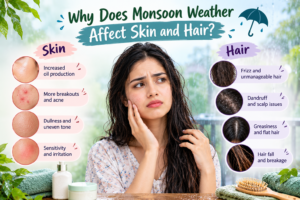
For some people, this can contribute to:
- Increased facial oiliness
- Clogged pores and breakouts
- Sweat-related irritation
- Frizzy or unruly hair
- Greasy scalp
- Dandruff or scalp discomfort
- Fungal skin infections in persistently damp areas
- Dryness from over-cleansing or harsh products
The answer isn’t to completely change your beauty routine. Instead, adjust a few habits to suit the weather.
Key Monsoon Beauty Tips for Healthy Skin and Hair
If you want a simple routine, focus on these habits:
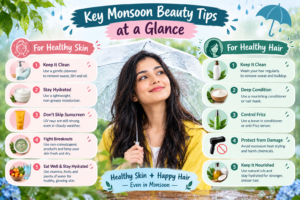
- Cleanse your face gently, especially after heavy sweating.
- Avoid scrubbing your skin to remove excess oil.
- Use a lightweight, non-comedogenic moisturizer if your skin needs hydration.
- Continue using broad-spectrum sunscreen during the day.
- Keep sweaty areas clean and dry.
- Change out of wet or damp clothes as soon as practical.
- Avoid staying in wet shoes for long periods.
- Wash your scalp regularly according to your hair type.
- Dry your hair and scalp properly after getting caught in the rain.
- Handle wet hair gently because it is more vulnerable to breakage.
- Avoid sharing towels, combs, or other personal items.
- See a healthcare professional if you develop a persistent, unusual, or worsening rash.
1. Follow a Simple Monsoon Skincare Routine
A rainy-season skincare routine doesn’t need to contain many products. The goal is to keep the skin clean, comfortable, hydrated, and protected without stripping its natural barrier.
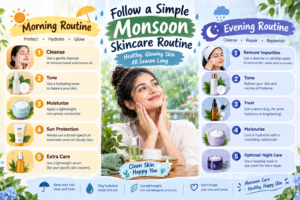
Morning
A basic morning routine can include:
- Gentle cleanser
- Lightweight moisturizer
- Broad-spectrum sunscreen
If your skin becomes very oily during the monsoon, you may prefer products labeled oil-free or non-comedogenic. These labels indicate that the product is designed to be less likely to clog pores.
Evening
At night:
- Remove makeup and sunscreen.
- Cleanse gently.
- Apply your usual treatment products if appropriate for your skin.
- Moisturize.
You don’t need to add multiple new products simply because the season has changed.
2. Cleanse Your Skin Without Overwashing
One of the most common monsoon skincare mistakes is washing the face repeatedly whenever it feels oily.
That can backfire.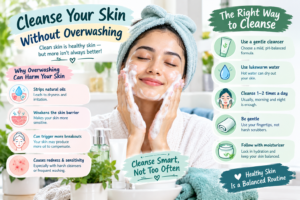
Dermatologists recommend gently cleansing oily skin up to twice daily and after sweating. Scrubbing aggressively can irritate the skin and make breakouts look worse.
A better approach
Use a gentle cleanser and your fingertips. Avoid harsh scrubbing brushes and rough washcloths.
If you’ve been outside in humid weather and are sweaty, cleansing after significant sweating can help remove sweat, oil, and buildup.
The goal is clean skin, not squeaky-dry skin.
3. Keep Oily Skin Under Control
Oily skin in monsoon weather can feel especially uncomfortable. Humidity and sweat may make the face look shiny within a few hours.
However, trying to remove every trace of oil isn’t necessary.
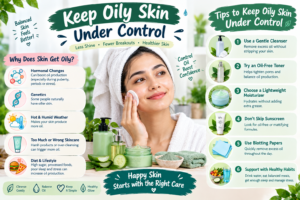
Skin naturally produces sebum, which helps protect it. The better approach is to control excess oil while maintaining the skin’s moisture balance.
Monsoon skincare for oily skin
Try these habits:
- Use a gentle cleanser.
- Choose lightweight skincare products.
- Look for non-comedogenic products if you’re acne-prone.
- Avoid repeatedly washing your face throughout the day.
- Don’t scrub aggressively.
- Use moisturizer even if your skin is oily.
- Keep makeup tools clean.
- Remove makeup before sleeping.
4. How to Prevent Acne During Monsoon
Humidity, sweat, excess oil, and occlusive products can make breakouts more noticeable for some people.
If you’re trying to prevent acne during monsoon, keep your routine simple.
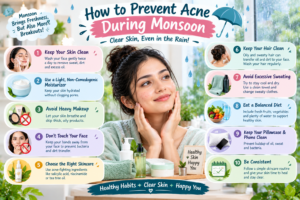
Helpful habits
Wash after heavy sweating.
Sweat sitting on the skin can contribute to irritation and breakouts. A gentle cleanse after sweating is preferable to repeated harsh washing.
Choose non-comedogenic products.
This includes moisturizer, sunscreen, and makeup when possible.
Keep hair away from your face.
Hair products containing oils can sometimes contribute to small bumps around the forehead and hairline.
Don’t pick pimples.
Picking or squeezing can increase inflammation and raise the risk of scarring and dark marks.
Clean makeup tools regularly.
Brushes and sponges can accumulate oil, makeup residue, and microorganisms when they aren’t cleaned regularly.
5. Don’t Skip Moisturizer Just Because Your Skin Is Oily
This is an important part of skin care during monsoon.
Oily skin still needs hydration.
Using harsh products to completely dry out the skin can cause irritation. Dermatologists recommend moisturizer for oily or acne-prone skin when the skin needs it, particularly when using treatments that can cause dryness. Oil-free and non-comedogenic formulas can be useful choices.
If your skin feels comfortable without a heavy moisturizer, a lightweight formula may be enough.
The right texture depends on your skin type and how your skin behaves in humid weather.
6. Continue Using Sunscreen
Cloudy skies don’t mean you should automatically stop using sunscreen.
UV exposure can still occur during rainy weather, so sunscreen remains an important part of a daytime skincare routine.
Look for a broad-spectrum sunscreen with SPF 30 or higher. If you’re spending time outdoors or sweating heavily, water-resistant sunscreen can be useful.
Remember that sunscreen works best when applied consistently rather than only on bright, sunny days.
7. Keep Your Skin Dry to Help Prevent Fungal Infections
Persistent dampness can create conditions in which fungal infections are more likely to spread.
This is particularly important around:
- Feet
- Between the toes
- Groin
- Under skin folds
- Areas covered by damp clothing
The CDC recommends keeping skin clean and dry, changing socks and underwear daily, and avoiding the sharing of towels, clothing, and other personal items to reduce the risk of ringworm and other fungal infections.
Simple habits that help
- Dry your feet carefully after bathing.
- Change wet clothes promptly.
- Don’t stay in wet socks.
- Let shoes dry completely before wearing them again.
- Avoid sharing towels.
- Wear appropriate footwear in communal wet areas.
- Keep skin folds as dry as practical.
If you develop an itchy, scaly, circular, or spreading rash, don’t automatically assume it’s ordinary irritation. Ringworm and other skin conditions can look similar, so proper diagnosis may be needed.
8. Take Extra Care of Your Feet
Your feet can spend more time in wet footwear during the rainy season.
That trapped moisture can cause discomfort and increase the risk of fungal infections.
Monsoon foot-care routine
After coming home:
- Remove wet footwear.
- Wash your feet if they’re dirty.
- Dry thoroughly, especially between the toes.
- Change into clean, dry socks if needed.
- Allow footwear to dry properly before wearing it again.
Don’t ignore persistent itching, peeling, cracking, or unusual rashes.
9. Wash Your Hair and Scalp Regularly
Rainy weather can make the scalp feel sweaty or greasy, especially if you have an oily scalp.
Instead of following a fixed shampoo schedule, pay attention to your scalp.
If it becomes oily, sweaty, dirty, or uncomfortable, wash it as needed with a suitable shampoo.
The American Academy of Dermatology recommends applying shampoo primarily to the scalp rather than rubbing it through the entire length of the hair. Conditioner can then be used according to your hair type.
Remember
Your scalp needs cleansing more than the lengths of your hair.
Overwashing the hair lengths can leave them dry and rough, while an unclean scalp can accumulate oil, sweat, and product residue.
10. Dry Your Hair Properly After Getting Caught in the Rain
Getting caught in the rain isn’t automatically harmful to your hair, but leaving the scalp and hair damp for long periods isn’t ideal.
Once you’re home:
- Change out of wet clothes.
- Gently towel-dry your hair.
- Let your scalp dry.
- Avoid tying soaking-wet hair tightly.
- Don’t aggressively rub your hair with a towel.
Hair is more fragile when wet, so rough handling can increase breakage. The AAD recommends gently wrapping hair in a towel or using a towel or T-shirt to absorb moisture rather than rubbing it vigorously.
11. Control Monsoon Hair Frizz
High humidity can make hair look puffy, frizzy, or difficult to manage.
Rather than repeatedly brushing your hair, focus on reducing unnecessary manipulation.
Try these habits
- Use conditioner after shampooing.
- Avoid excessive brushing.
- Use a wide-tooth comb when appropriate for your hair type.
- Handle wet hair gently.
- Limit unnecessary heat styling.
- Choose hairstyles that don’t require constant manipulation.
- Avoid repeatedly touching or brushing frizzy hair throughout the day.
The AAD notes that excessive styling and rough handling can contribute to breakage and frizz.
12. Don’t Tie Wet Hair Too Tightly
A tight ponytail or bun may seem convenient when your hair is wet, but wet hair is more vulnerable to damage.
Instead, allow your hair and scalp to dry as much as practical before securing it.
If you need to tie your hair back, avoid pulling it tightly.
This is especially important if you frequently wear tight hairstyles.
13. Reduce Excessive Heat Styling
You may be tempted to use a blow dryer or straightener to fight monsoon frizz.
Occasional heat styling isn’t necessarily a problem, but excessive heat can damage hair.
The AAD recommends limiting heat exposure and using lower or medium settings when heat styling is necessary.
A better monsoon strategy is to focus on:
- Gentle drying
- Conditioning
- Less brushing
- Less heat
- Protective hairstyles
14. Keep Towels, Pillowcases, and Hair Tools Clean
Beauty care isn’t only about the products you put on your skin and hair.
Your everyday fabrics and tools matter too.
During humid weather, towels can stay damp for longer. Avoid repeatedly using a wet towel without allowing it to dry properly.
You should also regularly clean:
- Hairbrushes
- Combs
- Makeup brushes
- Makeup sponges
- Pillowcases
- Towels
Don’t share personal items such as towels, combs, or brushes, particularly if someone has a suspected fungal or scalp infection. The CDC specifically advises against sharing personal items that may spread ringworm.
15. Choose Makeup Carefully During Humid Weather
Heavy makeup can feel uncomfortable when you’re already sweating.
If you notice frequent breakouts, consider simplifying your makeup routine.
Helpful choices
- Lightweight base products
- Non-comedogenic makeup when possible
- Minimal layers
- Clean makeup tools
- Proper makeup removal at night
If your face becomes sweaty during the day, gently blot rather than aggressively rubbing the skin.
The AAD recommends non-comedogenic products for people prone to breakouts and notes that wiping sweat aggressively can irritate the skin.
16. Adjust Your Routine to Your Skin Type
There isn’t one perfect monsoon beauty routine for everyone.

If you have oily skin
Focus on:
- Gentle cleansing
- Lightweight moisturizer
- Non-comedogenic sunscreen
- Minimal heavy layers
- Post-sweat cleansing
If you have dry skin
Don’t stop moisturizing just because the weather is humid.
Use gentle cleansing and an appropriate moisturizer. If your skin feels tight, flaky, or irritated, your routine may be too harsh.
If you have sensitive skin
Avoid making many changes at once.
Introduce new products gradually and stop using anything that causes significant irritation.
If you have acne-prone skin
Prioritize:
- Gentle cleansing
- Non-comedogenic products
- Consistent sunscreen
- Avoiding picking
- Keeping hair products away from the face when they cause breakouts
17. A Simple Monsoon Beauty Routine You Can Follow
Here’s an easy routine for someone who doesn’t want a complicated schedule.
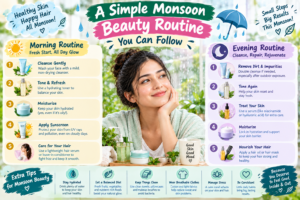
Morning
Step 1: Cleanse gently.
Step 2: Apply moisturizer if your skin needs it.
Step 3: Apply broad-spectrum SPF 30+ sunscreen.
Step 4: Apply makeup if desired.
During the day
Step 1: Blot sweat gently when needed.
Step 2: Avoid repeatedly touching your face.
Step 3: Change damp clothing when practical.
Step 4: Keep your feet dry.
After coming home
Step 1: Change out of wet clothes.
Step 2: Cleanse your face if you’ve been sweating heavily.
Step 3: Dry your feet carefully.
Step 4: Dry wet hair and scalp gently.
At night
Step 1: Remove makeup and sunscreen.
Step 2: Cleanse your face.
Step 3: Apply your usual skincare treatments if appropriate.
Step 4: Moisturize.
Step 5: Keep hair loosely secured or comfortable while sleeping.
Common Monsoon Beauty Mistakes to Avoid
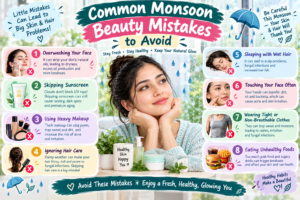
1. Washing your face too often
More cleansing isn’t necessarily better. Excessive washing and scrubbing can irritate the skin.
2. Skipping moisturizer
Oily skin still needs hydration.
3. Stopping sunscreen
Rain and clouds don’t eliminate UV exposure.
4. Sleeping with wet hair
Allow your scalp and hair to dry instead of keeping them damp for long periods.
5. Wearing damp clothes for hours
Change wet clothing when possible, especially if it remains against the skin.
6. Ignoring itchy rashes
A persistent rash shouldn’t automatically be treated as ordinary humidity-related irritation.
7. Using steroid cream on an undiagnosed rash
The CDC specifically advises against using steroid creams on suspected ringworm because they can make the infection worse.
8. Aggressively brushing wet hair
Wet hair is more prone to breakage. Handle it gently.
9. Using too many new products
Changing your entire skincare routine at once makes it difficult to identify what is helping or irritating your skin.
When Should You See a Dermatologist?
Most everyday monsoon skin and hair concerns can be managed with sensible hygiene and a consistent routine. However, some symptoms need professional attention.
Consider seeing a dermatologist or healthcare professional if you have:
- A rash that keeps spreading
- Severe or persistent itching
- Painful skin lesions
- A circular or scaly rash that doesn’t improve
- Sudden or significant hair loss
- Persistent scalp inflammation
- Severe acne
- Signs of infection
- A skin problem that repeatedly returns
Fungal infections can affect the skin, scalp, and nails, and the correct treatment depends on the location and severity of the infection.
Key Takeaways
- Keep your monsoon beauty routine simple and consistent.
- Cleanse gently rather than repeatedly scrubbing oily skin.
- Use lightweight, non-comedogenic products if you’re prone to clogged pores.
- Moisturize even when your skin is oily.
- Continue using broad-spectrum sunscreen.
- Cleanse after heavy sweating.
- Keep skin folds and feet dry.
- Change out of wet clothes promptly.
- Wash your scalp according to its needs.
- Dry wet hair gently and avoid aggressive towel rubbing.
- Reduce excessive heat styling and brushing.
- Don’t share towels, combs, or other personal items.
- Get unexplained or persistent rashes checked instead of self-treating blindly.
Frequently Asked Questions
1. What are the best monsoon beauty tips for skin?
The most useful monsoon beauty tips include gentle cleansing, regular moisturizing, daily sunscreen, managing excess sweat and oil, and keeping damp areas of the body dry. If you’re acne-prone, choose non-comedogenic products and avoid aggressive scrubbing.
2. How can I prevent acne during monsoon?
Cleanse gently after significant sweating, avoid touching or picking your face, use non-comedogenic skincare and makeup, and keep oily hair or hair products away from your face when they contribute to breakouts.
3. Should I moisturize oily skin during the rainy season?
Yes. Oily skin still needs moisture. A lightweight, oil-free or non-comedogenic moisturizer can provide hydration without unnecessarily adding heavy layers.
4. Do I need sunscreen during monsoon?
Yes. Continue using broad-spectrum sunscreen during the daytime, including on cloudy days. An SPF 30 or higher sunscreen is commonly recommended for everyday protection.
5. How often should I wash my hair during monsoon?
There isn’t one correct frequency for everyone. Wash according to your scalp’s oiliness, sweat, hair type, and buildup. If your scalp becomes oily or sweaty, you may need to shampoo more frequently.
6. Is it okay to leave my hair wet after getting caught in the rain?
It’s better to gently dry your hair and scalp rather than leaving them wet for a long time. Wet hair is also more fragile, so avoid vigorous rubbing and rough brushing.
7. How can I prevent fungal infections during monsoon?
Keep your skin clean and dry, change damp socks and underwear, avoid staying in wet clothing, don’t share towels or personal items, and wear suitable footwear in communal wet areas.
8. Why does my hair become frizzy during monsoon?
High humidity can make hair more difficult to manage and contribute to a frizzy appearance. Gentle handling, regular conditioning, less brushing, and reduced heat styling can help minimize damage and improve manageability.
9. Can I use heavy skincare products during monsoon?
You can, if your skin needs them, but heavy layers may feel uncomfortable in humid weather. If you’re prone to clogged pores or acne, lightweight and non-comedogenic options may be more suitable.
10. When should I worry about a monsoon-related skin rash?
Seek professional advice if a rash is persistent, spreading, painful, very itchy, scaly, circular, or otherwise unusual. A number of skin conditions can look similar, so guessing the cause and applying random treatments may delay appropriate care.
Final Thoughts
A good monsoon beauty routine doesn’t need to be complicated. The basics matter most: cleanse gently, moisturize appropriately, protect your skin from UV exposure, manage sweat and oil, keep damp areas dry, and treat your hair gently when it’s wet.
Your skin and hair may behave differently during the rainy season, so pay attention to those changes rather than following a rigid routine. If a problem becomes persistent or unusual, professional advice is safer than continually adding new products.