
Staying fresh all day is mostly about managing sweat, body odor, moisture, and clean clothing rather than covering smells with fragrance. A consistent hygiene routine, thorough drying, breathable clothes, clean socks and underwear, and the right deodorant or antiperspirant can help you feel comfortable and fresh from morning to night.
Why Is It Important to Stay Fresh All Day?
Feeling fresh isn’t only about smelling pleasant. Good personal hygiene can help control sweat, moisture, odor, and the buildup of dirt and microorganisms on the skin.

Sweating itself isn’t necessarily a problem. It’s one of the body’s normal ways of regulating temperature. Body odor develops when sweat interacts with microorganisms on the skin. Certain areas, including the underarms, feet, and groin, are more likely to develop noticeable odor.
This is why simply applying perfume may not solve the problem. A better approach is to keep the skin clean and dry, manage sweating, and wear clean clothing.
What Causes Body Odor?
Body odor can have several causes, but sweat and microorganisms on the skin are major contributors.
Sweat itself doesn’t always have a strong smell. Odor can develop when sweat mixes with bacteria and yeasts living on the skin. The amount and type of sweat, skin microorganisms, clothing, weather, hormones, exercise, and individual body chemistry can all influence how someone smells.
Common factors that can increase body odor include:
- Hot or humid weather

Body Odor - Exercise and physical activity
- Excessive sweating
- Wearing sweaty clothes for too long
- Poorly ventilated shoes
- Hormonal changes
- Tight or non-breathable clothing
- Certain foods or drinks
- Some medications
- Certain medical conditions
Body odor can also change over time. A sudden or unusual change, particularly when combined with a significant increase in sweating, is worth discussing with a healthcare professional.
How to Keep Your Body Fresh All Day
Keeping your body fresh doesn’t require an overly complicated routine. Small habits repeated consistently can make a noticeable difference.

1. Start Your Day With a Proper Shower
A morning shower can remove sweat, oil, and microorganisms that have accumulated on your skin overnight.
You don’t necessarily need a long or very hot shower. Focus on areas where sweat and odor commonly build up, such as:
- Underarms
- Groin
- Feet
- Skin folds
- Neck
- Other areas that become sweaty
Use a gentle cleanser or body wash and rinse thoroughly.
If your skin is sensitive or dry, avoid aggressively scrubbing your entire body. Excessive washing and harsh products can irritate the skin.
A simple shower routine
- Use comfortably warm water.
- Clean sweaty or odor-prone areas carefully.
- Rinse away the cleanser completely.
- Gently dry your skin with a clean towel.
- Apply moisturizer if your skin needs it.
- Apply deodorant or antiperspirant once your skin is dry.
2. Dry Your Body Thoroughly
One of the easiest body freshness tips is also one of the most overlooked: dry your skin properly after bathing.
Moisture that remains in warm, covered areas can contribute to discomfort and may encourage microorganisms to thrive.
Pay particular attention to:
- Between your toes
- Underarms
- Groin area
- Under the breasts
- Skin folds
- Areas covered by tight clothing
Don’t rub your skin aggressively. Pat it dry with a clean towel instead.
Keeping your feet dry is particularly important if you’re prone to sweaty or smelly feet.
3. Use Deodorant or Antiperspirant Correctly
Deodorant and antiperspirant aren’t the same thing.
Deodorant primarily helps control or mask body odor.
Antiperspirant is designed to reduce sweating. Many antiperspirants contain aluminum-based ingredients that temporarily reduce the amount of sweat reaching the skin.
If odor is your main concern, deodorant may be enough. If excessive underarm sweating is the bigger issue, an antiperspirant may be more useful.
Apply products according to their label directions and avoid putting fragranced products on sensitive areas such as the groin. Dermatologists specifically caution against using fragrance products there because they can irritate sensitive skin.
4. Wear Clean Clothes Every Day
Even if your body is clean, clothing can hold sweat, oil, and odor.
Fresh underwear and clothes are particularly important after sweating heavily.
Consider changing:
- Underwear daily
- Socks daily, or more often if they become sweaty
- Workout clothes after exercise
- Shirts that become noticeably damp
- Sleepwear regularly
If your clothes become sweaty during the day, changing them can sometimes make a bigger difference than applying more fragrance.
The NHS also recommends changing and washing clothes regularly when managing body odor.
5. Choose Breathable Clothing
Your clothing can affect how fresh you feel throughout the day.
Tight, poorly ventilated clothing can trap heat and moisture against the skin. Breathable fabrics can help you stay more comfortable, particularly during hot weather.
Depending on the situation, consider:
- Cotton
- Linen
- Other breathable fabrics
- Moisture-wicking athletic clothing during exercise
The best fabric can vary depending on the activity and individual comfort. If you sweat heavily, the ability of a garment to move moisture away from the skin may matter more than simply choosing a particular natural fabric.
The NHS advises avoiding tight clothing and recommends breathable or natural fabrics for people dealing with body odor.
6. Keep Your Feet Clean and Dry
Feet can become a major source of odor because they contain many sweat glands and spend much of the day inside shoes.
Wash your feet regularly and clean between your toes. Then dry them thoroughly before putting on socks.
For fresher feet:
- Change socks when they become damp.
- Choose breathable socks.
- Allow shoes to dry completely before wearing them again.
- Avoid wearing the same shoes continuously if they become sweaty.
- Keep toenails clean and trimmed.
- Consider a suitable foot powder or antiperspirant if you have sweaty feet.
Smelly feet are commonly linked to sweat and bacteria, and fungal infections can also contribute.
7. Don’t Forget Your Underarms
The underarms are one of the most common areas associated with body odor.
For better odor control:
- Wash the area regularly.
- Rinse thoroughly.
- Dry completely.
- Apply deodorant or antiperspirant as directed.
- Change sweaty tops when needed.
If shaving causes irritation, don’t feel that you need to shave simply to stay fresh. Choose whatever grooming method keeps your skin comfortable.
8. Keep Your Groin Area Clean and Dry
The groin naturally becomes warm and can collect sweat, so basic hygiene is important.
Wash the external skin gently and dry the area thoroughly. Wear clean underwear and change it after heavy sweating.
Avoid heavily fragranced products in intimate areas. Fragrance can irritate sensitive skin, and covering odor with perfume isn’t a substitute for hygiene.
If you notice persistent unusual odor, itching, burning, pain, discharge, or a rash, don’t simply keep adding scented products. A healthcare professional can help identify the cause.
9. Freshen Up After Exercise
Exercise increases body temperature and sweating, so it’s normal to feel less fresh afterward.
When possible, shower after a workout. If you can’t shower immediately:
- Change out of sweaty clothes.
- Change your underwear if needed.
- Wash or wipe sweat-prone areas appropriately.
- Dry your skin.
- Put on clean clothes.
- Let sweaty shoes and equipment dry.
If you’re prone to breakouts, gently cleansing skin after sweating can also help. Dermatologists recommend washing sweaty skin gently rather than aggressively scrubbing it.
10. Change Out of Wet or Sweaty Clothes
Staying in sweaty clothes for hours can make you feel uncomfortable and may contribute to odor.
This is particularly important after:
- Gym sessions
- Outdoor activities
- Long commutes
- Walking in hot weather
- Sports
- Working in a warm environment
Keep an extra shirt, underwear, or pair of socks in your bag if you know you’ll be sweating during the day.
This simple habit can be especially useful in hot and humid weather.
11. Keep Your Shoes Fresh
Shoes can trap sweat and odor even when your feet are clean.
To help prevent this:
- Allow shoes to air out between uses.
- Don’t wear damp shoes.
- Change socks regularly.
- Rotate footwear when practical.
- Choose shoes that allow reasonable airflow.
- Clean footwear according to the manufacturer’s instructions.
If your shoes remain strongly odorous despite good hygiene, the problem may be persistent moisture, bacteria, or a foot condition.
12. Pay Attention to Your Diet and Habits
Food isn’t the only cause of body odor, but certain foods and drinks can affect how some people smell or sweat.
The NHS notes that strong-smelling or spicy foods and alcohol can worsen body odor or sweating for some people.
That doesn’t mean everyone needs to avoid these foods.
Instead, notice whether a particular food consistently seems to affect your body odor. If you identify a pattern, you can discuss it with a healthcare professional or dietitian if necessary.
13. Stay Comfortable in Hot and Humid Weather
Hot weather naturally increases sweating.
When temperatures rise, try to:
- Wear lightweight clothing.
- Choose breathable fabrics.
- Carry an extra shirt if necessary.
- Drink enough fluids.
- Shower after heavy sweating.
- Keep your feet dry.
- Avoid staying in damp clothing.
- Reapply deodorant or antiperspirant according to its instructions.
Don’t try to stop normal sweating completely. Sweating is an important part of temperature regulation.
The goal is to manage excess moisture and odor while allowing your body to perform its normal cooling function.
14. Build a Simple Daily Body Care Routine
A consistent routine is easier to maintain than a complicated one.
Morning
- Shower or wash as needed.
- Clean odor-prone areas.
- Dry your body thoroughly.
- Apply moisturizer if needed.
- Apply deodorant or antiperspirant.
- Put on clean underwear and clothes.
- Wear clean socks.
During the day
- Change sweaty clothes when necessary.
- Reapply products only according to their directions.
- Keep your face and body comfortable without excessive washing.
- Drink fluids regularly.
- Carry tissues or a clean towel if you sweat heavily.
After exercise
- Change out of sweaty clothes.
- Shower when possible.
- Clean and dry your feet.
- Put on clean clothing.
- Allow shoes and workout gear to dry.
At night
- Remove sweaty clothing.
- Wash if you’ve exercised or become sweaty.
- Put on clean sleepwear.
- Allow footwear and damp clothing to dry or be washed.
This simple personal hygiene routine can help you stay comfortable without turning body care into a long list of chores.
How to Smell Fresh All Day Without Using Too Much Perfume
Smelling fresh doesn’t mean smelling strongly of fragrance.
A cleaner approach is to address the source of odor first.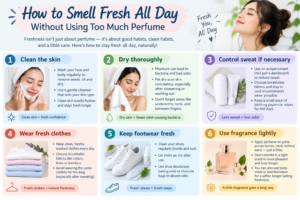
Step 1: Clean the skin
Wash areas where sweat and odor accumulate.
Step 2: Dry thoroughly
Moisture can contribute to odor and discomfort.
Step 3: Control sweat if necessary
Use an antiperspirant if excessive sweating is contributing to the problem.
Step 4: Wear fresh clothes
Don’t put clean skin into clothes that already smell sweaty.
Step 5: Keep footwear fresh
Clean, dry feet can still develop odor if they’re placed inside damp shoes.
Step 6: Use fragrance lightly
Perfume can add a pleasant scent, but it shouldn’t be used to cover persistent body odor.
This approach is more practical than repeatedly spraying fragrance throughout the day.
Body Freshness Tips for Busy Days
You don’t always have time for a full shower during the day. A small personal care kit can help.
Consider keeping these items with you:
- Deodorant or antiperspirant
- Tissues
- Clean handkerchief or small towel
- Spare underwear
- Spare socks
- Extra shirt
- Hairbrush or comb
- Breath freshener or oral-care essentials
If you’re particularly sweaty, changing a damp shirt or socks may provide more noticeable freshness than simply adding another layer of fragrance.
How to Prevent Body Odor: Common Mistakes to Avoid
Even a good hygiene routine can become less effective if you make certain mistakes.
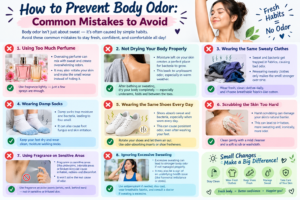
Using Too Much Perfume
More fragrance doesn’t necessarily mean more freshness.
Heavy fragrance can simply mix with existing body odor and create an unpleasant combination.
Not Drying Your Body Properly
Putting on clothes while your skin is still damp can trap moisture.
Take a few extra seconds to dry sweat-prone areas thoroughly.
Wearing the Same Sweaty Clothes
Clean skin won’t stay fresh for long if you’re wearing clothing saturated with sweat.
Change clothes after heavy sweating.
Wearing Damp Socks
Damp socks create an environment where odor can become a problem.
Change them when they become wet or sweaty.
Wearing the Same Shoes Every Day
Shoes need time to dry, especially if your feet sweat heavily.
Allow footwear to air out between uses.
Scrubbing the Skin Too Hard
Aggressive scrubbing doesn’t necessarily make you cleaner.
It can irritate the skin and make certain skin problems worse. Gentle cleansing is usually a better approach.
Using Fragrance on Sensitive Areas
Fragrance isn’t appropriate for every part of the body. Avoid fragranced deodorants or perfumes on sensitive intimate skin.
Ignoring Excessive Sweating
If you’re sweating much more than you used to, or sweating when your body doesn’t need to cool down, don’t assume it’s simply a hygiene problem.
Excessive sweating can be a condition called hyperhidrosis, and treatment options are available.
Can You Stay Fresh Without Showering Twice a Day?
Yes, depending on your activity level, weather, skin type, and how much you sweat.
There’s no universal requirement that everyone must take a full shower twice a day. Some people may need to wash more often because of exercise, hot weather, work conditions, or heavy sweating.
Others may find that one shower is enough.
The important thing is to keep yourself clean and comfortable without over-washing or irritating your skin.
If you exercise or become heavily sweaty during the day, cleaning the areas that became sweaty and changing clothes may be useful even when a full shower isn’t immediately possible.
What to Do If You Still Smell After Washing
If you wash regularly, wear clean clothes, and still have persistent body odor, look beyond basic hygiene.
Possible contributing factors can include:
- Excessive sweating
- Foot problems
- Skin infections
- Hormonal changes
- Certain medications
- Certain medical conditions
The NHS recommends seeking medical advice if body odor doesn’t improve with self-care, especially if it affects your well-being, changes noticeably, or is accompanied by a sudden increase in sweating.
A dermatologist or other healthcare professional can help determine whether an underlying condition is contributing to the problem.
When Should You See a Doctor?
Occasional body odor is normal. However, medical advice is appropriate when you notice a significant or unexplained change.
Consider speaking with a healthcare professional if:
- Your body odor suddenly changes.
- You suddenly begin sweating much more than usual.
- Excessive sweating interferes with daily activities.
- You regularly experience heavy night sweating.
- Persistent odor doesn’t improve with normal hygiene.
- You have a rash, pain, itching, swelling, or discharge.
- Your feet remain unusually smelly despite proper hygiene.
- Body odor is significantly affecting your daily life.
Excessive sweating that occurs without an obvious need for cooling can sometimes be hyperhidrosis, while persistent foot odor may sometimes be associated with fungal infection or another foot problem.
Frequently Asked Questions
1. How can I stay fresh all day?
Start with clean skin, dry yourself thoroughly, use deodorant or antiperspirant appropriately, wear clean breathable clothing, and change sweaty clothes or socks when needed. Keeping your feet and shoes dry can also make a significant difference.
2. How can I smell fresh all day naturally?
Focus on hygiene rather than fragrance. Wash regularly, dry your skin well, wear clean clothes, keep your feet dry, and choose breathable clothing. You can use a mild fragrance if you enjoy it, but it shouldn’t replace basic hygiene.
3. How do I prevent body odor?
Wash odor-prone areas, dry them thoroughly, wear clean clothes, manage excessive sweating, and keep shoes and socks clean and dry. Deodorant can help control odor, while antiperspirant can reduce sweating.
4. Why do I smell even after showering?
Odor can return when you sweat again, particularly if you’re wearing clothes or shoes that already contain odor. Excessive sweating, foot problems, hormonal changes, certain medications, and some medical conditions can also contribute.
5. Is deodorant or antiperspirant better for staying fresh?
They serve different purposes. Deodorant primarily helps control body odor, while antiperspirant is designed to reduce sweating. If odor is your main concern, deodorant may help. If excessive sweating is the bigger issue, an antiperspirant may be more appropriate.
6. How often should I change my socks?
Change socks whenever they become sweaty or damp. If you have particularly sweaty feet, you may need to change them more than once during the day.
7. Can perfume prevent body odor?
Perfume can add fragrance, but it doesn’t replace cleaning or necessarily prevent body odor. If odor is coming from sweat and microorganisms on the skin, address the underlying hygiene and sweating issue first.
8. Why do my feet smell even when I wash them?
Feet naturally sweat, and enclosed shoes can trap moisture. Sweat combined with bacteria can produce odor. Fungal infections can also contribute. Keeping your feet dry, changing socks, and allowing shoes to dry can help.
9. Can hot weather make body odor worse?
Yes. Heat can increase sweating, which can make body odor more noticeable. Wearing lightweight clothing, changing sweaty clothes, and keeping the skin dry can help you stay more comfortable.
10. When is body odor a medical concern?
A persistent or suddenly different odor deserves attention, particularly if it occurs with a sudden increase in sweating, skin symptoms, or other unusual changes. If normal self-care doesn’t improve the problem, speak with a healthcare professional.
Key Takeaways
Staying fresh all day doesn’t require an elaborate beauty routine. The basics matter most:
- Clean your body regularly, focusing on areas where sweat accumulates.
- Dry your skin thoroughly after bathing.
- Use deodorant for odor and consider antiperspirant when sweat is the main concern.
- Wear clean clothes and underwear.
- Change sweaty socks and clothes when necessary.
- Keep feet and shoes dry.
- Choose comfortable, breathable clothing.
- Don’t use perfume as a substitute for hygiene.
- Avoid harsh scrubbing and excessive use of fragranced products.
- Pay attention to unusual changes in sweating or body odor.
A consistent daily body care routine is usually more effective than trying to fix odor after it has already developed.
Final Thoughts
Knowing how to keep your body fresh all day comes down to a few practical habits: clean skin, good drying, fresh clothing, dry feet, appropriate odor or sweat control, and attention to your individual needs.
You don’t need to shower constantly or cover yourself in fragrance. In fact, overdoing cleansing or fragranced products can irritate the skin. A simple routine that you can maintain every day is usually a more sensible approach.
If strong body odor or excessive sweating continues despite good personal hygiene, don’t assume you’re doing something wrong. Persistent symptoms can sometimes have an underlying cause and may benefit from professional evaluation.