
Skin texture refers to how smooth, soft, or uneven your skin feels and looks. To improve skin texture naturally, focus on gentle cleansing, regular moisturizing, sun protection, adequate hydration, balanced nutrition, and avoiding habits that damage the skin barrier. Consistency matters more than using many products or complicated treatments.
Uneven or rough skin texture is common. You may notice tiny bumps, dry patches, flakiness, enlarged-looking pores, or areas that simply don’t feel as smooth as they used to.
The good news is that you can support smoother, healthier-looking skin with a simple routine and a few lifestyle habits. However, “natural” doesn’t automatically mean safer or more effective. Some popular home remedies can actually irritate the skin.
This guide explains practical, evidence-informed ways to improve skin texture naturally while keeping your routine gentle.
What Causes Uneven Skin Texture?
Skin texture can change for many reasons. Sometimes the problem is temporary, while persistent roughness or bumps may be related to an underlying skin condition.
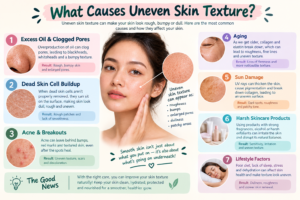
Common causes include:
- Dryness and dehydration
- Buildup of dead skin cells
- Excess oil
- Clogged pores
- Acne and post-acne changes
- Sun exposure
- Irritation from skincare products
- Over-exfoliation
- A weakened skin barrier
- Normal aging
- Environmental factors such as dry air or pollution
Your skin can also look rougher when you’re using too many active ingredients or cleansing too aggressively.
Dryness and Dehydration
When the outer layer of the skin doesn’t retain enough water, the surface may feel tight, rough, or flaky.
Dehydrated skin lacks water, while dry skin generally refers to skin that doesn’t produce enough oil. They can occur together, but they’re not exactly the same thing.
Dead Skin Cell Buildup
Your skin naturally sheds dead cells. When they accumulate on the surface, skin can appear dull or feel rough.
Gentle exfoliation can help some people, but aggressive scrubbing isn’t necessary and may cause irritation.
Sun Exposure
Repeated ultraviolet exposure can contribute to uneven pigmentation, roughness, and visible signs of skin aging. That’s why daily sun protection is one of the most important parts of any routine aimed at maintaining smoother-looking skin.
Irritation
Using too many products, frequently changing your routine, or applying harsh ingredients can disturb the skin barrier.
A damaged or irritated barrier may cause dryness, sensitivity, redness, and rough texture.
Natural Ways to Improve Skin Texture
Improving skin texture naturally isn’t about finding one magical ingredient. It’s about supporting the skin consistently.
Here are the most useful habits to focus on.
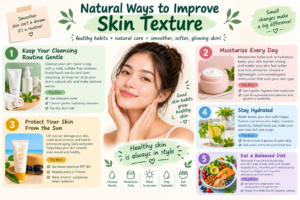
1. Keep Your Cleansing Routine Gentle
Cleansing removes sweat, excess oil, sunscreen, makeup, and environmental debris.
However, washing too aggressively can leave the skin dry and irritated.
For smoother-looking skin:
- Use a gentle cleanser.
- Avoid very hot water.
- Don’t scrub your face with a rough towel.
- Wash according to your skin’s needs rather than repeatedly throughout the day.
- Pat your skin dry instead of rubbing it.
If your face feels tight immediately after cleansing, your cleanser or cleansing routine may be too harsh for your skin.
2. Moisturize Every Day
One of the simplest tips for smooth skin is consistent moisturization.
A moisturizer helps reduce water loss from the skin and supports the skin barrier. When skin is properly moisturized, fine surface roughness can look less noticeable.
Look for a moisturizer suited to your skin type.
For example:
- Dry skin: richer creams may feel more comfortable.
- Oily skin: lightweight lotions or gels may be preferable.
- Combination skin: use textures that feel comfortable on different areas.
- Sensitive skin: choose simple, fragrance-free formulas when possible.
You don’t need an elaborate routine to make skin feel softer.
3. Protect Your Skin From the Sun
Sun protection is essential if you’re trying to improve uneven skin texture naturally.
UV exposure can contribute to premature skin aging, pigmentation changes, and rougher-looking skin over time.
A broad-spectrum sunscreen with an appropriate SPF can help protect exposed skin. Apply it consistently during daytime, especially when spending time outdoors.
Other helpful habits include:
- Seeking shade when practical
- Wearing protective clothing
- Using a hat
- Avoiding unnecessary prolonged sun exposure
Think of sunscreen as part of maintaining your results rather than an optional extra step.
4. Stay Hydrated
Drinking enough fluids supports normal body function, but drinking extra water doesn’t automatically transform skin texture.
If you’re dehydrated, correcting that can support overall skin health. Still, skin hydration also depends on the skin barrier and your environment.
Instead of relying on water alone, combine adequate fluid intake with a good moisturizing routine.
5. Eat a Balanced Diet
Your skin needs nutrients to maintain normal structure and function.
A balanced diet can include:
- Fruits
- Vegetables
- Whole grains
- Beans and lentils
- Nuts and seeds
- Eggs
- Fish or other protein sources
- Healthy sources of fats
Foods containing vitamin C, vitamin E, protein, essential fatty acids, and other nutrients can contribute to overall nutritional health.
There’s no single food that can instantly make your skin smoother. A consistent, varied diet is more useful than focusing on one “beauty food.”
How to Get Smoother Skin Naturally With Gentle Exfoliation
Exfoliation removes some dead cells from the surface of the skin. It can make skin feel smoother, but more exfoliation isn’t necessarily better.
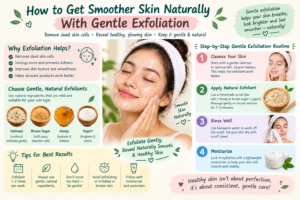
Physical Exfoliation
Physical exfoliation uses friction to remove surface cells.
Examples include:
- Scrubs
- Exfoliating cloths
- Brushes
These can be irritating if used too aggressively, particularly on sensitive or acne-prone skin.
Chemical Exfoliation
Chemical exfoliants use ingredients such as alpha hydroxy acids (AHAs) or beta hydroxy acids (BHAs) to loosen dead skin cells.
Although these aren’t “natural remedies” in the traditional sense, they can be useful tools for improving texture when used appropriately.
If you’re new to exfoliation, start slowly rather than combining several exfoliating products.
Don’t Over-Exfoliate
Over-exfoliation can cause:
- Redness
- Burning
- Dryness
- Increased sensitivity
- Flaking
- A rough or irritated appearance
If your skin starts feeling raw or unusually sensitive, stop exfoliating and focus on gentle cleansing and moisturizing.
Home Remedies for Smooth Skin: What Should You Know?
Many homemade skincare remedies are promoted online, but natural ingredients aren’t automatically appropriate for facial skin.
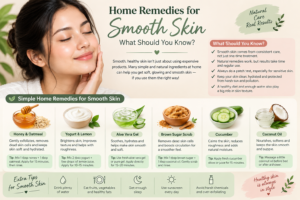
Some common kitchen ingredients can be irritating, especially when used undiluted or frequently.
Ingredients to Be Careful With
Avoid treating your face like a kitchen experiment with ingredients such as:
- Lemon juice
- Undiluted vinegar
- Baking soda
- Coarse sugar scrubs
- Rough salt scrubs
- Essential oils applied directly to skin
These can irritate the skin or disrupt its natural barrier.
What About Aloe Vera?
Aloe vera gel can feel soothing and hydrating for some people. If you’re using an aloe product, choose one formulated for skin and check the ingredient list.
If you’re using fresh aloe, remember that plant preparations can vary and may cause irritation or allergic reactions in some people.
Patch testing is a sensible precaution when trying something new.
Natural Skincare Routine for Smooth Skin
A simple routine is often easier to maintain than a complicated one.
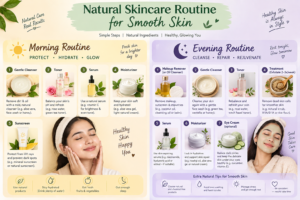
Morning
Step 1: Gentle cleansing
Cleanse your face according to your skin’s needs.
Step 2: Moisturizer
Apply a moisturizer that feels comfortable for your skin.
Step 3: Sunscreen
Finish with broad-spectrum sunscreen before daytime sun exposure.
Evening
Step 1: Cleanse
Remove makeup, sunscreen, sweat, and daily buildup.
Step 2: Treatment, if needed
If you’re using an exfoliating or other treatment product, introduce it gradually and avoid layering too many irritating ingredients.
Step 3: Moisturize
Use moisturizer to support the skin barrier overnight.
This basic routine can be enough for many people.
How to Improve Uneven Skin Texture Naturally
If your skin feels bumpy or uneven, first try to identify what’s causing the texture.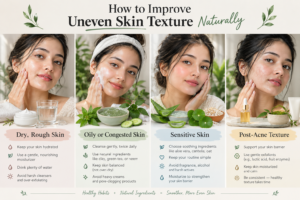
For Dry, Rough Skin
Focus on:
- Gentle cleansing
- Regular moisturizing
- Avoiding very hot water
- Limiting harsh exfoliation
- Protecting your skin from the sun
For Oily or Congested Skin
Focus on:
- Gentle cleansing
- Non-comedogenic skincare when appropriate
- Avoiding heavy products that consistently clog your pores
- Avoiding aggressive scrubbing
- Introducing suitable exfoliation gradually
For Sensitive Skin
Keep your routine simple.
Choose:
- Gentle cleansers
- Fragrance-free products when possible
- A basic moisturizer
- Daily sun protection
Avoid introducing several new products at the same time. If irritation develops, it’s much easier to identify the cause when your routine is simple.
For Post-Acne Texture
Post-acne texture can mean different things. Temporary roughness is different from deeper acne scars.
Gentle skincare may improve the appearance of mild unevenness, but established acne scars often need professional treatment. Home remedies generally can’t completely remove deeper scars.
Lifestyle Habits That Can Support Smoother Skin
Skincare isn’t the only factor affecting how your skin looks.
Get Enough Sleep
Poor sleep can affect overall health and may influence how tired or dull the skin appears.
Aim for a consistent sleep schedule rather than relying on occasional long nights of sleep.
Manage Stress
Stress doesn’t cause every skin problem, but it can affect some existing conditions and may influence habits such as picking or touching the face.
Simple stress-management activities such as walking, exercise, relaxation, or hobbies can support overall well-being.
Don’t Pick at Your Skin
Picking pimples, blackheads, or rough patches can cause inflammation and increase the risk of marks and scarring.
If you find yourself repeatedly touching your face, keeping your hands occupied can help break the habit.
Change Pillowcases Regularly
Keeping bedding clean is a reasonable hygiene habit, especially if you sweat heavily or use hair products at night.
However, changing pillowcases alone isn’t a treatment for acne or uneven texture.
How Long Does It Take to Improve Skin Texture?
There isn’t one exact timeline because the cause of uneven texture matters.
Dryness may improve relatively quickly once you restore moisture and reduce irritation. Other concerns, such as acne-related texture, pigmentation, or signs of sun damage, can take considerably longer.
The key is consistency.
Avoid changing your routine every few days because you aren’t seeing immediate results. Give gentle skincare enough time to show whether it’s helping.
If a product causes persistent burning, swelling, severe redness, or worsening irritation, don’t continue using it simply because you expect your skin to “adjust.”
Common Mistakes That Can Make Skin Texture Worse
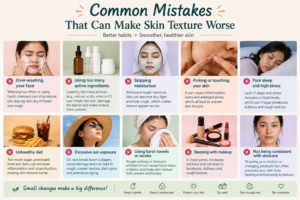
Using Too Many Products
More products don’t necessarily mean better skin.
Combining multiple acids, retinoids, scrubs, masks, and other active ingredients can overwhelm sensitive skin.
Scrubbing Too Hard
A rough scrub can temporarily make skin feel smooth while causing irritation underneath.
Gentle treatment is usually a better approach.
Skipping Sunscreen
You can have an excellent skincare routine, but regular UV exposure can continue contributing to skin damage.
Trying Every DIY Remedy
A natural ingredient can still cause irritation or an allergic reaction.
Always consider how an ingredient interacts with your skin rather than assuming “natural” means harmless.
Constantly Changing Your Routine
Frequent changes make it difficult to know what’s actually helping.
Introduce new products one at a time whenever possible.
Tips for Smooth Skin: A Simple Checklist
If you want a straightforward approach, focus on these habits:
- Cleanse gently.
- Moisturize consistently.
- Wear broad-spectrum sunscreen during the day.
- Avoid aggressive scrubbing.
- Exfoliate carefully if your skin tolerates it.
- Don’t pick at blemishes.
- Eat a varied, balanced diet.
- Stay adequately hydrated.
- Get consistent sleep.
- Avoid unnecessary skincare products.
- Patch test new products when appropriate.
- Give your routine time to work.
When Should You See a Dermatologist?
Natural skincare can support healthy-looking skin, but it isn’t a solution for every skin condition.
Consider professional advice if you have:
- Persistent rough or scaly patches
- Painful or severe acne
- Deep acne scars
- Persistent redness or irritation
- Unexplained skin changes
- A rash that doesn’t improve
- A new or changing mole or growth
- Symptoms that keep returning despite gentle skincare
A dermatologist can determine whether your uneven texture is related to acne, eczema, keratosis pilaris, rosacea, sun damage, scarring, or another condition.
Key Takeaways
- Skin texture describes how smooth, soft, or uneven your skin looks and feels.
- Gentle cleansing and regular moisturizing can help support smoother-looking skin.
- Sun protection is one of the most important long-term habits for maintaining healthy skin.
- Gentle exfoliation may help remove surface buildup, but over-exfoliation can make texture worse.
- A balanced diet and adequate hydration support overall skin health.
- Natural ingredients aren’t automatically safe for facial skin.
- Avoid harsh DIY remedies such as lemon juice, baking soda, and coarse scrubs.
- Persistent bumps, rough patches, acne scars, or unexplained changes may require professional care.
- Consistency is more useful than constantly changing your skincare routine.
Frequently Asked Questions
1. How can I improve my skin texture naturally?
Use a gentle cleanser, moisturize regularly, protect your skin from UV exposure, eat a balanced diet, stay adequately hydrated, and avoid harsh scrubbing. If appropriate for your skin, gentle exfoliation can also help reduce surface buildup.
2. How can I make my skin smoother at home?
Start with a simple routine: gentle cleansing, moisturizing, and daytime sun protection. Avoid picking your skin and don’t rely on harsh homemade scrubs. If you want to exfoliate, introduce a suitable method gradually.
3. What is the best natural way to improve rough skin?
The best approach depends on the cause. For dryness, focus on moisturizing and reducing irritation. For clogged pores, gentle cleansing and appropriate exfoliation may help. Persistent roughness should be evaluated by a dermatologist.
4. Can drinking water improve skin texture?
Adequate hydration supports normal body function and can help if you’re dehydrated. However, drinking extra water isn’t a guaranteed treatment for uneven skin texture. Moisturizing and protecting the skin barrier are also important.
5. Does exfoliation improve skin texture?
Yes, appropriate exfoliation can help remove dead surface cells and make skin feel smoother. However, excessive exfoliation can cause irritation, dryness, and sensitivity, so it should be done gently.
6. Can aloe vera make skin smoother?
Aloe vera can provide a soothing, hydrating feel for some people. However, it isn’t a universal treatment for uneven texture, and some people may experience irritation or allergy.
7. Can natural remedies remove acne scars?
Home remedies generally cannot remove established deep acne scars. Gentle skincare can support overall skin health, but persistent or deeper scarring may require professional treatment.
8. Why does my skin still feel rough after moisturizing?
Roughness may be caused by more than dryness. Possible factors include dead-cell buildup, irritation, clogged pores, acne, eczema, or another skin condition. If the problem persists, consider getting professional advice.
9. How long does it take to get smoother skin?
The timeframe varies depending on the cause. Dryness may respond relatively quickly to better moisturization, while acne-related texture, pigmentation, or scarring can take much longer. Consistent skincare is important.
10. Is natural skincare better for skin texture?
Not necessarily. “Natural” describes the source of an ingredient, not whether it is safe or effective. Some natural ingredients can irritate the skin, while well-formulated skincare products can be gentle and effective.
Conclusion
Improving skin texture naturally is less about finding a miracle remedy and more about building healthy, consistent habits. Gentle cleansing, regular moisturizing, sun protection, balanced nutrition, adequate hydration, and careful exfoliation can all support smoother-looking skin.
Most importantly, pay attention to what your skin is telling you. If a product burns, causes persistent redness, or makes your skin increasingly rough, stop and simplify your routine.
Healthy skin doesn’t need to be perfectly smooth. A little texture is normal. The goal is to keep your skin comfortable, balanced, and well cared for rather than trying to eliminate every natural variation in its appearance.