
Your daily habits can affect how your skin looks and how quickly visible signs of aging appear. Everyday habits that may make your skin look older include skipping sunscreen, smoking, getting too little sleep, eating an unbalanced diet, and using harsh skincare products. The good news is that small, consistent changes can help protect your skin, support its natural barrier, and reduce preventable signs of premature aging.
Fine lines, uneven skin tone, dryness, and a loss of firmness are normal parts of aging. Genetics, hormones, sun exposure, and other factors all play a role. However, some everyday choices can speed up visible skin changes, while healthier routines may help your skin stay comfortable and resilient.
You don’t need an expensive skincare routine to make a difference. Understanding what affects your skin is a useful first step toward caring for it over time.
What Causes Premature Skin Aging?
Premature skin aging refers to visible signs of aging that appear earlier or become more pronounced than expected because of factors such as ultraviolet (UV) radiation, smoking, and environmental exposure.
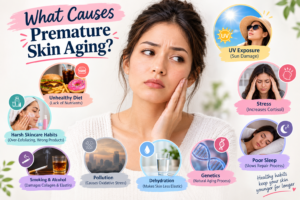
Skin aging happens in two main ways:
-
Intrinsic aging: The natural aging process influenced by genetics, hormones, and changes in the body’s ability to maintain and repair skin.
-
Extrinsic aging: Changes linked to external factors, including sunlight, tobacco smoke, pollution, and certain lifestyle habits.
Collagen and elastin are proteins that help skin stay firm and flexible. As we age, their production and structure change. Repeated UV exposure can accelerate collagen breakdown, while other damaging exposures may contribute to inflammation, uneven pigmentation, and a rougher skin texture.
Not every wrinkle or dark spot is caused by a bad habit. Your skin type, family history, medical conditions, and hormonal changes also matter. The goal isn’t to stop aging completely, but to protect your skin from avoidable damage.
10 Everyday Habits That May Be Making Your Skin Look Older
Some habits affect your skin gradually, so you may not notice their impact right away. Here are ten common habits that can contribute to premature skin aging and practical ways to change them.
1. Skipping Sunscreen on Cloudy Days

Skipping sunscreen is one of the most important skincare mistakes to address if you want to reduce premature skin aging. Ultraviolet A (UVA) rays contribute to wrinkles, uneven pigmentation, and the breakdown of collagen. UV exposure can affect your skin even when the weather is cloudy.
You don’t have to spend hours outdoors to accumulate sun exposure. Walking to work, running errands, sitting near a sunny window, and spending time outside during lunch can all contribute.
What you can do:
-
Use a broad-spectrum sunscreen with SPF 30 or higher on exposed skin.
-
Apply it before going outdoors and reapply about every two hours when outside, or after swimming or heavy sweating.
-
Wear a wide-brimmed hat and sunglasses when possible.
-
Seek shade during periods of strong sunlight.
-
Protect your neck, ears, hands, and other exposed areas, not just your face.
Consistent sun protection is one of the most effective ways to help prevent premature skin aging.
2. Smoking or Regularly Exposing Your Skin to Tobacco Smoke
Smoking affects more than your lungs. Chemicals in tobacco smoke contribute to oxidative stress, which can damage cells and interfere with the structures that keep skin firm.
Over time, smoking is associated with more pronounced wrinkles, a dull complexion, and reduced skin elasticity. Repeatedly pursing your lips while smoking may also contribute to lines around the mouth.
Secondhand smoke is another reason to avoid smoky environments when possible.
What you can do:
-
If you smoke, seek support to quit rather than relying on skincare products to counteract the damage.
-
Avoid indoor spaces filled with tobacco smoke.
-
Continue using sunscreen and a gentle skincare routine.
Quitting smoking can benefit your health at any age. Although it cannot erase existing wrinkles, it removes an ongoing source of skin damage.
3. Sleeping Too Little or Following an Irregular Sleep Schedule

A few late nights won’t suddenly age your face. However, regularly getting insufficient or poor-quality sleep may affect your skin’s appearance and its ability to recover from everyday stress.
You might notice puffiness around your eyes, a tired-looking complexion, or more noticeable fine lines when your skin is dry. Research also suggests that poor sleep can affect skin-barrier recovery, although the strength of the evidence varies by outcome.
What you can do:
-
Aim for seven to nine hours of sleep if you’re an adult.
-
Try to go to bed and wake up at consistent times.
-
Reduce late-night caffeine if it interferes with your sleep.
-
Create a relaxing bedtime routine and keep your bedroom comfortable.
Sleep won’t eliminate wrinkles, but regular, good-quality rest supports overall health and may help your skin look less tired.
4. Eating Too Many Sugary and Highly Refined Foods
Your diet influences your overall health, and it may also affect the condition of your skin. Diets consistently high in added sugars and refined carbohydrates are a concern because sugar can contribute to the formation of advanced glycation end products (AGEs).
AGEs form when sugars react with proteins or fats. Their accumulation can affect collagen and elastin, which help maintain skin structure. However, the relationship between specific foods and visible wrinkles in humans is complex, and diet alone cannot predict how quickly your skin will age.
What you can do:
-
Eat a variety of colorful fruits and vegetables.
-
Include protein sources such as beans, eggs, fish, or other suitable foods.
-
Choose whole grains more often than highly refined grains.
-
Include sources of healthy fats, such as nuts, seeds, and fish.
-
Reduce frequent consumption of sugary drinks and heavily processed snacks.
You don’t need to eliminate every dessert or favorite food. Aim for a balanced eating pattern that provides the nutrients your body needs.
5. Using Harsh Cleansers or Scrubbing Your Face Too Hard

A squeaky-clean feeling doesn’t necessarily mean your skin is healthy. Strong cleansers, frequent exfoliation, rough facial brushes, and aggressive scrubbing can strip away protective oils and irritate the skin barrier.
When your barrier is disrupted, your skin may feel tight, sting when you apply products, become flaky, or look red and uneven. Dryness can also make fine lines appear more noticeable.
What you can do:
-
Choose a gentle cleanser suited to your skin type.
-
Wash with lukewarm rather than very hot water.
-
Use your fingertips instead of rough washcloths or abrasive scrubs.
-
Pat your face dry with a clean, soft towel.
-
Reduce exfoliation if your skin becomes irritated.
Healthy skin doesn’t need to feel stripped after cleansing. Gentle, consistent care is usually a better choice than trying to scrub away every trace of oil.
6. Drinking Too Much Alcohol
Frequent heavy alcohol consumption can affect overall health, and alcohol may contribute to dehydration and temporary changes in facial appearance. Some people notice puffiness, redness, or a tired-looking complexion after drinking.
However, one drink doesn’t automatically cause wrinkles, and the relationship between alcohol consumption and visible skin aging depends on several factors. Avoid treating every change in your complexion as proof of alcohol-related damage.
What you can do:
-
Limit or avoid alcohol, especially if you notice it affects your skin or sleep.
-
Drink water regularly throughout the day.
-
Avoid using alcohol as a way to manage stress or help yourself fall asleep.
-
Seek medical advice if you have persistent facial redness or unexplained swelling.
Reducing heavy alcohol use supports your general health. Drinking water can help with hydration, but it doesn’t reverse collagen damage or erase wrinkles.
7. Skipping Moisturizer Because Your Skin Is Oily
Many people with oily or acne-prone skin avoid moisturizer because they fear it will make their face greasy. Unfortunately, skipping moisturizer can leave the skin feeling uncomfortable and dehydrated.
When skin lacks moisture, fine lines may appear more pronounced. This doesn’t mean every line is a wrinkle caused by dehydration; it means dryness can temporarily make existing lines more visible.
What you can do:
-
Choose a lightweight, non-comedogenic moisturizer if your skin is oily or acne-prone.
-
Look for ingredients such as glycerin, ceramides, or hyaluronic acid.
-
Apply moisturizer after cleansing while your skin is slightly damp.
-
Adjust the texture of your moisturizer to the season and your skin’s needs.
Oily skin still needs hydration. The goal is to support the skin barrier without using a product that feels too heavy for you.
8. Spending Too Much Time Under Stress

Stress doesn’t instantly create wrinkles, but ongoing stress can affect sleep, daily routines, and inflammatory processes in the body. These indirect effects may influence skin health.
When you’re stressed, you may also skip meals, forget sunscreen, pick at blemishes, or rely on harsh products in an attempt to fix sudden breakouts. Over time, these habits can make existing skin concerns harder to manage.
What you can do:
-
Take short breaks during a busy day.
-
Try gentle exercise, breathing exercises, or another relaxing activity.
-
Keep your skincare routine simple when life feels overwhelming.
-
Make time for regular meals and adequate sleep.
-
Seek professional support if stress becomes difficult to manage.
You don’t need to eliminate stress completely. Building manageable habits can support both your well-being and your skin.
9. Repeatedly Squinting Without Protecting Your Eyes
Squinting contracts the muscles around your eyes. Repeated facial movements can contribute to expression lines over time, particularly when combined with other aging factors.
Bright sunlight may cause you to squint more often. Uncorrected vision problems can also make you strain your eyes, although persistent squinting isn’t necessarily a skincare issue.
What you can do:
-
Wear sunglasses that provide UV protection.
-
Use a hat or seek shade in bright sunlight.
-
Get your vision checked if you frequently squint to see clearly.
-
Avoid worrying about every facial expression; normal expressions are part of being human.
You don’t need to stop smiling or laughing to prevent wrinkles. Focus on protecting your eyes and reducing avoidable strain.
10. Changing Skincare Products Too Often
Trying a new serum every week may seem like a shortcut to better skin, but constantly changing products can make it harder to know what works. Using too many active ingredients at once may also cause irritation.
For example, combining several exfoliating acids with retinol without a suitable routine can leave skin red, dry, or sensitive. These reactions may make your complexion look worse rather than better.
What you can do:
-
Start with a gentle cleanser, moisturizer, and sunscreen.
-
Introduce one new product at a time.
-
Follow product directions and avoid combining multiple strong treatments without understanding their compatibility.
-
Give suitable products time to work, while stopping products that cause significant irritation.
-
Seek advice from a dermatologist if a reaction persists.
A simple routine that you can follow consistently is often more useful than a crowded shelf of products.
Other Lifestyle Habits That Can Affect Your Skin
The ten habits above are worth reviewing, but a few additional factors deserve attention.
Not Getting Enough Physical Activity
Regular physical activity supports circulation, cardiovascular health, and general well-being. Some research suggests that exercise may also support aspects of skin health, but it shouldn’t be treated as a proven way to remove wrinkles.
Try walking, cycling, dancing, or another activity you enjoy. If you sweat heavily, gently cleanse your skin afterward to remove sweat and buildup.
Spending Time in Polluted Environments Without Basic Skin Care
Air pollution can expose your skin to particles and other substances associated with oxidative stress and skin damage. The degree of impact depends on the type and level of exposure.
You can’t always avoid pollution, particularly when commuting or living in a busy city. Still, washing your face gently at the end of the day, moisturizing, and using sunscreen can help support your skin’s protective barrier.
Ignoring Persistent Skin Changes
A new dark spot, unusual patch, or persistent irritation shouldn’t automatically be dismissed as a sign of aging.
See a dermatologist if a spot changes in size or color, bleeds, itches persistently, or looks different from your other spots. Early assessment is especially important for identifying potentially serious skin conditions.
How to Prevent Premature Skin Aging Naturally
You don’t need to follow a complicated routine to care for aging skin. Start with a few practical habits and maintain them consistently.Morning: Protect your skin
Use a gentle cleanser if needed, apply moisturizer, and finish with broad-spectrum SPF 30 or higher sunscreen on exposed skin.

During the day: Support your body
Eat balanced meals, drink water regularly, move your body, and protect yourself from strong sunlight.

Evening: Cleanse and moisturize
Remove makeup, sunscreen, and daily buildup with a gentle cleanser. Apply moisturizer to help reduce dryness.

Every night: Prioritize sleep
Aim for seven to nine hours of sleep if you’re an adult, and maintain a regular sleep schedule when possible.
These habits are consistent with guidance from the American Academy of Dermatology on reducing premature skin aging.
Common Myths About Habits That Make Skin Look Older
Several popular skincare claims can create unnecessary worry. Here’s what you should know.
| Myth | What is more accurate? |
|---|---|
| Every wrinkle means you’ve damaged your skin. | Wrinkles are a normal part of aging and are influenced by genetics, facial movement, and environmental exposure. |
| Oily skin doesn’t need moisturizer. | Oily skin can still become dehydrated and benefit from a suitable moisturizer. |
| Drinking extra water erases wrinkles. | Adequate hydration supports health, but drinking excess water won’t erase established wrinkles. |
| Natural skincare products are always safer. | Natural ingredients can still cause irritation or allergic reactions. |
| Expensive products prevent aging better. | Price alone doesn’t determine effectiveness. Consistent sun protection and gentle skin care matter more. |
| You can prevent all signs of aging. | Aging is natural. Healthy habits can help reduce preventable damage, but they cannot stop the process completely. |
Frequently Asked Questions
1. What everyday habits cause premature skin aging?
Frequent unprotected sun exposure and smoking are particularly well-established contributors to premature skin aging. Other habits, such as harsh cleansing, excessive exfoliation, heavy alcohol consumption, and poor sleep, may affect skin health or appearance.
2. What is the biggest cause of premature skin aging?
Ultraviolet radiation from the sun is a major cause of premature skin aging. Repeated exposure can contribute to wrinkles, uneven pigmentation, and changes in skin texture. Daily sun protection helps reduce this preventable damage.
3. Can sleeping late make your skin look older?
Occasionally staying up late won’t suddenly age your skin. However, regularly getting insufficient sleep may contribute to a tired appearance and interfere with normal skin-barrier recovery. Maintaining a consistent sleep schedule can help.
4. Does drinking coffee caus wrinkles?
There isn’t strong evidence that moderate coffee consumption directly causes wrinkles. The effects depend partly on overall habits, sleep quality, and what you add to your drink. If caffeine disrupts your sleep, consider reducing it or avoiding it later in the day.
5. Can skincare mistakes make your face look older?
Yes, certain mistakes can make skin appear temporarily older or more tired. Over-exfoliation, harsh cleansers, and skipping moisturizer can cause dryness, irritation, and more noticeable fine lines. Persistent irritation should be assessed rather than covered with more products.
6. How can I prevent wrinkles naturally?
Use sunscreen consistently, avoid smoking, eat a balanced diet, get enough sleep, exercise regularly, and use a gentle moisturizer. These habits can help reduce preventable skin damage, although they cannot eliminate all wrinkles.
7. Does sugar really cause skin aging?
Sugar can participate in glycation, a process that affects proteins such as collagen. However, the relationship between sugar intake and visible skin aging is complex. Limiting excessive added sugar and eating a balanced diet are sensible steps for overall health.
8. Can I reverse premature skin aging?
Some visible changes can improve, depending on their cause. Moisturizers can soften the appearance of dryness-related lines, and sun protection can help prevent further UV damage. Established wrinkles and deeper changes in skin structure may not disappear with lifestyle changes alone.
9. At what age should I start caring about premature skin aging?
Sun protection and gentle skin care are beneficial at almost any age. You don’t need to wait until you notice wrinkles. Establishing healthy habits early can help reduce cumulative damage, but it’s never too late to improve your routine.
10. How long does it take to see results after changing skincare habits?
It depends on the change. Dryness and irritation may improve within days or weeks after you stop using irritating products and support your skin barrier. Changes in pigmentation and fine lines generally take longer, and some may require professional treatment. There is no guaranteed timeline.
Key Takeaways
-
Protect your skin from the sun. Consistent sunscreen use is one of the most effective ways to reduce premature skin aging.
-
Avoid smoking. Tobacco smoke contributes to wrinkles and other visible changes.
-
Keep your routine gentle. Harsh cleansing and excessive exfoliation can damage your skin barrier.
-
Support your overall health. Balanced meals, adequate sleep, physical activity, and sensible alcohol choices all matter.
-
Don’t overcomplicate skincare. A consistent routine suited to your skin’s needs is more useful than constantly switching products.
-
Remember that aging is natural. Healthy skin doesn’t have to be wrinkle-free, and everyone’s skin changes differently.
Final Thoughts
Everyday habits that may be making your skin look older are not always obvious. Skipping sunscreen, smoking, sleeping poorly, and repeatedly irritating your skin can contribute to changes that become more noticeable over time.
The good news is that you can start making improvements without replacing your entire skincare collection. Protect your skin from UV exposure, cleanse gently, moisturize regularly, eat balanced meals, and prioritize sleep.
Be patient with your skin, too. Healthy habits can help reduce preventable damage and support a healthier-looking complexion, but they won’t stop natural aging. The most useful routine is one that protects your skin without making you feel that every line or change needs to be fixed.