
Knowing how to identify your skin type correctly is the first and most important step toward building an effective skincare routine. Using products that don’t match your skin type can lead to dryness, excess oil, irritation, breakouts, or sensitivity. Fortunately, identifying your skin type doesn’t require expensive equipment—you can often do it at home with a few simple observations.
This comprehensive guide explains the different skin types, easy testing methods, common mistakes, and practical tips to help you understand your skin better and choose products that truly work.
Why Identifying Your Skin Type Matters
Identifying your skin type correctly helps you choose products that meet your skin’s specific needs. When your skincare routine matches your skin type, you can reduce irritation, improve hydration, minimize breakouts, and maintain healthier-looking skin over time.
Your skin is unique. While trends and viral skincare products may work for some people, they may not be suitable for you.
Understanding your skin type helps you:
- Choose the right cleanser
- Pick an appropriate moisturizer
- Avoid unnecessary irritation
- Select effective sunscreen
- Reduce wasted money on unsuitable products
- Build a personalized skincare routine
Takeaway
Knowing your skin type is the foundation of healthy skincare.
What Are the Main Skin Types?
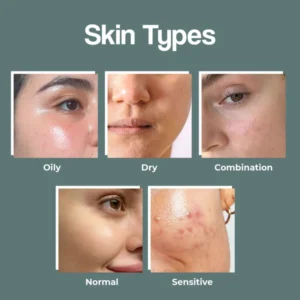
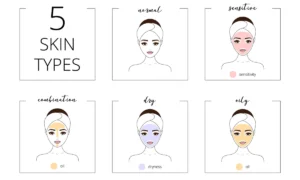
Most dermatologists classify skin into five primary types: normal, oily, dry, combination, and sensitive. Each skin type has different characteristics, which influence how your skin reacts to weather, skincare products, and daily environmental factors.
| Skin Type | Main Characteristics |
|---|---|
| Normal | Balanced oil and moisture |
| Oily | Excess sebum production |
| Dry | Lack of moisture and oils |
| Combination | Oily T-zone with dry cheeks |
| Sensitive | Easily irritated by products or environmental triggers |
Remember that your skin type can change over time because of:
- Age
- Hormones
- Pregnancy
- Climate
- Medications
- Lifestyle
- Seasonal changes
Takeaway
Most people fall into one of five main skin types, but your skin may change throughout life.
How to Identify Your Skin Type Correctly at Home
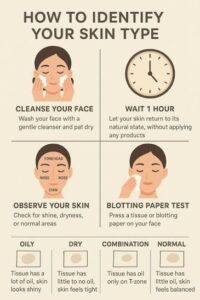
The easiest way to identify your skin type is to wash your face with a gentle cleanser, avoid applying products, wait about 30–60 minutes, and observe how your skin feels and looks. This simple method provides useful clues about oil production and hydration.
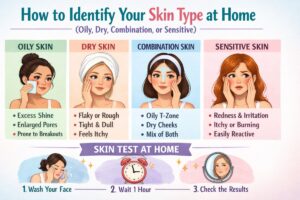
Step 1: Cleanse Your Face
Use a gentle, fragrance-free cleanser.
Avoid:
- Heavy moisturizers
- Serums
- Makeup
- Sunscreen
Pat your face dry.
Step 2: Wait
Leave your skin bare for 30–60 minutes.
Do not apply any skincare products.
Step 3: Observe Your Skin
Ask yourself:
- Does your skin feel tight?
- Does your forehead become shiny?
- Are only certain areas oily?
- Do you notice flakes?
- Is your skin comfortable?
- Do you experience redness?
Your answers help determine your skin type.
Takeaway
The “wash and wait” method is one of the simplest and most reliable ways to identify your skin type at home.
The Blotting Paper Test
Blotting paper helps measure how much oil your skin produces. Gently press blotting sheets on different parts of your face. The amount and location of oil absorbed can help identify whether your skin is oily, dry, combination, or normal.
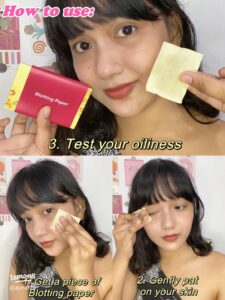
| Result | Possible Skin Type |
|---|---|
| Very little oil | Dry |
| Small amount | Normal |
| Oil mainly on forehead and nose | Combination |
| Oil everywhere | Oily |
Takeaway
Blotting paper provides a quick and easy way to assess oil production.
Signs of Normal Skin
Normal skin is balanced. It produces enough natural oil to stay hydrated without becoming greasy. Pores are usually small, breakouts are uncommon, and the skin feels comfortable throughout the day.
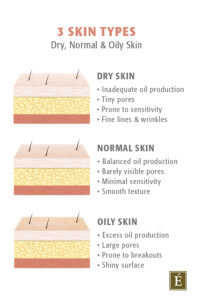
Common signs include:
- Smooth texture
- Even tone
- Small pores
- Few blemishes
- Comfortable after cleansing
- Healthy glow
Takeaway
Normal skin requires maintenance rather than intensive correction.
Signs of Oily Skin
Oily skin produces excess sebum, making the face appear shiny, especially around the forehead, nose, and chin. Larger pores and frequent breakouts are also common due to increased oil production.
Signs include:
- Midday shine
- Large pores
- Blackheads
- Whiteheads
- Acne
- Makeup wears off quickly
Takeaway
Oil control—not oil removal—is the goal for oily skin.
Signs of Dry Skin
Dry skin lacks enough moisture and natural oils to maintain a healthy skin barrier. It often feels tight after washing and may appear rough, flaky, or dull if not properly hydrated.
Common symptoms:
- Tight feeling
- Flaking
- Rough texture
- Dull appearance
- Fine lines appear more noticeable
- Itchiness
Takeaway
Dry skin benefits from gentle cleansing and rich moisturizing.
Signs of Combination Skin
Combination skin features both oily and dry areas on the face. Typically, the T-zone is oily while the cheeks remain normal or dry. This skin type often requires different products or application methods for different facial areas.
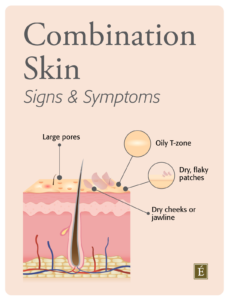
Characteristics:
- Oily forehead
- Oily nose
- Dry cheeks
- Uneven texture
- Occasional breakouts
Takeaway
Combination skin requires balanced skincare rather than treating the entire face the same way.
Signs of Sensitive Skin
Sensitive skin reacts more easily to skincare products, weather changes, fragrances, or other environmental factors. It may become red, itchy, burning, or irritated even when using products designed for general skin care.
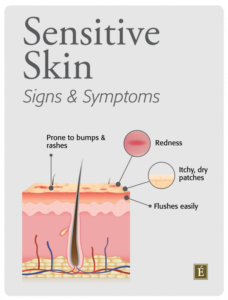
Common signs:
- Redness
- Burning
- Stinging
- Itching
- Frequent irritation
- Product reactions
Takeaway
Choose gentle, fragrance-free products and introduce new products gradually.
Skin Type vs. Skin Condition
Skin type is generally stable, while skin conditions are temporary issues that can affect any skin type. For example, oily skin can still become dehydrated, and dry skin can develop acne. Understanding this difference helps you choose treatments more effectively.
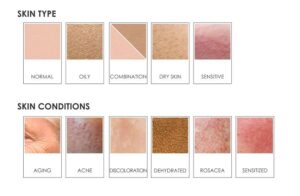
| Skin Type | Skin Condition |
|---|---|
| Oily | Acne |
| Dry | Dehydration |
| Normal | Redness |
| Combination | Hyperpigmentation |
| Sensitive | Eczema flare-ups |
Takeaway
Treat your skin type as the foundation and address skin conditions as needed.
Factors That Can Change Your Skin Type
Your skin can change due to internal and external factors. Hormones, aging, weather, medications, stress, and lifestyle habits all influence oil production, hydration, and skin sensitivity over time.
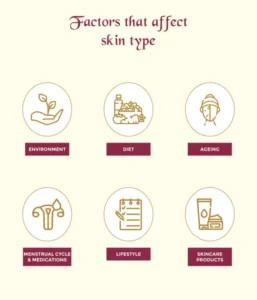
Common factors include:
- Puberty
- Pregnancy
- Menopause
- Seasonal weather
- Air conditioning
- Diet
- Stress
- Lack of sleep
- New medications
Takeaway
Reassess your skin type periodically, especially after major life or seasonal changes.
Common Mistakes When Identifying Skin Type
Many people misidentify their skin type because they observe their skin immediately after cleansing, use harsh products before testing, or confuse temporary skin conditions with their natural skin type. Avoiding these mistakes leads to more accurate results.

Avoid:
- Testing right after washing
- Using harsh cleansers
- Confusing dehydration with dryness
- Judging after wearing makeup all day
- Ignoring seasonal changes
Takeaway
Test your skin under normal conditions for the most accurate assessment.
How to Care for Each Skin Type
Once you identify your skin type, tailor your skincare routine to its needs. Use gentle cleansing, appropriate hydration, and daily sun protection while choosing products formulated for your specific skin type.
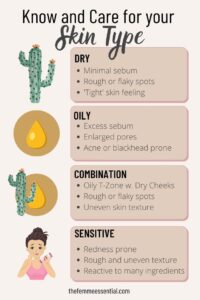
| Skin Type | Best Routine |
|---|---|
| Normal | Gentle cleanser + lightweight moisturizer |
| Dry | Cream cleanser + rich moisturizer |
| Oily | Gel cleanser + oil-free moisturizer |
| Combination | Balanced cleanser + targeted moisturizing |
| Sensitive | Fragrance-free cleanser + soothing moisturizer |
Everyone should also:
- Wear sunscreen daily (SPF 30 or higher)
- Avoid over-cleansing
- Patch-test new products
- Stay consistent with routines
Takeaway
The right routine supports your skin’s natural balance and long-term health.
Quick Skin Type Checklist
Use this checklist to identify your skin:
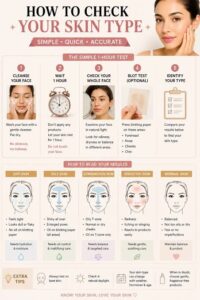
You may have Normal Skin if:
- ✓ Comfortable after washing
- ✓ Minimal shine
- ✓ Small pores
You may have Oily Skin if:
- ✓ Shiny face
- ✓ Large pores
- ✓ Frequent acne
You may have Dry Skin if:
- ✓ Tightness
- ✓ Flakes
- ✓ Rough texture
You may have Combination Skin if:
- ✓ Oily forehead
- ✓ Dry cheeks
- ✓ Mixed texture
You may have Sensitive Skin if:
- ✓ Burning
- ✓ Redness
- ✓ Product irritation
Frequently Asked Questions (FAQ)
How can I identify my skin type at home?
Wash your face with a gentle cleanser, leave it product-free for 30–60 minutes, and observe how it feels and looks. Tightness, shine, dryness, or redness can help you determine your skin type.
Can my skin type change over time?
Yes. Hormones, aging, climate, medications, stress, and seasonal changes can affect oil production and hydration, causing your skin type or its behavior to change.
Is combination skin common?
Yes. Combination skin is one of the most common skin types, with an oily T-zone and normal or dry cheeks.
How often should I check my skin type?
Reassess your skin every few months or whenever you notice significant changes due to weather, lifestyle, or hormonal shifts.
Can oily skin still be dehydrated?
Yes. Oily skin can lack water while still producing excess oil. This is called dehydration, which is a temporary skin condition rather than a skin type.
Should sensitive skin avoid all active ingredients?
No. Sensitive skin can often tolerate active ingredients if they are introduced slowly, used at appropriate strengths, and paired with barrier-supporting skincare.
Final Thoughts
Learning how to identify your skin type correctly is the foundation of an effective skincare routine. Once you understand whether your skin is normal, oily, dry, combination, or sensitive, you can make informed choices about cleansers, moisturizers, serums, and sunscreens. Remember that your skin can change over time, so it’s worth reassessing it periodically. By observing your skin carefully and using products suited to its unique needs, you can support a healthier complexion and achieve more consistent, long-term skincare results.