
Natural hair masks can help improve the feel, moisture, and manageability of dry or damaged hair when they’re used appropriately.
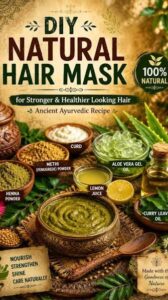
Ingredients such as aloe vera, coconut oil, yogurt, honey, and avocado can provide conditioning benefits, while gentle application and proper washing help prevent buildup. Hair masks won’t permanently repair damaged hair, but they can support healthier-looking, softer, more manageable strands.
Key Takeaways
- Natural hair masks can provide moisture, softness, slip, and temporary conditioning.
- Different ingredients suit different hair needs.
- Coconut oil may help reduce protein loss from hair when used before washing.
- Aloe vera can provide a lightweight conditioning effect.
- Honey works as a humectant, helping attract and retain moisture.
- Very dry or damaged hair may benefit from conditioning masks, but severely split or broken ends cannot be repaired permanently.
- Natural doesn’t automatically mean safe for everyone.
- Always patch-test ingredients that may irritate your skin and stop using a mask if burning, itching, or a rash develops.
- A healthy hair routine also includes gentle washing, adequate conditioning, careful detangling, and minimizing excessive heat and chemical processing.
What Are Natural Hair Masks?
Natural hair masks are conditioning treatments made from plant-based foods, oils, or other simple ingredients that are applied to the hair for a limited period before being rinsed out. They’re mainly used to add moisture, reduce roughness, improve softness, and make hair easier to manage.
Unlike a shampoo, a hair mask isn’t primarily designed to cleanse the scalp. And unlike a permanent chemical treatment, it doesn’t change the structure of your hair.
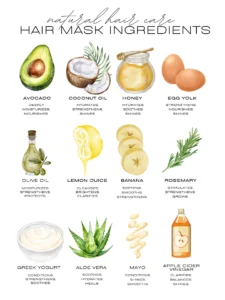
A homemade mask may contain ingredients such as:
- Coconut oil
- Olive oil
- Avocado
- Aloe vera
- Honey
- Plain yogurt
- Banana
- Egg
- Oatmeal
- Flaxseed gel
The best ingredient depends on your hair’s condition, texture, porosity, and how much product you normally use.
Why Use Natural Hair Masks?
Hair becomes dry and rough when its outer layer loses moisture and the strand’s surface becomes more damaged or uneven. Frequent heat styling, bleaching, coloring, chemical treatments, sun exposure, friction, and harsh handling can all contribute to this problem.
A suitable hair mask can temporarily improve how the hair feels and behaves.
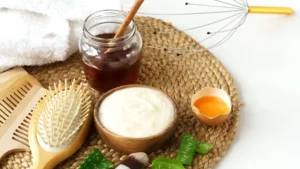
Common reasons people use hair masks include:
- Dryness
- Frizz
- Rough texture
- Tangling
- Lack of softness
- Heat-related dryness
- Brittle-feeling hair
- Difficulty detangling
- Dull-looking strands
A mask is best viewed as supportive hair care, not a cure for hair loss or a permanent repair treatment.
10 Natural Hair Masks for Stronger, Healthier Hair
Different masks offer different benefits. You don’t need to use every recipe. Choose one based on what your hair actually needs.
1. Coconut Oil Hair Mask
Coconut oil is one of the better-studied natural oils for hair care. Its fatty acids can penetrate the hair shaft more effectively than some other oils, and research has found that coconut oil can help reduce protein loss from hair.
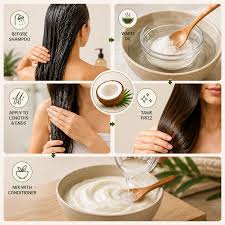
What You Need
- 1–2 tablespoons coconut oil
- A little more if you have very long or thick hair
How to Use It
- Warm a small amount between your palms.
- Apply it mainly to the mid-lengths and ends.
- If your scalp tolerates oil well, you can apply a small amount near the roots.
- Leave it on for around 20–60 minutes.
- Shampoo thoroughly.
- Follow with conditioner if your hair still feels dry.
Best For
Coconut oil may work particularly well for:
- Dry hair
- Coarse hair
- Thick hair
- Hair that feels rough after washing
- Hair exposed to frequent washing or styling
One Important Limitation
Coconut oil isn’t ideal for everyone. Some people find that heavy oiling leaves their hair greasy, stiff, or difficult to wash. Fine hair may become weighed down quickly.
Start with a small amount rather than coating your entire head.
2. Aloe Vera Hair Mask
Aloe vera is widely used in personal care because it has a soothing, water-rich gel. For hair, it can provide lightweight conditioning and help hair feel smoother.
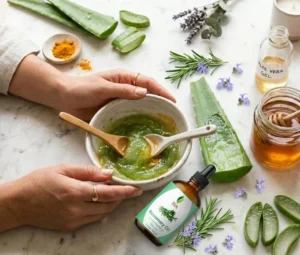
What You Need
- 2–3 tablespoons pure aloe vera gel
- 1 teaspoon coconut or jojoba oil, optional
How to Use It
- Combine the ingredients.
- Apply the mixture to damp hair.
- Concentrate on the lengths and ends.
- Leave it for about 20–30 minutes.
- Rinse thoroughly.
- Shampoo if necessary.
Best For
Aloe vera may be useful for people who prefer a lighter treatment, particularly those with:
- Fine hair
- Mild dryness
- Frizz
- Hair that becomes greasy easily
Be careful with homemade aloe preparations. The yellow latex found in the aloe leaf can irritate the skin. A properly prepared cosmetic aloe gel is generally more practical than applying raw plant material directly.
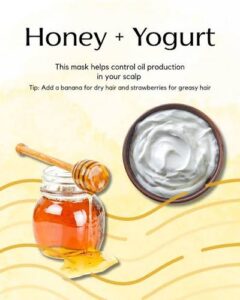
3. Honey and Yogurt Hair Mask
Honey is a humectant, meaning it can attract water. Yogurt contains water and proteins and can provide a creamy conditioning base.
What You Need
- 2 tablespoons plain yogurt
- 1 tablespoon honey
How to Use It
- Mix the ingredients until smooth.
- Apply to damp hair.
- Focus on dry areas and the ends.
- Leave it on for 15–20 minutes.
- Rinse well with lukewarm water.
- Shampoo if needed.
Best For
This mask may suit:
- Dry hair
- Dull-looking hair
- Rough-feeling ends
- Hair that needs extra softness
Don’t expect yogurt to permanently strengthen damaged hair. Its main benefit as a homemade mask is temporary conditioning and improved feel.
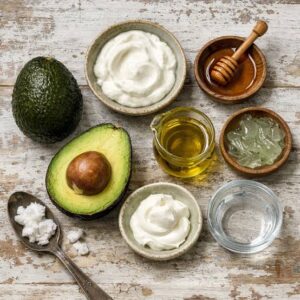
4. Avocado Hair Mask
Avocado contains fats and other nutrients, but eating avocado and applying it to hair are two different things. A topical avocado mask mainly acts as a rich conditioning treatment.
What You Need
- ½ ripe avocado
- 1 tablespoon olive oil or coconut oil
How to Use It
- Mash the avocado until completely smooth.
- Mix in the oil.
- Apply to damp hair.
- Leave it on for 20–30 minutes.
- Rinse carefully.
- Shampoo thoroughly to remove residue.
Best For
Avocado masks are most suitable for:
- Coarse hair
- Dry hair
- Thick curls
- Rough ends
If your hair is fine or easily weighed down, use a smaller amount.
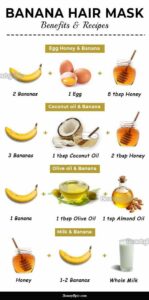
5. Banana Hair Mask
Banana is sometimes used in homemade hair treatments because its soft texture can create a creamy mask.
What You Need
- 1 very ripe banana
- 1 tablespoon yogurt
- 1 teaspoon honey
How to Use It
- Blend the banana until completely smooth.
- Add yogurt and honey.
- Apply to damp hair.
- Leave for about 15–20 minutes.
- Rinse very thoroughly.
- Shampoo to remove residue.
A Practical Warning
Banana pieces can become surprisingly difficult to remove from hair.
Blend it extremely well.
If your hair is curly, thick, or highly textured, use a fine strainer after blending if necessary. A poorly blended banana mask can turn a simple treatment into a frustrating washing session.
6. Egg Hair Mask
Egg-based hair masks are popular because eggs contain proteins. However, applying egg to hair isn’t the same as delivering protein into the hair shaft in a controlled cosmetic formulation.
Egg masks may temporarily make hair feel different, but they aren’t necessary for healthy hair.
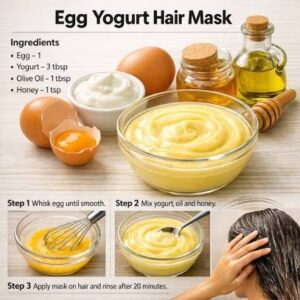
What You Need
- 1 egg
- 1 tablespoon plain yogurt
- 1 teaspoon olive oil
How to Use It
- Beat the mixture thoroughly.
- Apply to cool or lukewarm damp hair.
- Leave for approximately 10–15 minutes.
- Rinse with cool or lukewarm water.
- Shampoo normally.
Why Avoid Hot Water?
Hot water can cook the egg, making the residue harder to remove.
Best For
This type of mask is best considered an occasional conditioning experiment rather than an essential strengthening treatment.
If your hair feels stiff or dry afterward, discontinue it.
7. Olive Oil Hair Mask
Olive oil can help reduce dryness and improve the feel of coarse hair. Because it’s rich and heavy, it may not be comfortable for fine hair.
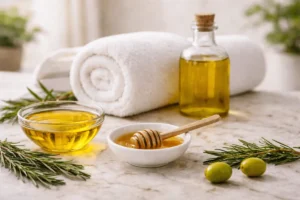
What You Need
- 1–2 tablespoons extra-virgin olive oil
- 1 tablespoon aloe vera gel, optional
How to Use It
- Mix the ingredients.
- Apply primarily to the lengths and ends.
- Leave for 20–30 minutes.
- Shampoo thoroughly.
- Condition afterward if needed.
Best For
- Coarse hair
- Dry ends
- Thick hair
- Textured hair
Use less if your hair gets oily quickly.
8. Oatmeal and Yogurt Hair Mask
Oatmeal is often used in skin and scalp care because it can be soothing. A finely ground oatmeal mixture can create a gentle conditioning treatment.
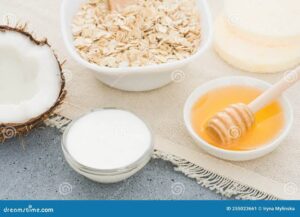
What You Need
- 1 tablespoon finely ground oats
- 2 tablespoons plain yogurt
- 1 teaspoon honey
How to Use It
- Mix everything into a smooth paste.
- Apply mainly to the hair rather than aggressively rubbing the scalp.
- Leave for 15–20 minutes.
- Rinse thoroughly.
- Shampoo if needed.
Best For
This mask may be appropriate when the hair feels dry and needs gentle conditioning.
Avoid vigorous scrubbing, especially if your scalp is sensitive.
9. Flaxseed Gel Hair Mask
Flaxseed gel is a simple plant-based styling and conditioning option. It can provide slip and light hold, which may be especially useful for curly or wavy hair.
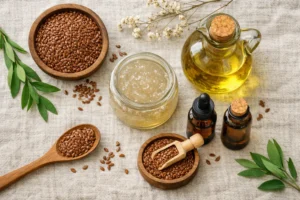
How to Make Flaxseed Gel
- Add about ¼ cup flaxseeds to approximately 2 cups of water.
- Simmer until the liquid becomes slightly gel-like.
- Strain while warm.
- Allow it to cool completely.
- Store it in the refrigerator and use it promptly.
How to Use It
Apply a small amount to damp hair, especially the lengths and curls. Leave it on for around 15–30 minutes as a mask, then rinse.
It can also be used in a small amount as a leave-in styling gel if your hair tolerates it.
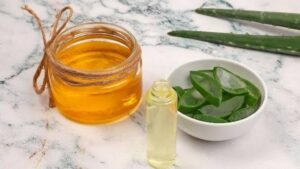
10. Honey and Aloe Vera Hair Mask
This is a lighter option for people who don’t want a heavy oil treatment.
What You Need
- 2 tablespoons aloe vera gel
- 1 teaspoon honey
- 1 teaspoon jojoba oil, optional
How to Use It
- Mix the ingredients.
- Apply to damp hair.
- Concentrate on the mid-lengths and ends.
- Leave for 15–20 minutes.
- Rinse thoroughly.
Best For
This mask may work well for:
- Fine-to-medium hair
- Mild dryness
- Frizz
- Hair that doesn’t tolerate heavy oils
How to Choose the Right Natural Hair Mask
The best natural hair mask isn’t necessarily the one with the most ingredients. Your hair’s needs matter more.
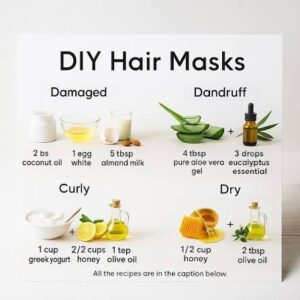
For Dry Hair
Choose richer, moisturizing ingredients such as:
- Coconut oil
- Avocado
- Olive oil
- Honey
- Yogurt
Dry hair often benefits from a combination of water-based conditioning and a small amount of oil.
For Fine Hair
Heavy masks can make fine hair flat and greasy.
Try:
- Aloe vera
- Light amounts of honey
- Flaxseed gel
- A small amount of jojoba oil
Keep applications short and use less product.
For Curly Hair
Curly hair often benefits from extra moisture and reduced friction.
Consider:
- Aloe vera
- Honey
- Avocado
- Flaxseed gel
- Small amounts of coconut or olive oil
Apply products gently and avoid aggressive brushing.
For Coarse Hair
Coarse hair may tolerate richer treatments better.
Try:
- Coconut oil
- Avocado
- Olive oil
- Yogurt and honey combinations
Start with a modest amount and adjust according to how your hair responds.
For Oily Hair
If your roots become oily quickly, don’t automatically put an oil-heavy mask on your scalp.
Instead:
- Apply the mask from mid-length to ends.
- Use lightweight ingredients.
- Wash thoroughly.
- Avoid applying excessive product.
How to Apply a Natural Hair Mask Correctly
Application technique matters almost as much as the ingredients.
Step 1: Start With Damp Hair
Slightly damp hair makes it easier to spread many masks evenly.
You don’t need soaking-wet hair.
Step 2: Divide Your Hair
Separate thick or long hair into several sections.
This helps you use less product while still covering the areas that need treatment.
Step 3: Start at the Ends
The ends are usually the oldest part of the hair and often show the most dryness and mechanical damage.
Apply the mask there first.
Step 4: Work Toward the Mid-Lengths
Spread the remaining product upward.
There’s usually no need to saturate the scalp unless the particular treatment is specifically intended for scalp use and your skin tolerates it.
Step 5: Leave It On for a Reasonable Time
Most homemade masks don’t need to stay on for hours.
Around 15–30 minutes is enough for many simple conditioning treatments.
Longer isn’t automatically better.
Step 6: Rinse Thoroughly
Use lukewarm or cool water.
Make sure no food particles or thick residue remain.
Step 7: Shampoo When Necessary
Oil-heavy masks may require shampooing.
Lightweight aloe or flaxseed treatments may need less cleansing.
Step 8: Condition if Needed
If your hair still feels rough after rinsing, apply your normal conditioner.
How Often Should You Use Natural Hair Masks?
For most people, once a week or every one to two weeks is a reasonable starting point.
You don’t need to mask your hair every day.
The ideal frequency depends on:
- Hair texture
- Hair dryness
- Product buildup
- Washing frequency
- Chemical processing
- Heat styling
- How your hair responds to the mask
If your hair becomes greasy, limp, coated, or difficult to style, you’re probably using too much product or treating it too often.
Can Natural Hair Masks Make Hair Stronger?
Natural hair masks can improve the condition and appearance of hair, but the word “stronger” needs some context.
Hair that is properly conditioned can feel smoother and less prone to tangling. This can reduce some mechanical stress during combing and styling.
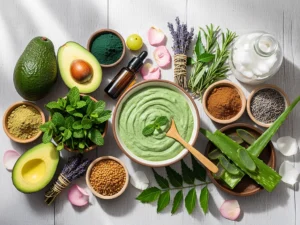
Some oils may also interact with the hair shaft in ways that reduce certain types of damage. Coconut oil, for example, has evidence supporting its ability to reduce protein loss from hair.
However, a mask cannot permanently reverse:
- Split ends
- Severe chemical damage
- Burned hair
- Completely broken strands
Once a hair fiber is significantly damaged, trimming may be the only way to remove the damaged portion.
Natural Hair Masks vs. Commercial Hair Treatments
Homemade masks can be inexpensive and convenient, but they aren’t automatically better than professionally formulated conditioners or masks.
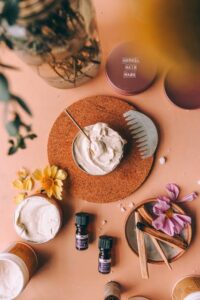
Commercial hair products can contain ingredients specifically selected for:
- Conditioning
- Detangling
- pH control
- Hair-surface protection
- Preservation
- Consistent texture
- Reduced friction
Homemade mixtures don’t usually have the same level of formulation control.
That doesn’t mean homemade masks are useless. It simply means they’re best viewed as an optional part of a broader hair-care routine.
Common Mistakes to Avoid
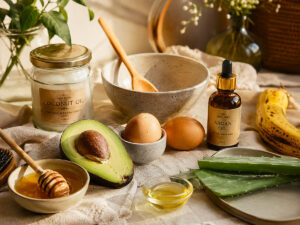
1. Using Too Much Oil
More oil doesn’t necessarily mean more moisture.
Excess oil can leave hair greasy, heavy, or difficult to wash.
2. Applying Every Mask to the Scalp
The scalp is skin, not simply an extension of the hair shaft.
Some ingredients may cause irritation, especially if you have sensitive skin.
3. Leaving Masks on Overnight
Longer application isn’t automatically more effective.
Overnight oiling can also make washing difficult and may irritate some scalps.
4. Using Hot Water With Egg Masks
Hot water can cook the egg onto the hair.
Use cool or lukewarm water instead.
5. Scrubbing the Hair Aggressively
Wet hair can be more vulnerable to mechanical damage.
Don’t rub or pull aggressively while applying or removing a mask.
6. Expecting a Mask to Stop Hair Loss
Hair masks primarily affect the hair shaft.
They don’t treat the underlying causes of persistent hair loss.
If you’re experiencing significant or sudden hair shedding, a healthcare professional or dermatologist can help identify the cause.
7. Using Undiluted Essential Oils
Essential oils can irritate or sensitize the skin.
Never assume that because an ingredient is natural, it’s safe to apply directly to the scalp.
8. Ignoring Allergies
Food ingredients can still cause allergic reactions.
If you’re allergic to an ingredient, don’t put it on your hair or scalp simply because it’s part of a DIY recipe.
Safety Tips for Homemade Hair Masks
Natural hair care should still be approached carefully.
Patch-Test New Ingredients
If you’re using an unfamiliar ingredient, test a small amount on a small area of skin first.
Stop if you experience:
- Burning
- Itching
- Redness
- Swelling
- Rash
Don’t Apply Broken Skin
Avoid applying homemade masks to cuts, sores, or irritated areas of the scalp.
Keep Food-Based Masks Fresh
Ingredients such as yogurt, egg, fruit, and other foods can spoil.
Prepare only what you need and don’t keep homemade mixtures sitting around for long periods.
Avoid the Eyes
Many DIY ingredients can cause significant irritation if they enter the eyes.
Be Careful With Raw Ingredients
Raw eggs and other food ingredients should be handled hygienically. Wash your hands and containers thoroughly after preparation.
Natural Hair Masks for Different Hair Problems
| Hair Concern | Ingredients to Consider | Application |
|---|---|---|
| Dry hair | Coconut oil, avocado, honey | Mid-lengths and ends |
| Fine hair | Aloe vera, flaxseed gel | Light application |
| Frizzy hair | Aloe vera, honey, light oil | Lengths and ends |
| Coarse hair | Coconut oil, avocado, olive oil | Richer treatment |
| Curly hair | Flaxseed gel, aloe, avocado | Curls and lengths |
| Dry ends | Coconut oil, olive oil, avocado | Focus on ends |
| Product buildup | Gentle cleansing rather than heavy masking | Avoid excessive oils |
| Sensitive scalp | Minimal ingredients | Keep mask off scalp |
A Simple Weekly Hair Mask Routine
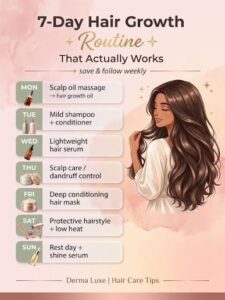
If you’re new to homemade hair treatments, keep your routine simple.
Week 1: Moisture
Use an aloe and honey mask.
Week 2: Conditioning
Try yogurt and honey.
Week 3: Oil Treatment
Use a small amount of coconut oil on the lengths and ends.
Week 4: Rest
Skip the DIY mask and continue with your normal shampoo and conditioner routine.
You can then evaluate which treatment actually improved your hair.
There’s no need to rotate through multiple masks simply because they’re available.
How to Build a Healthier Hair-Care Routine
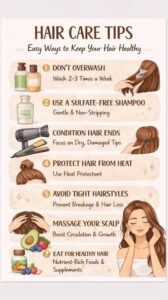
Hair masks work best when they’re part of good everyday habits.
Wash According to Your Scalp
There’s no universal number of days that everyone should wait between washes.
People with oily scalps may need frequent washing, while dry or textured hair may need less frequent cleansing.
Use Conditioner Regularly
Conditioner helps reduce friction and makes detangling easier.
For many people, regular conditioning is more important than occasional DIY masks.
Reduce Excessive Heat
Frequent use of high-temperature styling tools can contribute to damage.
When possible:
- Lower the temperature.
- Limit repeated passes.
- Use heat protection.
- Avoid styling already-damaged hair at very high temperatures.
Detangle Gently
Start from the ends and gradually work upward.
Avoid pulling through stubborn knots.
Protect Hair During Sleep
If friction causes tangling, consider a smooth pillowcase or a loose protective hairstyle that doesn’t pull on the roots.
Trim Severely Split Ends
A mask may make damaged ends feel smoother temporarily, but it can’t permanently fuse split hair back together.
Are Natural Hair Masks Good for Hair Growth?
Natural hair masks generally do not directly make hair grow faster.
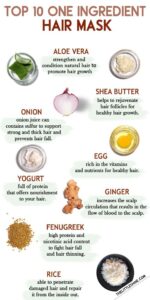
Hair growth occurs from follicles in the scalp. A mask applied to the hair lengths mainly affects the existing hair fiber.
However, good hair care can help preserve the hair you already have by reducing breakage and unnecessary damage.
That distinction matters.
Hair Growth vs. Hair Retention
Hair growth refers to the production of new hair from follicles.
Hair retention means keeping the hair you grow instead of losing length through breakage.
A conditioning routine can support hair retention, but it shouldn’t be marketed as a treatment for hair loss.
When Should You Avoid DIY Hair Masks?
Skip a homemade mask if your scalp is:
- Irritated
- Inflamed
- Scratched
- Sunburned
- Recently chemically treated and sensitive
- Experiencing an unexplained rash
You should also be cautious if you have known allergies to any ingredient.
If your hair is severely damaged from bleaching, repeated chemical treatments, or heat, a simple DIY mask may not be enough. A professional hair-care approach may be more appropriate.
Frequently Asked Questions
1. What is the best natural hair mask for stronger, healthier hair?
There isn’t one best mask for every hair type. Coconut oil can be useful for reducing protein loss, while aloe vera and honey can provide lighter conditioning. Choose the treatment according to your hair’s dryness, thickness, texture, and tolerance for oils.
2. How often should I use a natural hair mask?
Start with once a week or every one to two weeks. Fine or oily hair may need less frequent treatments, while very dry or coarse hair may tolerate richer masks more often.
3. Can natural hair masks repair damaged hair?
They can improve the feel and appearance of damaged hair temporarily, but they cannot permanently repair severely damaged or split hair. Once the hair fiber has split, trimming is the only permanent solution.
4. Can I leave a hair mask on overnight?
It’s usually unnecessary. Many homemade masks work well within 15–30 minutes. Leaving food-based or oily mixtures on overnight may increase buildup or cause scalp irritation.
5. Is coconut oil good for hair?
Coconut oil can be beneficial for some hair types and has evidence that it can reduce protein loss from hair. However, it may weigh down fine hair or leave some people’s hair feeling coated or stiff.
6. Can aloe vera make hair grow faster?
There isn’t strong evidence that applying aloe vera to the hair directly makes hair grow faster. Aloe can provide a soothing or conditioning effect, but hair growth depends primarily on the health and activity of the hair follicles.
7. Are egg masks good for hair?
Egg masks are a popular DIY treatment, but they aren’t essential for healthy hair. They may temporarily change the feel of the hair, but properly formulated conditioners and treatments can provide more predictable conditioning benefits.
8. Can I use a natural hair mask on my scalp?
It depends on the ingredients and your scalp. Some masks are better applied only to the lengths and ends. Oils and food-based ingredients can cause irritation or buildup for some people, so avoid applying them to an irritated scalp.
9. Why does my hair feel dry after using a hair mask?
The ingredient may not suit your hair, or you may be using too much product. Heavy oils can leave some hair types coated rather than moisturized. Try a lighter mask and reduce the quantity.
10. Can hair masks stop hair fall?
Hair masks aren’t a treatment for most causes of hair loss. They can help condition the hair shaft and potentially reduce some breakage, but persistent, sudden, or significant shedding should be evaluated by a healthcare professional.
Key Takeaways
Natural hair masks can be a useful addition to a simple hair-care routine, especially when your main concerns are dryness, roughness, frizz, or difficult detangling.
The most important points are:
- Choose the mask according to your hair type.
- Use a small amount first.
- Focus rich treatments on the lengths and ends.
- Don’t assume natural means risk-free.
- Patch-test unfamiliar ingredients.
- Don’t leave homemade masks on unnecessarily long.
- Don’t expect DIY treatments to repair split ends permanently.
- Don’t confuse hair growth with preventing breakage.
- Regular conditioning and gentle handling matter more than complicated DIY routines.
Final Thoughts
Natural hair masks for stronger, healthier hair can be simple, affordable, and useful when you choose ingredients that match your hair’s needs. Coconut oil may help protect the hair from protein loss, while aloe vera, honey, yogurt, avocado, and flaxseed gel can provide different forms of conditioning and manageability.
Still, a homemade mask isn’t a magic treatment. Healthy-looking hair comes from consistent care: gentle cleansing, regular conditioning, sensible heat use, careful detangling, adequate nutrition, and protection from unnecessary damage.
Start with one simple mask, use it occasionally, and pay attention to how your hair responds. If a treatment leaves your hair greasy, stiff, irritated, or difficult to manage, there’s no reason to keep using it just because the ingredients are natural.
The best hair routine is the one that keeps your hair comfortable, manageable, and protected over time.