
Simple self-care habits that improve your appearance include getting enough sleep, eating balanced meals, staying hydrated, caring for your skin and hair, maintaining good hygiene, and managing daily stress. These small actions can help you look fresher, feel more comfortable, and support your overall well-being. You don’t need an expensive beauty routine to make a difference; consistency with basic habits often matters more than using lots of products.
Your appearance is influenced by many things, including genetics, age, health, lifestyle, and environment. While self-care can’t change every aspect of how you look, it can help you care for your natural features and avoid habits that leave you looking tired or feeling less confident.
Why Do Simple Self-Care Habits Matter for Your Appearance?
Self-care means taking practical steps to look after your physical health, comfort, and emotional well-being. Many of these habits also affect how your skin, hair, and body look and feel.
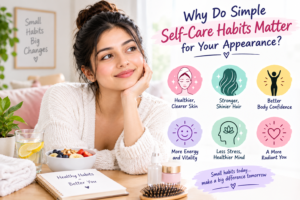
For example, a regular sleep schedule may help you look less tired, while gentle cleansing and daily sun protection can support healthier-looking skin. Balanced nutrition helps supply nutrients your body needs to maintain normal skin and hair function.
The benefits are usually gradual rather than dramatic. A single night of good sleep or one healthy meal won’t transform your appearance. However, small habits repeated over time can support a fresher, more well-groomed look.
It is also important to remember that healthy skin doesn’t always look perfectly smooth, and healthy hair doesn’t have to be shiny or straight. Natural features, skin texture, and age-related changes are normal.
10 Simple Self-Care Habits That Improve Your Appearance
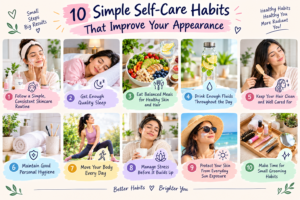
1. Follow a Simple, Consistent Skincare Routine
One of the easiest ways to care for your appearance is to keep your skincare routine simple. You don’t need a shelf full of serums, masks, and creams to maintain healthy-looking skin.
Start with three basic steps: cleansing, moisturizing, and sun protection during the day. Choose products based on your skin type and concerns rather than following every new beauty trend.
Here’s a practical routine to follow:
-
Morning: Gently cleanse your face if needed, apply moisturizer, and finish with broad-spectrum sunscreen with SPF 30 or higher.
-
Evening: Remove makeup and sunscreen, cleanse your skin gently, and apply moisturizer.
-
As needed: Add a targeted product for a specific concern, such as acne or uneven skin tone, if your skin tolerates it.
Avoid washing your face too often or scrubbing it aggressively. These habits can irritate the skin and make existing problems worse. If a product causes persistent burning, redness, or itching, stop using it and seek advice if the symptoms continue.
Why it helps: Gentle, regular skincare supports the skin barrier, helps manage dryness, and protects your skin from environmental damage. Results vary depending on your skin type and the products you use.
2. Get Enough Quality Sleep
Sleep is an essential part of a healthy lifestyle, and it can affect how refreshed you look and feel. After a night of poor sleep, you may notice puffiness around your eyes, a tired appearance, or difficulty concentrating.
Most adults need at least seven hours of sleep each night, although individual needs vary.
Try these habits to improve your sleep:
-
Go to bed and wake up at roughly the same time each day.
-
Create a quiet, comfortable sleeping environment.
-
Reduce stimulating activities and bright screen exposure before bedtime.
-
Avoid drinking caffeinated beverages late in the day if they interfere with your sleep.
-
Develop a relaxing nighttime routine, such as reading or taking a warm shower.
You don’t need to follow a complicated nighttime ritual. A consistent bedtime and enough rest are more useful than spending extra time on unnecessary beauty steps.
Why it helps: Adequate sleep supports normal body functions and may help you look less tired. It won’t eliminate every dark circle or puffiness issue, since genetics, allergies, and other factors can also play a role.
3. Eat Balanced Meals for Healthy Skin and Hair
Your skin and hair need nutrients to function normally. A varied diet provides protein, vitamins, minerals, healthy fats, and other nutrients that support the body’s everyday processes.
Instead of following restrictive beauty diets, focus on eating a balanced range of foods.
Include foods such as:
-
Fruits and vegetables: Provide vitamins, minerals, and other beneficial plant compounds.
-
Eggs, fish, beans, lentils, and other protein sources: Supply protein needed for normal tissue maintenance.
-
Nuts and seeds: Provide healthy fats and nutrients such as vitamin E.
-
Whole grains: Supply fiber and other nutrients.
-
Dairy products or suitable alternatives: Can provide protein and minerals, depending on the product.
For example, a meal of rice, lentils, vegetables, and fish or eggs can be a practical option for many households. You don’t need expensive imported foods to eat well.
A balanced diet supports general health, but no single food can guarantee glowing skin or faster hair growth. Hair loss, brittle nails, and persistent skin changes may have causes that food alone cannot address.
Why it helps: Consistent, balanced eating gives your body the nutrients it needs to maintain healthy skin, hair, and nails.
4. Drink Enough Fluids Throughout the Day
Hydration is another important part of simple self-care habits for glowing skin. When you don’t drink enough fluids, dehydration can affect your overall well-being and may make you feel tired or unwell.
However, drinking excessive amounts of water won’t automatically make your skin flawless. Skin hydration also depends on the skin barrier, weather, skincare products, and individual health factors.
To build a practical hydration habit:
-
Drink water regularly throughout the day.
-
Keep water nearby when working, studying, or travelling.
-
Drink more when you sweat heavily or spend time in hot weather.
-
Include water-rich foods, such as cucumbers, oranges, and watermelon.
-
Pay attention to thirst and your usual fluid needs.
Fluid needs vary with temperature, activity, diet, and health. People with medical conditions that require fluid restrictions should follow their healthcare professional’s advice.
Why it helps: Adequate fluid intake supports normal body functions and helps prevent dehydration. It works best alongside a balanced diet and appropriate skincare.
5. Keep Your Hair Clean and Well Cared For
Healthy-looking hair doesn’t require an elaborate collection of hair masks and styling products. A consistent routine based on your scalp and hair type is often enough.
Start by washing your scalp as often as needed to remove excess oil, sweat, and product buildup. Someone with an oily scalp may need to wash more frequently than someone with a dry scalp.
Follow these simple hair-care habits:
-
Use a shampoo suited to your scalp.
-
Apply conditioner to the lengths of your hair if needed.
-
Detangle gently, starting near the ends.
-
Reduce frequent high-heat styling.
-
Avoid hairstyles that pull tightly on the hair.
-
Protect your hair from excessive friction and rough handling.
If your hair feels dry or brittle, consider whether frequent coloring, bleaching, heat styling, or harsh treatments may be contributing to the problem.
You should also be cautious about home remedies that promise rapid hair growth. Natural ingredients aren’t automatically safe, and some can irritate the scalp.
Why it helps: Gentle hair care can reduce avoidable breakage, improve manageability, and help your hair look neater. It cannot guarantee faster growth or reverse every type of hair loss.
6. Maintain Good Personal Hygiene
Personal hygiene is one of the most practical everyday beauty habits for women and men. Clean skin, fresh clothing, cared-for teeth, and well-maintained nails can help you feel comfortable and look well-groomed without spending much money.
Build these basic habits into your day:
-
Shower or wash your body as needed, especially after sweating.
-
Wear clean underwear, socks, and clothes.
-
Wash your hands regularly.
-
Brush your teeth twice daily with fluoride toothpaste.
-
Clean under your nails and trim them when necessary.
-
Wash your feet and dry carefully between your toes.
-
Use deodorant if you find it helpful for managing body odor.
If you use makeup brushes, sponges, or other reusable beauty tools, clean them regularly according to their intended use. Avoid sharing items that come into contact with the eyes, lips, or broken skin.
Good hygiene doesn’t mean your body must smell like perfume all day. Fragranced products can irritate some people, and excessive washing may dry or irritate the skin.
Why it helps: Regular hygiene helps manage sweat, dirt, and body odor while supporting oral health and general comfort.
7. Move Your Body Every Day
Physical activity is often discussed in terms of fitness, but it’s also an important part of self-care. Regular movement supports physical and mental health and may help you feel more energetic during everyday activities.
You don’t need an intense workout to begin.
Try activities you enjoy, such as:
-
Walking outdoors.
-
Dancing to your favorite music.
-
Cycling at a comfortable pace.
-
Stretching after sitting for long periods.
-
Following a beginner-friendly exercise routine.
Start with a manageable amount and increase activity gradually. If you spend most of the day sitting, short movement breaks can be a useful starting point.
Exercise can also make you sweat, so wash your face gently and change out of damp clothing after a workout when practical.
Why it helps: Regular physical activity supports general health, mood, and sleep. It isn’t a guaranteed treatment for acne or a direct way to achieve a particular body shape.
8. Manage Stress Before It Builds Up
Stress can affect sleep, daily routines, and how well you care for yourself. Some skin conditions, including acne, eczema, and psoriasis, can worsen during periods of stress, although stress isn’t the only cause.
You don’t have to remove every source of stress from your life. Instead, find small ways to manage it.
Try these simple self-care practices:
-
Take a short walk when you feel overwhelmed.
-
Spend a few minutes breathing slowly and comfortably.
-
Make time for hobbies that help you relax.
-
Talk to someone you trust when you need support.
-
Break large tasks into smaller, more manageable steps.
-
Protect time for sleep and regular meals.
Be realistic about what relaxation can accomplish. A few minutes of deep breathing won’t cure a skin condition, but healthy stress-management habits can support your overall well-being.
Why it helps: Managing stress may help you maintain a more consistent self-care routine and can be useful for people whose skin conditions flare during stressful periods.
9. Protect Your Skin From Everyday Sun Exposure
Sun protection is one of the most useful daily habits for maintaining healthy-looking skin over time. Ultraviolet (UV) radiation can contribute to premature skin aging, uneven pigmentation, and skin cancer.
Make sun protection part of your morning routine:
-
Apply broad-spectrum sunscreen with SPF 30 or higher to exposed skin.
-
Reapply according to the label, particularly after sweating, swimming, or towel drying.
-
Wear a hat and protective clothing when appropriate.
-
Seek shade when the sun is strong.
-
Remember areas such as your ears, neck, and the backs of your hands.
In hot or humid weather, you may prefer a lightweight sunscreen that feels comfortable on your skin. If you have sensitive or acne-prone skin, look for a formula suited to your needs.
Don’t skip sunscreen just because the weather is cloudy. UV exposure can still occur when the sky is overcast.
Why it helps: Regular sun protection helps reduce UV damage and supports healthier-looking skin as you age.
10. Make Time for Small Grooming Habits
Sometimes, a fresher appearance comes from simple details rather than additional skincare products. Clean glasses, tidy hair, comfortable clothing, and moisturized lips can make daily grooming feel easier.
Try creating a short grooming checklist:
-
Comb or style your hair in a way that suits your routine.
-
Apply lip balm when your lips feel dry.
-
Moisturize dry hands and rough areas of skin.
-
Keep your nails clean and comfortably trimmed.
-
Wear clean clothes that fit comfortably.
-
Clean your glasses and other frequently used personal items.
-
Choose makeup, if you wear it, that feels comfortable and suits your preferences.
These habits don’t need to follow beauty trends. The goal is to feel clean, comfortable, and confident in your own appearance.
Why it helps: Small grooming habits can make you look more put-together and help you feel ready for your daily activities without a lengthy routine.
A Simple Daily Self-Care Routine for a Fresh Look
You don’t need to do everything at once. Start with a few habits and build a routine that fits your schedule, budget, and personal needs.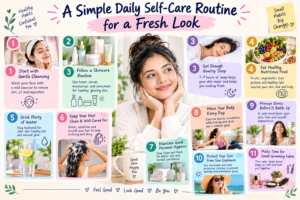
Morning routine
-
Wash your face gently and apply moisturizer if needed.
-
Apply sunscreen to exposed skin.
-
Brush your teeth and freshen up.
-
Eat a balanced breakfast and drink fluids.
-
Comb your hair and choose comfortable, clean clothes.
During the day
-
Drink water regularly.
-
Eat balanced meals.
-
Move your body and take breaks from prolonged sitting.
-
Reapply sunscreen when needed.
-
Take short breaks to relax and manage stress.
Evening routine
-
Remove makeup and cleanse your face gently.
-
Apply moisturizer and lip balm if needed.
-
Brush your teeth and change into clean sleepwear.
-
Prepare for the next day to reduce morning stress.
-
Follow a consistent bedtime that allows enough sleep.
This routine is a starting point, not a strict rule. Adjust it to your skin type, work schedule, climate, and health needs.
Common Self-Care Mistakes to Avoid
Even well-intentioned beauty habits can become unhelpful when you take them too far.
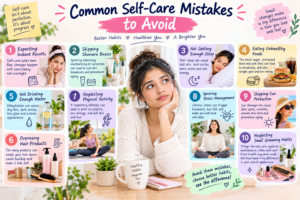
Using too many skincare products
Combining several exfoliants, serums, and active ingredients can irritate your skin. Start with the basics and introduce new products gradually.
Expecting overnight results
Healthy-looking skin and manageable hair usually require consistent care. Give a routine time to work, but stop using products that cause irritation.
Following every online beauty trend
A routine that works for one person may not suit another. Skin type, hair texture, sensitivities, and health conditions all matter.
Skipping sun protection
Moisturizer alone doesn’t protect your skin from UV radiation. Use appropriate sun protection as part of your daytime routine.
Relying on restrictive diets
Cutting out entire food groups or taking supplements without a clear need isn’t a reliable way to improve your appearance. Aim for balanced nutrition instead.
Comparing your appearance with edited images
Lighting, filters, makeup, and image editing can change how people look online. Comparing your natural appearance with heavily edited images can create unrealistic expectations.
How to Build Self-Care Habits You Can Maintain
The best routine is one you’ll actually follow. If you’re starting from scratch, avoid changing every part of your lifestyle in a single day.
Use this simple approach:
-
Choose three habits. For example, apply sunscreen, brush your teeth twice daily, and maintain a regular sleep schedule.
-
Connect habits to existing routines. Apply moisturizer after washing your face or prepare your clothes before bedtime.
-
Make habits easy to follow. Keep everyday essentials in convenient places.
-
Track your progress. Use a simple checklist rather than judging your appearance every day.
-
Review your routine weekly. Keep the habits that help and adjust anything that feels difficult or unnecessary.
Give yourself room for imperfect days. Missing one step doesn’t mean you’ve failed, and you don’t need to compensate by following an intense routine the next day.
Frequently Asked Questions
1. What are the best simple self-care habits for improving your appearance?
The most useful starting points are adequate sleep, balanced nutrition, enough fluids, gentle skincare, sun protection, regular physical activity, good hygiene, and consistent hair care. Choose habits that meet your needs and fit your daily life.
2. How can I look better naturally without makeup?
Focus on basic skincare, sun protection, clean and well-maintained hair, oral hygiene, comfortable clothing, and adequate rest. These habits can help you look refreshed without makeup, although they won’t eliminate natural skin texture or every visible concern.
3. Which daily habits help support glowing skin?
Gentle cleansing, regular moisturizing, sun protection, balanced meals, adequate sleep, and avoiding smoking can support healthy-looking skin. A natural glow isn’t guaranteed, and skin appearance varies with genetics, age, and health.
4. How long does it take for self-care habits to improve your appearance?
It depends on the habit and the individual. Better sleep may help you feel more refreshed after a few nights, while improvements in dryness or skin texture may take longer. Some concerns require specific treatment rather than lifestyle changes alone.
5. Can drinking more water make my skin glow?
Drinking enough water helps prevent dehydration and supports normal body functions. However, drinking more than your body needs won’t automatically clear acne, remove dark spots, or make your skin glow. Overall hydration and skin care both matter.
6. What is a simple self-care routine for glowing skin?
In the morning, use suitable skincare and sunscreen. During the day, eat balanced meals and drink fluids regularly. In the evening, cleanse gently, moisturize, and prepare for adequate sleep. Adjust products to your skin type and concerns.
7. How can I improve my appearance on a budget?
Focus on habits that cost little or nothing, such as getting enough sleep, eating balanced meals, staying active, maintaining hygiene, and following a simple skincare routine. Choose affordable products that meet your needs instead of buying every trending item.
8. Do natural beauty habits work for everyone?
Not in the same way. Genetics, age, hormones, environmental conditions, and underlying health issues affect how people look and respond to self-care. Natural ingredients can also cause irritation or allergies, so natural doesn’t always mean safe.
9. Can stress affect my skin and hair?
Stress can affect sleep and daily self-care, and it may worsen certain skin conditions. Significant or prolonged stress can also contribute to some types of hair shedding. Persistent skin changes or unusual hair loss deserve professional evaluation.
10. What should I do if my skin or hair doesn’t improve?
Review your routine, avoid irritating products, and consider whether your habits or environment may be contributing. If you experience persistent acne, severe dryness, itching, unusual hair loss, or other concerning changes, consult a qualified healthcare professional or dermatologist.
Final Thoughts
Simple self-care habits that improve your appearance don’t have to involve expensive products, complicated routines, or unrealistic beauty standards. Getting enough sleep, eating balanced meals, caring for your skin and hair, maintaining good hygiene, and protecting yourself from the sun are practical ways to support your appearance and well-being.
Start small, stay consistent, and give yourself time to notice what works. Your goal isn’t to achieve a perfect appearance. It’s to feel healthier, more comfortable, and confident while caring for the features that make you uniquely you.