
Red light therapy masks have become a popular at-home skincare option for people who want to improve the appearance of fine lines, uneven skin texture, and certain types of acne. These devices use specific wavelengths of light to affect skin cells without relying on ultraviolet (UV) radiation. However, results vary by device and skin concern, and at-home masks are not a replacement for proven skincare treatments or professional medical care.
Before adding one to your routine, it’s important to understand how red light therapy works, what benefits research supports, how long results may take, and which safety precautions matter most.
What Are Red Light Therapy Masks?
Red light therapy masks are wearable skincare devices that deliver red light, and sometimes near-infrared light, to the face. They use light-emitting diodes (LEDs) to expose the skin to selected wavelengths. This treatment is often called LED light therapy or photobiomodulation.
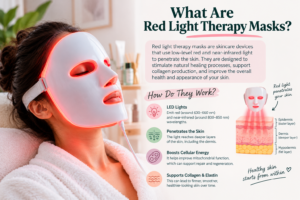
Unlike tanning beds and other UV-based devices, red light therapy does not use ultraviolet light. Its purpose is to influence cellular activity rather than create a tan.
Most home-use masks are designed for concerns such as:
-
Fine lines and visible signs of skin aging
-
Mild inflammation and redness
-
Uneven-looking skin texture
-
Certain forms of acne, especially when the device also includes blue light
Not every mask delivers the same wavelengths, intensity, or treatment dose. Those differences can affect how well a device works, so the label alone doesn’t tell you how effective it will be.
How Does Red Light Therapy Work on the Skin?
Red light therapy delivers light energy to skin tissue. Researchers believe that certain wavelengths can interact with cellular structures, including mitochondria, which help cells produce energy.
This process may influence cellular signaling, inflammation, and other pathways involved in skin repair. Some studies have reported improvements in wrinkles and skin appearance after repeated treatments, but research methods and results vary.
Red Light vs. Near-Infrared Light
Red light and near-infrared light are related but not identical.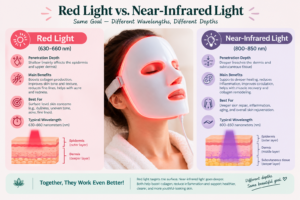
-
Red light: Visible light that is commonly studied for skin appearance, fine lines, and inflammatory processes.
-
Near-infrared light: Light beyond the visible spectrum that may penetrate deeper into tissue, depending on its wavelength and the device’s output.
-
Blue light: Visible light used in some acne-focused devices because it can target certain acne-associated bacteria.
Some masks combine red and near-infrared light, while others include red and blue light. These combinations serve different purposes, so it’s important to check the specific wavelengths and intended use.
Red Light Therapy Mask Benefits
The main potential benefits of red light therapy masks relate to visible signs of skin aging, skin texture, and inflammation. Some clinical studies have found improvements with repeated LED treatments, but the strength of the evidence depends on the condition being treated and the device used.
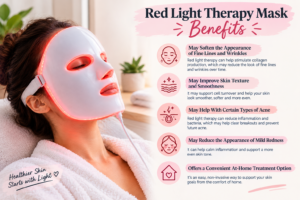
1. May Soften the Appearance of Fine Lines and Wrinkles
One of the most common reasons people try red light therapy is to reduce the appearance of fine lines.
Red light may influence cellular processes involved in collagen production. Collagen is a structural protein that helps keep skin firm and resilient. As we age, collagen gradually declines, and fine lines become more noticeable.
A red light therapy mask for wrinkles may offer modest improvements in skin smoothness and the appearance of crow’s feet over time. A 2025 randomized, sham-controlled study of 60 adults reported improvements in crow’s feet after 8 to 16 weeks of treatment with a specific red and near-infrared light device. However, the findings from one device cannot be applied to every mask on the market.
Red light therapy won’t erase deep wrinkles or stop natural aging. Think of it as a possible addition to a broader skin-aging routine rather than a complete anti-aging treatment.
2. May Improve Skin Texture and Smoothness
Rough texture can develop because of dryness, accumulated dead skin cells, sun damage, or changes associated with aging.
Some studies suggest that repeated red light treatments may improve the appearance of rough skin and make it look smoother. The exact degree of improvement varies, and evidence for consumer devices is still developing.
If your skin feels rough because it’s dehydrated, a moisturizer may provide a more immediate and reliable improvement. Red light therapy should not replace basic skincare.
3. May Help With Certain Types of Acne
A red light therapy mask for acne may be useful, particularly when the device combines red and blue light.
Blue light targets certain acne-associated bacteria, while red light may help address inflammation. A 2025 systematic review and meta-analysis found that at-home LED devices, especially those combining red and blue light, showed promise for acne. However, the studies differed in their devices and treatment schedules.
There are important limits to remember:
-
Light therapy may help with inflammatory pimples.
-
It is not a dependable treatment for blackheads and whiteheads.
-
Deep, painful nodules and cystic acne usually need medical assessment.
-
Results vary, and an LED mask may not be enough to control persistent acne.
For ongoing breakouts, a dermatologist can help you choose treatments with stronger evidence for your particular type of acne.
4. May Reduce the Appearance of Mild Redness
Red light therapy is being studied for its effects on inflammation and skin recovery. Some studies have reported improvements in redness following repeated treatments.
However, facial redness has many possible causes, including rosacea, irritation, allergies, and a damaged skin barrier. Red light therapy isn’t a universal solution for these conditions.
If your face frequently feels hot, stings, or develops persistent redness, identify the underlying cause before experimenting with a light-based device.
5. Offers a Convenient At-Home Treatment Option
Another practical benefit is convenience. A home-use mask can fit into a skincare routine without requiring an appointment or a visit to a clinic.
Depending on the device, treatment may take only a few minutes per session. You can use that time while sitting comfortably at home.
Convenience doesn’t automatically mean effectiveness, though. The device needs suitable specifications, and you must follow its instructions consistently.
Limitations of Red Light Therapy Masks
Red light therapy has promising applications, but it’s not a miracle treatment. Understanding its limitations helps prevent unrealistic expectations and unnecessary spending.
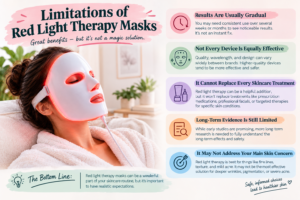
1. Results Are Usually Gradual
Red light therapy isn’t an overnight solution. Changes in skin appearance, when they occur, generally develop over repeated sessions.
Some clinical studies have reported improvements after several weeks or months. Results from a controlled study using a specific device don’t guarantee the same outcome with a different home-use mask.
2. Not Every Device Is Equally Effective
Two masks may look similar but deliver different wavelengths, light intensity, treatment doses, and coverage.
These details matter because the effects of light depend on more than its color. A device with many LEDs isn’t automatically better than one with fewer LEDs.
Look for clear technical specifications and evidence supporting the device’s intended use rather than relying on appearance or marketing claims.
3. It Cannot Replace Every Skincare Treatment
Red light therapy does not replace sunscreen, moisturizers, prescription acne treatments, or medical care when those treatments are needed.
For example, a person with persistent acne may need a treatment plan that includes a topical retinoid or another clinician-recommended medication. Someone concerned about sunspots may need sun protection and an assessment to confirm that the spots are harmless.
4. Long-Term Evidence Is Still Limited
Researchers continue to investigate the best treatment schedules, the most effective light doses, and the long-term effects of repeated use.
Evidence from one device or treatment setting cannot automatically establish the effectiveness of every consumer mask. The American Academy of Dermatology notes that more research is needed to clarify how well at-home red light devices work and how they should be used.
5. It May Not Address Your Main Skin Concern
Red light therapy may be less useful if your primary concern is unrelated to the effects it can produce.
For example, it won’t remove unwanted facial hair, replace sunscreen, or reliably treat deep acne scars. If your main concern is dark spots, melasma, or persistent pigmentation, ask a dermatologist whether visible light could worsen your condition.
Red Light Therapy Mask Side Effects
Red light therapy is generally considered low-risk when an appropriate device is used as directed. Still, side effects are possible, and the treatment isn’t suitable for everyone.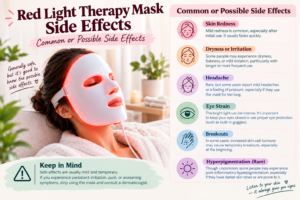
Common or Possible Side Effects
Some users may experience:
-
Temporary skin irritation
-
Mild discomfort or tenderness
-
Increased sensitivity or dryness
-
Eye discomfort if the device is unsuitable or used without required protection
-
Pigmentation changes in people who are particularly sensitive to visible light
Stop using the mask if you notice persistent redness, burning, pain, swelling, or new dark patches.
Who Should Be Careful?
Speak with a dermatologist or qualified healthcare professional before using a red light therapy mask if you:
-
Have a condition that causes sensitivity to light, such as lupus.
-
Take medication that increases photosensitivity.
-
Have a history of unusual reactions to light-based treatments.
-
Have a skin condition that is worsening or has not been diagnosed.
-
Have a history of skin cancer or a suspicious lesion in the treatment area.
-
Have concerns about how light exposure may affect existing pigmentation.
People with darker skin tones should also consider the possibility of visible-light-induced hyperpigmentation. The risk depends on individual sensitivity and the device, but new or worsening pigmentation deserves attention.
Pregnant people and those with implanted medical devices should ask their healthcare professional whether a particular device is appropriate, as precautions can vary by device and treatment circumstances.
Is Red Light Therapy Safe for Skin?
For many people, red light therapy appears to be reasonably safe in the short term when used with a suitable device and according to its instructions. Unlike ultraviolet radiation, red light has not been shown to cause the same type of DNA damage associated with UV exposure. However, this doesn’t mean that every device, dose, or use pattern is risk-free.
Three precautions are especially important:
-
Protect your eyes. Follow the manufacturer’s eye-safety instructions and use the specified protective eyewear when required.
-
Avoid excessive exposure. Longer sessions aren’t necessarily more effective. Don’t increase treatment time or frequency beyond the recommended schedule.
-
Check your medications and skin conditions. Some health conditions and medications can make light exposure unsuitable or require professional guidance.
If you experience persistent irritation or pigmentation changes, stop treatment and seek medical advice.
How to Use a Red Light Therapy Mask
Using a red light therapy mask correctly can help you avoid unnecessary irritation and follow the treatment schedule tested for that device. The exact process differs by manufacturer, so always follow the instructions supplied with your mask.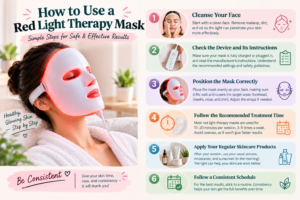
Step 1: Cleanse Your Face
Start with clean skin. Use a gentle cleanser to remove makeup, sunscreen, oil, and dirt.
Pat your face dry. Unless the device instructions say otherwise, avoid applying products that could interfere with the treatment or irritate your skin.
Step 2: Check the Device and Its Instructions
Before switching on the mask, check that it’s intended for facial use and that you understand the treatment duration, frequency, and eye-protection requirements.
Make sure the mask fits properly and that there are no damaged wires, cracked components, or other signs of malfunction.
Step 3: Position the Mask Correctly
Place the mask on your face as directed by the manufacturer. Some masks sit directly against the skin, while others maintain a small distance.
Don’t assume that all devices should be positioned in the same way. Incorrect placement can affect the light reaching the treatment area.
Step 4: Follow the Recommended Treatment Time
Use the mask for the specified duration. Don’t extend a session because your skin doesn’t feel different afterward.
Red light therapy doesn’t necessarily produce a sensation you can feel, and longer exposure doesn’t automatically mean better results.
Step 5: Apply Your Regular Skincare Products
After treatment, use a gentle moisturizer if your skin needs hydration. Apply sunscreen during the daytime as part of your normal sun-protection routine.
You don’t need to add several new serums immediately after using the mask. Keeping your routine simple makes it easier to identify the cause if irritation develops.
Step 6: Follow a Consistent Schedule
Use the mask at the frequency recommended by the manufacturer. Some devices are designed for several sessions per week, while others use a different schedule.
Avoid adding extra sessions or combining multiple light devices without professional guidance. Consistency within the recommended schedule is more sensible than excessive use.
Best Red Light Therapy Mask for Home Use: What to Look For
The best red light therapy mask for home use is one that suits your skin concern, has clearly documented specifications, and provides appropriate safety instructions. No single mask is best for everyone, and a high price or large number of LEDs doesn’t prove that a device works.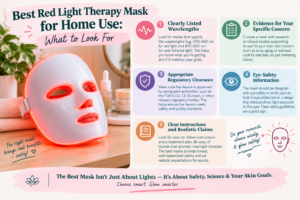
Consider the following factors before choosing a device.
1. Clearly Listed Wavelengths
Look for the exact wavelengths in nanometers (nm), rather than relying on descriptions such as “advanced red light.”
Red light devices commonly use wavelengths in the approximate 630–660 nm range, while some masks also include near-infrared light around 800–850 nm. These are examples of wavelengths studied in skin treatments, not a guarantee that any device using them will be effective.
2. Evidence for Your Specific Concern
Choose a device with evidence relevant to your goal.
-
Fine lines: Look for clinical evidence on wrinkles or skin rejuvenation.
-
Acne: Look for evidence supporting the device’s specific light combination and acne indication.
-
Uneven texture: Check whether the device has been studied for texture or related signs of skin aging.
Evidence for one skin concern shouldn’t be treated as evidence for all the others.
3. Appropriate Regulatory Clearance
In the United States, some light-based skincare devices have FDA clearance for particular intended uses. Check the exact device and the indication for which it was cleared.
FDA clearance is not a blanket guarantee of effectiveness for every claim a manufacturer makes. Also, regulatory terms and requirements vary by country.
4. Eye-Safety Information
The manufacturer should clearly explain whether eye protection is required and how to use the device safely around the eyes.
Avoid any mask with unclear safety instructions or no reliable information about its intended use.
5. Clear Instructions and Realistic Claims
A reliable device should provide information about treatment time, frequency, cleaning, contraindications, and maintenance.
Be cautious of claims that a mask will eliminate all wrinkles, cure every type of acne, or deliver dramatic results in a few days. Those promises go beyond what the available evidence can establish.
Red Light Therapy Mask Before and After: What Results Can You Expect?
Red light therapy mask before-and-after photos can be interesting, but they don’t always provide a reliable picture of what a device can achieve.
Lighting, camera settings, facial expression, makeup, skincare products, and image editing can make skin look different even when the underlying condition hasn’t changed.
What Improvements May Be Possible?
With consistent use of a suitable device, some people may notice:
-
Slightly smoother-looking skin
-
Subtle improvement in fine lines
-
Reduced appearance of some inflammatory blemishes
-
Changes in mild redness or overall skin texture
These outcomes aren’t guaranteed. Clinical studies have found benefits for certain concerns, but the results vary by device and treatment protocol.
How Long Does It Take to See Red Light Therapy Mask Results?
There is no universal timeline.
Some studies have reported changes after several weeks, while other treatment protocols have continued for longer. The results from a controlled 16-week trial, for example, shouldn’t be interpreted as a promise that every home-use mask will produce the same improvement.
Take a baseline photo before starting if you’d like to track changes. Use similar lighting, the same camera distance, and a relaxed facial expression each time. Compare photos every few weeks rather than judging your skin after every session.
If you don’t notice meaningful improvement after following the manufacturer’s recommended course, reassess whether the device is appropriate for your concern. A dermatologist can help you consider alternatives.
Common Mistakes to Avoid When Using Red Light Therapy Masks
A few common mistakes can undermine your experience or increase the risk of irritation.
-
Using the mask too often: More sessions aren’t necessarily better. Follow the recommended schedule.
-
Ignoring eye protection: Use the protection specified in the device instructions.
-
Expecting instant results: Skin changes, when they occur, generally take repeated treatments.
-
Choosing a device based on social media alone: Look for technical specifications and credible clinical evidence.
-
Stopping proven treatments without advice: Don’t replace prescribed acne or skin treatments with a mask without consulting your healthcare professional.
-
Ignoring pigmentation changes: Stop treatment and seek advice if new dark patches or persistent irritation develop.
-
Using it on unexplained skin problems: Have persistent rashes, unusual lesions, or worsening inflammation assessed before trying light therapy.
Frequently Asked Questions
1. Do red light therapy masks really work?
Red light therapy masks may provide modest improvements in fine lines, skin texture, and some signs of inflammation. Research supports potential benefits, but results vary depending on the device, treatment schedule, and skin concern. They work best as a possible addition to a well-rounded skincare routine, not as a guaranteed solution.
2. Can I use a red light therapy mask every day?
That depends on the device. Some masks are designed for frequent use, while others recommend fewer sessions each week. Follow the manufacturer’s instructions rather than assuming daily treatment is safe or more effective.
3. Is a red light therapy mask good for wrinkles?
It may help soften the appearance of fine lines with repeated use. Some clinical research has found improvements in crow’s feet and other signs of skin aging. However, results are usually modest, and a mask won’t eliminate deep wrinkles.
4. Can a red light therapy mask help with acne?
It may help with mild to moderate inflammatory acne, particularly when the device combines red and blue light. Evidence for at-home LED acne treatments is promising, but the available studies are limited. Deep cystic acne, blackheads, and whiteheads may require other treatments.
5. Can I use a red light therapy mask with retinol?
It may be possible, but compatibility depends on your skin, the retinol product, and the device. Retinol can cause irritation, particularly when you first start using it. Follow the device’s instructions and ask a dermatologist if you use prescription retinoids or experience sensitivity. Avoid adding several potentially irritating treatments at once.
6. Should I use a red light therapy mask before or after skincare products?
A common approach is to cleanse your face and use the mask on clean, dry skin. However, the correct method depends on the device’s instructions. Apply moisturizer and other suitable skincare products afterward unless the manufacturer advises otherwise.
7. Are red light therapy masks safe for darker skin tones?
They may be suitable for some people with darker skin tones, but visible light can contribute to hyperpigmentation in susceptible individuals. Consult a dermatologist before starting, especially if you have melasma, persistent dark spots, or a history of pigmentation changes.
8. Can red light therapy damage your skin?
Side effects are generally mild when suitable devices are used correctly, but irritation, discomfort, and pigmentation changes are possible. Improper use or unsuitable devices may increase risk. Stop treatment if you experience persistent redness, burning, pain, or new dark patches.
9. How long should I use a red light therapy mask to see results?
There is no standard duration that works for every mask. Some clinical studies have reported improvements after several weeks, while others have used longer treatment periods. Follow the specific device’s schedule and evaluate changes over time rather than extending sessions to speed up results.
10. Is an expensive red light therapy mask better than a cheaper one?
Not necessarily. Price alone doesn’t establish effectiveness. Compare the exact wavelengths, light output information, intended use, clinical evidence, safety instructions, and relevant regulatory clearance. A less expensive device with reliable evidence for your concern may be more appropriate than a premium mask supported mainly by marketing.
Key Takeaways
-
Red light therapy masks use red or near-infrared light to influence biological processes in the skin.
-
Potential benefits include modest improvements in fine lines, texture, and certain inflammatory skin concerns.
-
Masks combining red and blue light may help with some types of acne.
-
Results vary, and long-term evidence for many home-use devices remains limited.
-
Follow the manufacturer’s treatment schedule and eye-safety instructions.
-
Consult a dermatologist if you have a light-sensitive condition, take photosensitizing medication, or are concerned about pigmentation.
-
Don’t replace sunscreen, prescribed treatments, or necessary medical care with an LED mask.
Final Thoughts
Red light therapy masks can be a useful addition to a skincare routine for people who understand what the devices can and cannot do. Research suggests that certain devices may improve fine lines, skin texture, and some forms of inflammatory acne, but the benefits aren’t guaranteed, and not all masks have the same evidence behind them.
If you’re considering one, start with your main skin concern. Choose a device with clear specifications, credible evidence, and appropriate safety guidance. Use it consistently according to its instructions, protect your eyes when required, and give your skin time to respond.
Most importantly, keep your expectations realistic. A red light therapy mask may complement good skincare habits, but it isn’t a substitute for sun protection, effective treatments, or professional advice when a skin problem needs medical attention.