
Soft, smooth lips don’t require an expensive beauty routine. Natural lip care starts with protecting the delicate skin on your lips, keeping it moisturized, and avoiding habits that cause dryness and irritation. Simple ingredients such as plain petroleum jelly, shea butter, and fragrance-free lip moisturizers can help prevent moisture loss and support healing. With gentle daily care and sun protection, you can keep your lips comfortable, healthy-looking, and smooth.
What Is Natural Lip Care?
Natural lip care involves using gentle ingredients and healthy daily habits to protect your lips from dryness, cracking, and irritation. It often includes moisturizing, protecting lips from sunlight and harsh weather, and avoiding products that trigger sensitivity.
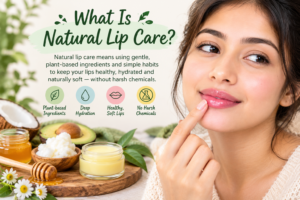
Some people prefer plant-based ingredients such as shea butter, coconut oil, or beeswax. Others choose simple, fragrance-free products because they are less likely to irritate sensitive lips.
It’s important to remember that natural doesn’t automatically mean safe or effective. Essential oils, citrus juice, and certain botanical extracts can irritate the delicate skin around your mouth. The best lip care routine is one that keeps your lips comfortable without causing redness, burning, or peeling.
Why Do Lips Become Dry and Chapped?
Understanding the causes of dry lips makes it easier to choose the right treatment. Unlike much of the skin on your face, your lips have a thinner protective barrier and lack the oil glands that help keep other areas of skin lubricated.
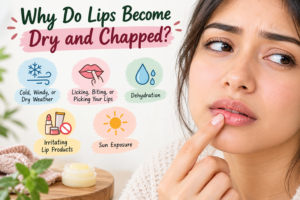
Several everyday factors can contribute to dryness.
1. Cold, Windy, or Dry Weather
Cold temperatures, strong winds, and low humidity can increase moisture loss from your lips. Air-conditioned rooms and indoor heating may also contribute to dryness.
During colder months or in windy conditions, applying a protective lip moisturizer regularly can help reduce moisture loss.
2. Licking, Biting, or Picking Your Lips
Licking your lips may provide temporary relief, but saliva evaporates quickly and can leave them feeling even drier. Repeated licking may also irritate the skin around your mouth.
Biting and picking at peeling skin can create small cracks, delay healing, and sometimes cause bleeding.
Try applying a gentle lip moisturizer whenever you feel the urge to lick or pick your lips.
3. Dehydration
Not drinking enough fluids can contribute to dry lips, particularly when accompanied by other signs of dehydration. However, dry lips alone do not necessarily mean you’re dehydrated.
Drink water regularly according to your needs, especially during hot weather or after exercise. Remember that moisturizing your lips directly is also important.
4. Irritating Lip Products
Some lip products contain ingredients that may cause irritation or allergic reactions. Common triggers include fragrances, flavors, menthol, camphor, and certain essential oils.
Lip plumpers and strongly flavored balms may also cause burning or tingling.
If a product makes your lips sting, burn, or become red, stop using it and switch to a bland, fragrance-free moisturizer.
5. Sun Exposure
The lips are vulnerable to ultraviolet (UV) radiation. Too much sun exposure can cause dryness, inflammation, and long-term damage.
Choose a broad-spectrum lip balm with SPF 30 or higher. Reapply it about every two hours when outdoors and after eating, drinking, or swimming, following the product instructions.
Persistent roughness, scaling, or sores on the lips should be checked by a healthcare professional rather than treated indefinitely with home remedies.
Best Natural Ingredients for Lip Care
Choosing suitable ingredients is one of the most useful natural lip care tips. The goal is to reduce moisture loss, soften dry skin, and protect the lips without causing irritation.
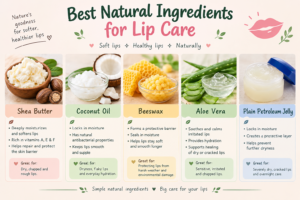
1. Shea Butter
Shea butter is a plant-derived fat commonly used in moisturizers and lip balms. It helps soften the skin and provides an emollient layer that makes dry lips feel smoother.
Best for: Lips that feel rough, tight, or dry.
Choose a simple, fragrance-free formulation. Even plant-based ingredients can cause sensitivity in some people.
2. Coconut Oil
Coconut oil contains fatty acids that help soften the skin and reduce moisture loss. A small amount may work as a temporary moisturizer for mildly dry lips.
However, coconut oil may not provide the same lasting protection as a thicker ointment, particularly in cold or windy conditions.
Best for: Mild dryness when your lips tolerate it well.
Avoid using it if it causes irritation or if the product contains added fragrances or flavors that trigger sensitivity.
3. Beeswax
Beeswax helps create a protective layer on the lips. It is often included in lip balms to improve texture and reduce moisture loss.
Best for: Protecting lips from wind and everyday environmental exposure.
Beeswax is an animal-derived ingredient, so it is not suitable for strictly vegan routines. People with sensitivities to bee-related products should also use caution.
4. Aloe Vera
Aloe vera is known for its soothing properties and may help calm mild irritation in some formulations. However, raw aloe gel is not always ideal for dry or cracked lips, especially when it contains other irritating plant compounds.
If you want to try aloe vera, choose a product intended for lip use that is free from fragrance and other potential irritants. Stop using it if it stings or worsens dryness.
5. Plain Petroleum Jelly
Petroleum jelly is not a plant-derived ingredient, but it is one of the most useful options for protecting dry lips. It forms an occlusive barrier that slows moisture loss and helps the skin heal.
Best for: Very dry, cracked, or chapped lips.
Apply a thin layer to clean lips, especially before bed. If your goal is effective natural-inspired lip care rather than an exclusively plant-based routine, this is worth considering.
Which Ingredient Should You Choose?
- For very dry lips: Plain petroleum jelly or a thick, fragrance-free ointment.
- For everyday softness: A simple balm containing shea butter.
- For mild dryness: Coconut oil, if it does not irritate your lips.
- For outdoor protection: A broad-spectrum SPF 30+ lip balm.
- For sensitive lips: A bland, fragrance-free product with as few potential irritants as possible.
No single ingredient works best for everyone. Your skin’s response matters more than whether an ingredient is labeled natural or organic.
How to Get Soft and Smooth Lips Naturally
A consistent routine is usually more helpful than frequently switching products or trying several home remedies at once.
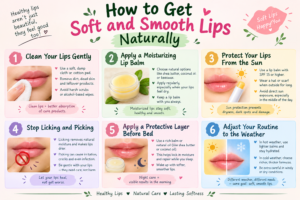
Follow these steps to keep your lips moisturized and comfortable.
Step 1: Clean Your Lips Gently
Use lukewarm water to remove food residue and other debris. Avoid rubbing your lips with a rough towel, washcloth, or cleansing brush.
If you wear long-lasting lipstick, remove it gently with a suitable cleanser or makeup remover. Follow with a lip moisturizer.
Step 2: Apply a Moisturizing Lip Balm
Apply a gentle moisturizer several times throughout the day, especially when your lips feel tight or dry.
Look for ingredients that soften the skin or help seal in moisture, such as shea butter, petrolatum, or other suitable emollients.
Keep a lip balm nearby so you can reapply it when needed. Consistent use is generally more useful than applying a large amount only after your lips become severely chapped.
Step 3: Protect Your Lips From the Sun
Sun protection is an important part of daily lip care, even when your main goal is softness.
Use a broad-spectrum SPF 30 or higher lip balm when outdoors. Reapply regularly, particularly after eating, drinking, or swimming.
A lip balm without SPF may soften your lips, but it does not replace sun protection.
Step 4: Stop Licking and Picking
Avoid licking your lips, biting off loose skin, or pulling at flakes.
If your lips feel dry, apply another layer of moisturizer instead. If the skin is cracked, skip exfoliation until it has healed.
Step 5: Apply a Protective Layer Before Bed
Nighttime is a convenient opportunity to protect your lips for several hours.
After gently cleaning your lips, apply a generous layer of plain petroleum jelly or another well-tolerated, fragrance-free ointment.
This helps reduce moisture loss overnight and may improve the feel of dry lips by morning. Severely chapped lips may need several days or longer to recover.
Step 6: Adjust Your Routine to the Weather
Your lips may need extra protection in different conditions.
- Hot, sunny weather: Use SPF 30+ lip balm and reapply it regularly.
- Cold or windy weather: Apply a thicker protective balm before going outside.
- Dry indoor environments: Keep your lips moisturized and consider using a clean humidifier if indoor air is very dry.
- During exercise: Drink fluids as needed and reapply lip balm after wiping sweat or washing your face.
A simple routine that adapts to your environment is often easier to maintain than a complicated lip care regimen.
Natural Remedies for Dry Lips: What Actually Helps?
Many home remedies are promoted as quick solutions for chapped lips. Some may provide temporary softness, while others can worsen irritation.
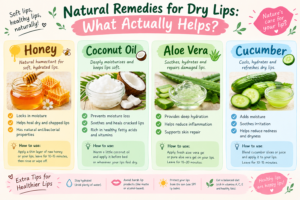
Honey
Honey has moisturizing properties and is sometimes used in homemade beauty treatments. However, evidence supporting honey as a reliable treatment for ordinary chapped lips is limited.
It may feel soothing for some people, but it can be sticky and may irritate sensitive skin. A simple lip ointment is often more practical and predictable.
Coconut Oil
Coconut oil can soften the surface of dry lips and may help reduce moisture loss. Use a small amount only if you tolerate it well.
For deep cracks or persistent dryness, a thicker protective ointment may work better.
Aloe Vera
A suitable aloe-based lip product may soothe mild discomfort, but raw aloe is not necessary for healing chapped lips.
Avoid products containing alcohol, fragrance, or other ingredients that sting.
Cucumber
Cucumber contains water and may provide a temporary cooling sensation when applied gently. However, it does not offer lasting protection against moisture loss.
If you enjoy using cucumber, treat it as an optional comfort measure rather than a substitute for moisturizer.
What About Lemon Juice and Baking Soda?
Avoid applying lemon juice, lime juice, or baking soda to your lips. Citrus juice can irritate damaged skin and may increase sensitivity to sunlight. Baking soda can disrupt the skin’s natural surface conditions and cause irritation.
To heal chapped lips naturally, gentle care and consistent moisturization are safer choices than harsh kitchen remedies.
How to Exfoliate Lips Safely
Exfoliation is often recommended for removing flaky skin, but it isn’t necessary for everyone. Rough lips are frequently a sign of dryness or irritation rather than a need for scrubbing.
If your lips are cracked, bleeding, inflamed, or painful, do not exfoliate them. Focus on moisturizing and protecting the skin until it heals.
If your lips are healthy and you still want to remove a small amount of loose surface skin, follow these precautions:
- Make sure your lips are not sore or cracked.
- Avoid harsh sugar scrubs, salt, baking soda, and abrasive brushes.
- Never pull off loose skin with your fingers or teeth.
- Apply a gentle moisturizer afterward.
- Stop immediately if you experience burning, redness, or discomfort.
Even a homemade sugar scrub can cause tiny injuries when rubbed too hard. For most people, applying a moisturizer consistently is enough to improve the appearance and feel of flaky lips.
Homemade Lip Balm for Dry Lips
Making a lip balm at home can be simple, but homemade products do not automatically offer better results than commercially prepared ones. Their safety depends on the ingredients, cleanliness, and storage conditions.
Simple Two-Ingredient Lip Balm
Ingredients:
- 1 teaspoon cosmetic-grade shea butter
- 1 teaspoon cosmetic-grade beeswax pastilles
Instructions:
- Place the ingredients in a clean, heat-safe container.
- Warm them gently using a double boiler until melted.
- Stir carefully until the mixture is combined.
- Pour it into a clean, dry lip balm container.
- Allow it to cool completely before use.
This recipe creates a protective balm that may help soften lips and reduce moisture loss.
Important safety notes:
- Use clean utensils and containers.
- Avoid adding water, fresh aloe, fruit juice, or other perishable ingredients.
- Do not add essential oils, menthol, or fragrance to a balm intended for sensitive lips.
- Discard the product if its smell, appearance, or texture changes.
- If you have a known allergy to beeswax-related ingredients or shea butter, choose an alternative you tolerate.
If you prefer a vegan formula, you can use a suitable plant-derived wax, such as candelilla wax, but the texture and proportions may need adjustment.
For severely chapped lips, plain petroleum jelly or a professionally formulated fragrance-free ointment may be a simpler choice than experimenting with homemade products.
Tips for Soft Pink Lips Naturally
Many people want naturally pink lips, but lip color varies widely because of genetics, skin pigmentation, blood flow, and other individual factors.
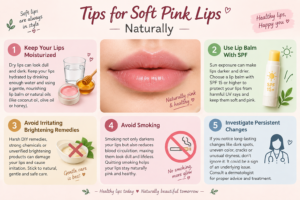
Healthy lips do not have to be pink. Brown, mauve, reddish, and other natural shades can all be normal.
If you want your lips to look smoother and more even-toned, focus on protecting their health rather than trying to change their natural color.
1. Keep Your Lips Moisturized
Dry, flaky skin can make lips appear dull or uneven. Applying a gentle moisturizer regularly can improve their texture and natural appearance.
2. Use Lip Balm With SPF
Sun exposure can contribute to pigmentation changes and long-term lip damage. An SPF 30+ lip balm helps protect your lips from UV radiation.
3. Avoid Irritating Brightening Remedies
Lemon juice, strong exfoliants, and untested DIY treatments can cause inflammation and may make discoloration worse.
There is no reliable home remedy that can safely guarantee naturally pink lips.
4. Avoid Smoking
Smoking can contribute to lip discoloration and other health problems. Avoiding tobacco supports overall health and may help prevent further discoloration.
5. Investigate Persistent Changes
If your lips develop new, persistent, or uneven dark patches, or if you notice ongoing scaling or sores, seek medical advice. Pigmentation can have several causes, and not all of them can be addressed with moisturizers.
The safest approach is to maintain comfortable, protected lips rather than chasing a particular color.
Common Natural Lip Care Mistakes to Avoid
Even well-intentioned beauty habits can make dry lips worse.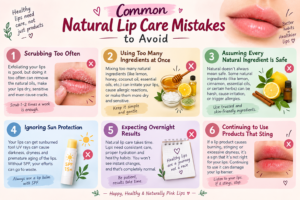
Scrubbing Too Often
Frequent exfoliation can damage the protective surface of your lips. Avoid aggressive scrubs, especially when the skin is already peeling.
Using Too Many Ingredients at Once
Mixing several oils, extracts, essential oils, and kitchen ingredients makes it difficult to identify what causes irritation.
Start with one simple product and observe how your lips respond.
Assuming Every Natural Ingredient Is Safe
Essential oils, peppermint oil, cinnamon, citrus, and fragranced botanical products can irritate the lips.
Choose products based on their formulation and your skin’s tolerance, not just their natural or organic label.
Ignoring Sun Protection
A moisturizing balm without SPF cannot protect your lips from UV damage. Include sun protection in your daytime routine.
Expecting Overnight Results
Mild dryness may improve quickly, but severely chapped lips can take longer to heal. Repeatedly changing products or scrubbing away flakes may delay recovery.
Continuing to Use Products That Sting
A tingling sensation is not proof that a lip product is working. Burning, redness, and irritation are reasons to stop using it.
When Should You See a Healthcare Professional?
Most ordinary chapped lips improve with gentle care and consistent moisturization. However, persistent symptoms may indicate a problem that needs more than home treatment.
Consider seeking medical advice if:
- Your lips remain dry or cracked after two to three weeks of appropriate care.
- Cracks at the corners of your mouth keep returning.
- You experience significant swelling, bleeding, pain, or signs of infection.
- You develop persistent rough patches, sores, or unusual discoloration.
- A lip product repeatedly triggers a rash or burning sensation.
Persistent dryness may be related to irritation, allergies, certain medications, or an underlying skin condition. Cracks at the corners of the mouth can have several causes, including inflammation or infection.
Seek urgent medical attention if your lips suddenly swell along with difficulty breathing, throat tightness, or trouble swallowing, as these can be signs of a serious allergic reaction.
Frequently Asked Questions About Natural Lip Care
1. How can I get soft and smooth lips naturally?
Apply a gentle lip moisturizer regularly, protect your lips from sunlight and wind, avoid licking or picking them, and use a thick protective ointment before bed. Avoid harsh scrubs and irritating ingredients.
2. What is the best natural moisturizer for dry lips?
Shea butter and coconut oil can soften lips when well tolerated. However, plain petroleum jelly is often particularly effective for very dry or chapped lips because it forms a protective barrier that reduces moisture loss.
3. Can I use coconut oil on my lips every day?
Yes, if your lips tolerate it without irritation. Coconut oil can soften the skin, but it may not provide enough protection for severely chapped lips. Use a more protective ointment if dryness persists.
4. Is honey good for chapped lips?
Honey is sometimes used in home beauty treatments and may feel soothing, but strong evidence for treating ordinary chapped lips is limited. A simple, fragrance-free lip ointment is usually a more practical option.
5. How can I heal chapped lips naturally overnight?
Gently clean your lips and apply a generous layer of plain petroleum jelly or another well-tolerated, fragrance-free ointment before bed. Avoid licking, scrubbing, and picking at loose skin. Improvement depends on how severely your lips are damaged.
6. How often should I apply lip balm?
Apply lip balm whenever your lips feel dry, tight, or uncomfortable. Reapply after eating, drinking, or washing your face as needed. Outdoor SPF lip balms generally need reapplication about every two hours and after swimming or eating.
7. Is it safe to exfoliate my lips with sugar?
Sugar scrubs can irritate or damage the delicate skin of the lips, particularly when rubbed firmly. Exfoliation is not necessary for most people. Never scrub lips that are cracked, bleeding, inflamed, or painful.
8. How can I make my lips naturally pink?
Keep your lips moisturized, use sun protection, and avoid smoking and irritating DIY treatments. Your natural lip color is largely influenced by genetics and pigmentation, and no home remedy can guarantee pinker lips.
9. Why are my lips still dry even when I use lip balm?
Your lip balm may contain an irritant, or you may be licking your lips frequently. Environmental conditions, allergies, and certain skin conditions can also contribute. Try a bland, fragrance-free ointment and seek medical advice if the problem persists.
10. Are organic lip balms better than regular lip balms?
Not necessarily. Organic certification relates to how certain ingredients are produced, not whether a product is automatically more effective or less irritating. A well-formulated, fragrance-free conventional lip balm may work better for your needs than an irritating organic product.
Key Takeaways
- Natural lip care works best when it focuses on moisture, protection, and avoiding irritation.
- Shea butter and coconut oil can soften lips, while plain petroleum jelly offers effective protection against moisture loss.
- Use SPF 30+ lip balm to protect your lips from the sun.
- Avoid licking, picking, harsh scrubs, citrus juice, and irritating essential oils.
- Homemade products require clean preparation and careful ingredient selection.
- Naturally pink lips are not a requirement for healthy lips.
- Persistent dryness, sores, or unusual changes deserve medical attention.
Final Thoughts
Soft, smooth lips are easier to maintain when you keep your routine simple. Gentle cleansing, regular moisturizing, sun protection, and avoiding irritating habits can make a noticeable difference over time.
You don’t need a long list of natural remedies or an elaborate DIY routine. Start with a lip moisturizer that suits your skin, protect your lips from the weather, and give damaged skin time to recover.
The most effective natural lip care routine is one that keeps your lips comfortable, supports healing, and works safely for your individual needs.