
Your skincare routine should help keep your skin healthy, comfortable, and protected. But some everyday habits can have the opposite effect. The 7 skincare mistakes that may be damaging your skin include over-exfoliating, using too many products, skipping sunscreen, washing your face too often, ignoring your skin type, applying active ingredients incorrectly, and picking at blemishes. These habits may cause dryness, redness, irritation, breakouts, or damage to your skin barrier.
The good news is that you don’t need an expensive routine to care for your skin properly. A few simple changes can help reduce irritation and make your skincare routine more effective.
Why Do Skincare Mistakes Matter?
Healthy skin has a protective outer layer called the skin barrier. It helps retain moisture and protects the body from external irritants. When this barrier becomes irritated or damaged, your skin may feel dry, tight, sensitive, or uncomfortable.

Some skincare problems develop gradually. You might notice flaking after using an exfoliating toner every day, or your face may feel tight after washing it with a harsh cleanser. Other problems, such as irritation from a new product, can appear much sooner.
Not every breakout or patch of dry skin means you’ve damaged your skin barrier. Hormonal changes, weather, allergies, and underlying skin conditions can also affect your skin. Still, recognizing common skincare mistakes can help you avoid unnecessary irritation and identify when your routine needs to change.
1. Over-Exfoliating Your Skin
Exfoliation helps remove dead skin cells from the surface, but doing it too often can irritate your skin. This is one of the most common skincare mistakes that damage skin, especially when you use exfoliating scrubs, acids, or retinol without allowing your skin enough time to recover.

Why can over-exfoliation harm your skin?
Exfoliating too frequently or using harsh methods can leave your skin red, dry, sensitive, and uncomfortable. You may also notice more visible dark spots after irritation, particularly if your skin is prone to post-inflammatory hyperpigmentation.
Common signs of over-exfoliating your skin include:
-
Redness or unusual sensitivity.
-
Burning or stinging when applying skincare products.
-
Peeling, flaking, or tightness.
-
Rough patches or increased dryness.
-
Breakouts or irritation that seem worse after exfoliation.
These symptoms can have other causes, too, so don’t assume every reaction means you’ve damaged your skin barrier.
How can you avoid this mistake?
-
Start with a gentle exfoliation method suited to your skin.
-
Follow the product’s directions rather than assuming daily use is better.
-
Avoid scrubbing your face aggressively.
-
Be careful when combining exfoliating acids with retinol or other potentially irritating treatments.
-
Apply moisturizer after exfoliating.
-
Skip exfoliation when your skin is already irritated, sunburned, or peeling.
Remember: More exfoliation doesn’t necessarily mean smoother skin. A gentle, consistent routine is usually a better approach than trying to remove every trace of texture.
2. Using Too Many Skincare Products at Once
It can be tempting to try every serum, toner, mask, and treatment that promises clearer or brighter skin. However, overusing skincare products can make your routine harder to manage and increase the chance of irritation.
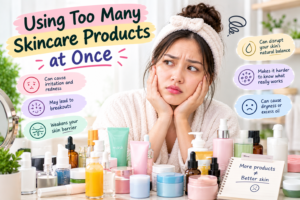
For example, using a vitamin C serum, a strong exfoliating toner, retinol, and an acne treatment together may be too much for some people’s skin, particularly when they introduce everything at once.
What happens when you overuse skincare products?
Using too many products doesn’t automatically damage your skin. The risk depends on the ingredients, their strength, how often you use them, and how well your skin tolerates them.
Problems may develop when several products contain irritating ingredients or perform similar functions. You might experience dryness, redness, peeling, or new breakouts. It can also become difficult to identify which product is causing the reaction.
The American Academy of Dermatology recommends keeping skincare simple and choosing products that suit your skin’s needs.
How to simplify your skincare routine
Start with three basic steps:
-
Cleanse: Use a gentle cleanser to remove dirt, excess oil, and sunscreen.
-
Moisturize: Choose a moisturizer that suits your skin type.
-
Protect: Apply broad-spectrum sunscreen with SPF 30 or higher during the day.
Once your skin tolerates these basics, introduce additional products one at a time. Follow the label instructions and give yourself time to notice how your skin responds.
You don’t need a ten-step routine to maintain healthy-looking skin. A smaller routine that meets your needs may be easier to follow consistently.
3. Washing Your Face Too Often or Using a Harsh Cleanser
Washing your face removes sweat, dirt, excess oil, and other impurities. But washing too frequently, scrubbing hard, or using a harsh cleanser can strip away some of the skin’s natural oils and cause irritation.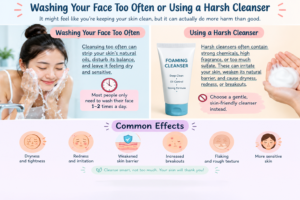
This is a common mistake among people with oily or acne-prone skin. When the face looks shiny, it may seem necessary to wash it repeatedly throughout the day. In reality, aggressive cleansing can make skin feel dry and uncomfortable without solving the underlying cause of excess oil or acne.
Signs your cleansing routine may be too harsh
Watch for these changes after washing your face:
-
Your skin feels tight or uncomfortable.
-
Your cheeks become dry or flaky.
-
Your face stings when you apply moisturizer.
-
Redness or irritation becomes more noticeable.
-
Your skin feels rough despite regular cleansing.
These signs don’t confirm skin barrier damage, but they suggest that your cleansing routine may need adjustment.
How often should you wash your face?
For most people, washing twice a day—once in the morning and once at night—is a reasonable starting point. You may also need to wash after heavy sweating.
Use lukewarm water and a mild, non-abrasive cleanser. Apply it gently with your fingertips, rinse thoroughly, and pat your face dry with a soft towel instead of rubbing it.
If your skin is dry or sensitive, you may need a gentler approach. If you have persistent acne, choose a routine suited to acne-prone skin rather than repeatedly washing or scrubbing your face.
4. Skipping Moisturizer Because You Have Oily Skin
One of the most misunderstood skincare habits is avoiding moisturizer because your face already produces plenty of oil.
However, oil and moisture are not the same thing. Oil refers to the lipids on your skin, while hydration relates to its water content. Skin can look oily and still feel dehydrated or tight.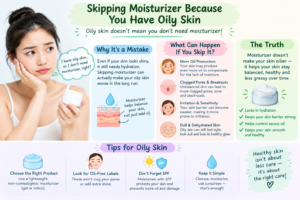
Why does moisturizer matter for oily skin?
Moisturizers help reduce water loss and support the skin’s protective barrier. Skipping moisturizer may leave some people feeling drier or more uncomfortable, especially when they use acne treatments or exfoliating ingredients.
The right moisturizer depends on your skin. A heavy, greasy formula may feel unpleasant or contribute to clogged pores for some people, while a lightweight moisturizer may work better.
How to choose a suitable moisturizer
-
Oily skin: Consider a lightweight gel or lotion labeled non-comedogenic, meaning it’s formulated not to clog pores.
-
Dry skin: A richer cream may provide more lasting moisture.
-
Combination skin: Use a comfortable formula that hydrates dry areas without feeling too heavy on oily areas.
-
Sensitive skin: Consider fragrance-free products with a short, uncomplicated ingredient list.
Look for ingredients such as glycerin, ceramides, or hyaluronic acid if they suit your skin. No single ingredient works perfectly for everyone, and even moisturizers can occasionally cause irritation.
Apply moisturizer after cleansing, following the product’s directions. If a particular product consistently causes burning, itching, or breakouts, stop using it and consider a different formulation.
5. Skipping Sunscreen or Applying Too Little
Sunscreen isn’t only for beach days or hot summer afternoons. Ultraviolet (UV) radiation can contribute to premature skin aging, uneven pigmentation, and skin cancer. Regular sun protection is an important part of maintaining healthy skin.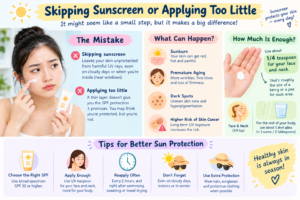
If your skincare routine focuses on brightening, reducing dark spots, or preventing early signs of aging but you skip sunscreen, you may be missing a key protective step.
How can skipping sunscreen affect your skin?
Repeated UV exposure can contribute to:
-
Fine lines and wrinkles.
-
Dark spots and uneven skin tone.
-
Loss of skin elasticity over time.
-
Sunburn and other forms of skin damage.
-
Increased risk of skin cancer.
The amount of UV exposure varies with location, time of day, season, and outdoor activities. Cloudy weather doesn’t eliminate UV exposure, so sun protection still matters when you’re outside.
How to use sunscreen correctly

-
Choose a broad-spectrum sunscreen with SPF 30 or higher.
-
Apply it to exposed skin before going outdoors, following the label directions.
-
Cover commonly missed areas, including your ears, neck, and the backs of your hands.
-
Reapply approximately every two hours outdoors, and after swimming or sweating, following the product instructions.
-
Use shade, hats, and protective clothing when practical.
The American Academy of Dermatology recommends broad-spectrum SPF 30 or higher alongside other sun-protection measures.
If you have oily or acne-prone skin, try a lightweight, non-comedogenic formula. If you have sensitive skin, look for a sunscreen that your skin tolerates well.
6. Introducing Strong Active Ingredients Too Quickly
Active ingredients are substances used to address specific skin concerns. Examples include retinol, salicylic acid, glycolic acid, and benzoyl peroxide.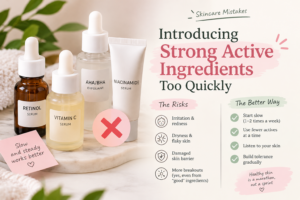
These ingredients can be helpful for certain concerns, but starting several strong treatments at once or using them more frequently than directed may cause irritation.
Which ingredient combinations require extra care?
The main issue isn’t that every combination is unsafe. It’s that the ingredients, strengths, and application schedules may be unsuitable for your skin when used together.
For example:
-
Retinol and exfoliating acids: Both may cause dryness or irritation, especially when you first start using them.
-
Benzoyl peroxide and exfoliating products: Combining acne treatments with exfoliants may increase irritation for some people.
-
Multiple exfoliating products: Using several acid-based toners, serums, and scrubs can lead to over-exfoliation.
-
Strong products on already irritated skin: Even a normally suitable ingredient may worsen existing irritation.
Some combinations can be used safely under the right conditions. You don’t necessarily need to avoid them forever; you need to consider the formulation, frequency, and condition of your skin.
How to introduce active ingredients safely
-
Start with one new active ingredient at a time.
-
Follow the product’s directions and recommended frequency.
-
Avoid adding several new treatments to the same routine at once.
-
Use moisturizer and daily sun protection as appropriate.
-
Stop using a product that causes persistent burning, marked redness, or significant peeling.
A patch test may help identify some reactions, but it cannot guarantee that a product won’t cause irritation or an allergic reaction when applied to your face.
If you use prescription skin treatments, ask your dermatologist or pharmacist before combining them with exfoliating products or other strong actives.
7. Picking Pimples, Squeezing Blackheads, or Scrubbing Blemishes
When a pimple appears, squeezing it can feel like the quickest way to make it disappear. Unfortunately, picking at blemishes may make inflammation worse and increase the risk of infection, dark marks, and scarring.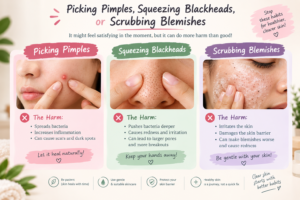
Scrubbing acne-prone skin is another mistake. Acne isn’t simply a sign that your face is dirty, and aggressive cleansing won’t remove its underlying causes.
Why should you leave blemishes alone?
Picking or squeezing can injure the surrounding skin and push inflamed material deeper into it. The result may be a more noticeable blemish that takes longer to settle.
People who are prone to post-inflammatory hyperpigmentation may also develop dark marks after inflammation or injury. These marks can take weeks or months to fade, and some may last longer.
The American Academy of Dermatology advises against popping or squeezing acne and recommends gentle cleansing instead.
What should you do instead?
-
Cleanse gently without scrubbing.
-
Avoid touching or squeezing active breakouts.
-
Choose acne treatments suited to your skin and use them as directed.
-
Consider a hydrocolloid pimple patch for a superficial blemish; it may protect the area from picking but won’t treat every type of acne.
-
Avoid applying toothpaste, lemon juice, or other irritating household ingredients to pimples.
-
Seek professional advice if acne is painful, persistent, or leaving scars.
If you’re experiencing frequent breakouts, the answer may be a more suitable acne treatment—not a harsher skincare routine.
Signs Your Skincare Routine May Be Damaging Your Skin
How can you tell when your products or habits are doing more harm than good? Pay attention to changes that appear after introducing a new product or increasing how often you use an existing one.
Common warning signs include:
-
Persistent tightness: Your face feels uncomfortable after cleansing or throughout the day.
-
New sensitivity: Products that were previously comfortable begin to sting or burn.
-
Redness or itching: Your skin becomes irritated after using certain products.
-
Peeling and flaking: Your skin develops persistent dry patches or sheds more than usual.
-
Unexpected breakouts: Your skin develops new or worsening blemishes after a routine change.
-
Rashes or swelling: You develop symptoms that may indicate irritation or an allergic reaction.
These are possible signs of irritation, not a definitive diagnosis of a damaged skin barrier. Acne, eczema, rosacea, contact dermatitis, and other conditions can produce similar symptoms.
If you notice a pattern, simplify your routine and stop using the suspected irritating product. Avoid adding more active ingredients to fix the problem.
Seek medical advice if symptoms persist, recur, or become severe. A rapidly spreading rash, blisters, significant pain, or signs of infection need prompt assessment. Facial or lip swelling accompanied by breathing or swallowing difficulty requires emergency care
How to Build a Skin-Friendly Routine
You don’t need to replace every product in your bathroom to correct common skincare mistakes. Start with the basics and make changes according to your skin’s response.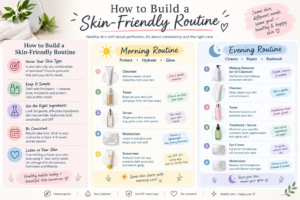
Morning routine
-
Cleanse gently: Wash with a mild cleanser, or use a gentler approach if your skin is very dry and tolerates it.
-
Moisturize: Apply a moisturizer suited to your skin type.
-
Apply sunscreen: Use broad-spectrum SPF 30 or higher on exposed skin.
Evening routine
-
Remove sunscreen and makeup: Cleanse thoroughly but gently.
-
Apply any suitable treatment: Use an acne treatment or other active ingredient according to its directions.
-
Moisturize: Help reduce moisture loss and keep your skin comfortable.
You don’t have to use a treatment every night. If your skin becomes irritated, pause nonessential active ingredients and focus on gentle cleansing, moisturizing, and sun protection until it settles.
When trying a new product, introduce it separately from other new products so you can more easily identify the cause of a reaction. Consistency matters, but you shouldn’t push through persistent burning or worsening irritation just to maintain a routine.
Key Takeaways
-
Over-exfoliating can cause dryness, redness, and increased skin sensitivity.
-
Using too many products at once can make irritation more likely and harder to identify.
-
Washing your face too often or scrubbing aggressively may worsen irritation and acne.
-
Oily skin can still need moisturizer.
-
Daily sun protection helps reduce UV-related skin damage.
-
Strong active ingredients should be introduced carefully and used as directed.
-
Picking pimples can increase inflammation, dark marks, and scarring.
-
Persistent irritation may indicate an underlying skin condition that needs professional care.
Frequently Asked Questions (FAQs)
1. What are the most common skincare mistakes?
Common skincare mistakes include over-exfoliating, using harsh cleansers, skipping moisturizer, forgetting sunscreen, combining too many active ingredients, and picking pimples. These habits can irritate the skin or make existing concerns worse.
2. How do I know if my skincare routine is damaging my skin?
Persistent dryness, redness, burning, itching, peeling, or increased sensitivity may indicate that your routine is irritating your skin. Pay attention to symptoms that begin after introducing a new product or changing how frequently you use it.
3. Can using too many skincare products cause acne?
Yes, it can contribute to breakouts in some people. Certain products may clog pores, while excessive use of irritating ingredients can worsen inflammation. However, acne has several possible causes, so not every breakout results from using too many products.
4. Does over-exfoliating damage the skin barrier?
Over-exfoliation can irritate the outer skin layer and interfere with its protective function. Symptoms may include tightness, dryness, redness, peeling, and stinging. Reducing exfoliation and using a gentle moisturizer may help, but persistent symptoms need professional assessment.
5. Should I stop using all skincare products if my skin becomes irritated?
Not necessarily. Stop using products that appear to trigger the reaction, particularly strong active ingredients. Keep your routine simple with gentle cleansing and a moisturizer you tolerate. Seek medical advice if symptoms are severe, persistent, or worsening.
6. Can oily skin become dehydrated?
Yes. Oil production and skin hydration are different. Oily skin can still feel tight, look flaky, or become uncomfortable when it lacks sufficient water or is irritated by harsh products. A suitable lightweight moisturizer may help.
7. How often should I exfoliate my face?
There is no single frequency that works for everyone. It depends on the exfoliating ingredient, product strength, skin type, and other treatments in your routine. Follow the product directions, start cautiously, and reduce or stop exfoliation if irritation develops.
8. What is the best way to repair an irritated skin barrier?
Start by simplifying your routine. Avoid harsh cleansers, scrubs, and nonessential active ingredients. Use a gentle cleanser, apply a moisturizer your skin tolerates, and protect exposed skin from the sun. If the irritation doesn’t improve or becomes worse, consult a dermatologist.
9. Can skincare mistakes cause permanent skin damage?
Some mistakes cause temporary irritation that improves when the trigger is removed. However, severe inflammation, repeated skin injury, and picking acne can contribute to persistent dark marks or scars. Sun exposure can also cause cumulative skin damage. Early, appropriate care can help reduce these risks.
Final Thoughts
Healthy skin doesn’t require a complicated routine or a shelf full of products. In many cases, avoiding common skincare mistakes is just as important as choosing the right ingredients.
Pay attention to how your skin responds, introduce new products gradually, avoid aggressive treatments, moisturize appropriately, and make sunscreen a regular part of your daytime routine. If a product repeatedly causes discomfort, don’t assume your skin needs time to tolerate it.
The best skincare routine is one that supports your skin’s needs without causing persistent irritation. If skin problems continue despite simplifying your routine, a dermatologist can help identify the cause and recommend appropriate treatment.