
Personal care essentials for long travel days include the hygiene products, skincare items, and everyday necessities that help you stay clean, comfortable, and refreshed while traveling. A small, well-organized travel kit with tissues, hand sanitizer, deodorant, moisturizer, lip balm, a toothbrush, and essential personal items can make long journeys easier. The best packing list depends on your destination, travel time, available facilities, and personal needs.
Long travel days can leave you feeling tired, sweaty, dehydrated, or uncomfortable. Whether you’re traveling by bus, train, car, or airplane, spending hours away from your usual bathroom and skincare routine can make personal care more challenging.
The good news is that you don’t need to pack your entire bathroom. A few carefully chosen essentials can help you manage common travel problems without taking up much space in your bag.
This guide covers what to pack, how to stay fresh during long trips, which hygiene habits matter most, and how to create a practical travel care routine.
Why Is Personal Care Important During Long Travel Days?
Travel often changes your usual daily routine. You may have limited access to clean water, restrooms, fresh clothes, or a private space to freshen up. Warm weather, crowded transport, and long periods of sitting can add to the discomfort.
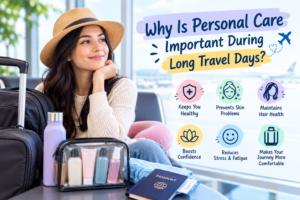
A simple personal care routine helps you manage these challenges.
Here are some of the main benefits:
-
Better hygiene: Handwashing and appropriate hygiene products help reduce the spread of germs.
-
More comfortable skin: Moisturizer and lip balm can help with dryness caused by weather, air conditioning, or frequent washing.
-
Less discomfort from sweat: Clean clothes, breathable fabrics, and deodorant can help you feel fresher.
-
Greater convenience: Keeping essentials together means you won’t have to search through your luggage whenever you need something.
-
More confidence: A quick refresh can help you feel more comfortable during long journeys or when meeting people after arrival.
Personal care products cannot prevent every travel-related problem, but they can make everyday discomfort easier to manage.
1. Essential Personal Care Items to Pack for Long Trips
The easiest way to prepare for a long journey is to divide your essentials into categories. This helps you avoid overpacking while making sure you have the items you are most likely to need.


Basic Hygiene Essentials
These items are useful for most types of travel.
-
Hand sanitizer: Choose an alcohol-based hand sanitizer containing at least 60% alcohol when soap and water aren’t available.
-
Tissues: Keep a small packet in an easy-to-reach pocket.
-
Wet wipes: Useful for cleaning your hands when appropriate, wiping small spills, or freshening up. They do not replace proper handwashing.
-
Toothbrush and toothpaste: Helpful if you have a long layover, an overnight journey, or plans to freshen up after eating.
-
Deodorant: A familiar product can help control body odor.
-
Toilet paper or pocket tissues: Useful when public restrooms have limited supplies.
-
Small comb or hairbrush: Helps manage hair after resting or traveling in windy conditions.
-
A small towel: A quick-drying towel can be helpful on overnight journeys or trips with limited facilities.
You won’t necessarily need everything on this list. For a short journey, tissues, sanitizer, deodorant, and a few other essentials may be enough.
Skincare Essentials for Travel
Travel can expose your skin to air conditioning, dry air, sunlight, dust, and changes in your usual routine. A basic skincare kit is often more useful than carrying several specialized products.
Pack these essentials according to your skin’s needs:
-
Gentle cleanser: Use it when your skin needs cleaning, especially after sweating or before bedtime.
-
Moisturizer: Helps support the skin barrier and reduce dryness.
-
Lip balm: Useful when your lips feel dry or tight.
-
Sunscreen: Choose broad-spectrum SPF 30 or higher for exposed skin when spending time outdoors. Reapply according to the label, especially after sweating or wiping your skin.
-
Blotting papers: An optional choice for people who experience excess facial oil.
-
Prescribed skincare treatments: Carry any essential treatments you normally use, following their storage instructions.
Avoid introducing several new skincare products during a trip. Your skin may react unpredictably, and unfamiliar products can be inconvenient when you’re away from home.
For most people, a gentle cleanser, moisturizer, and sunscreen provide a practical starting point.
Personal Care Essentials for Women
Women may want to add a few extra items based on their menstrual cycle, clothing, and travel plans.
Consider packing:
-
Menstrual pads, tampons, or a menstrual cup, depending on your preference.
-
Panty liners if you normally use them.
-
Spare underwear in a clean pouch.
-
A small bag for storing used items until you can dispose of them properly.
-
Hair ties or clips.
-
A compact mirror.
-
Any personal intimate-care products you regularly use.
Keep menstrual products in an accessible pocket rather than at the bottom of your suitcase. If your period arrives unexpectedly, you’ll be able to reach them quickly.
For intimate hygiene, use gentle external cleansing with water or a mild, fragrance-free product if needed. Avoid vaginal douching and heavily fragranced intimate products, which can cause irritation.
2. How to Stay Fresh During Long Travel
Packing the right items is only part of the solution. Knowing when and how to use them can make your journey much more comfortable.

Clean Your Hands at the Right Times
Travel involves frequent contact with shared surfaces, such as door handles, railings, ticket machines, and restroom fixtures.
Wash your hands with soap and water, especially after using the restroom and before eating. If soap and water aren’t available, use an alcohol-based sanitizer containing at least 60% alcohol.
Remember that visibly dirty or greasy hands should be washed with soap and water when possible. Sanitizer is not equally effective against every type of germ.
Manage Sweat Without Overwashing
Sweating is a normal way for your body to regulate temperature. You don’t need to shower every time you sweat.
Instead, try these practical steps:
-
Move to a cooler area when possible.
-
Gently blot sweat with a clean towel or tissue.
-
Change out of damp clothing when you have a suitable opportunity.
-
Use deodorant or antiperspirant according to its label.
-
Clean your skin gently when needed, then dry it thoroughly.
Avoid repeatedly rubbing your skin with rough towels or scented wipes. This can increase irritation, particularly in warm, moist areas where skin already experiences friction.
Keep Your Mouth Feeling Fresh
Eating, drinking coffee, and going for long periods without brushing can leave your mouth feeling unpleasant.
To maintain oral hygiene:
-
Brush your teeth before leaving home.
-
Carry a toothbrush and toothpaste for longer journeys.
-
Drink water regularly, unless your healthcare professional has advised you to restrict fluids.
-
Rinse your mouth with water after meals when brushing isn’t practical.
-
Use sugar-free gum if it suits you and you can chew it safely.
Mouthwash can be an optional addition, but it doesn’t replace brushing and cleaning between your teeth.
Refresh Your Face Without Irritating Your Skin
A long journey can leave your face feeling oily, dry, or sticky. The best approach depends on your skin type and environment.
If your skin feels oily, gently blot excess oil instead of scrubbing it. If it feels dry, apply a small amount of your usual moisturizer. When your face is sweaty, rinse with clean water if possible and pat it dry.
Avoid repeatedly washing your face with harsh cleansers or applying alcohol-based products to remove oil. These methods may leave your skin irritated or uncomfortable.
3. Travel-Friendly Hygiene Products That Save Space
You don’t need full-sized bottles for every product. Travel-friendly containers make it easier to organize your essentials and keep your bag lightweight.
| Product | Why it’s useful | Packing tip |
|---|---|---|
| Travel-size cleanser | Cleans your skin when needed | Use a leak-resistant container |
| Mini moisturizer | Helps manage dry skin | Choose one suited to your skin |
| Lip balm | Helps prevent and relieve dry lips | Keep it in a small pocket |
| Deodorant | Helps manage body odor | Choose a familiar formula |
| Hand sanitizer | Useful when handwashing isn’t available | Check the container for leaks |
| Pocket tissues | Useful for quick cleanups | Carry a spare packet |
| Foldable comb | Helps manage tangled hair | Store it in a clean pouch |
| Toothbrush kit | Supports oral hygiene on long journeys | Keep it separate from dirty items |
Travel rules vary by transport provider and country. Check current liquid, aerosol, and gel restrictions before flying.
How to Prevent Toiletry Leaks
Leaking products can ruin clothing, electronics, and other belongings.
Use these simple precautions:
-
Choose containers with secure lids.
-
Place liquid products in a separate waterproof pouch.
-
Keep products upright when possible.
-
Avoid filling travel bottles completely.
-
Put creams and liquids away from electronics and important documents.
For air travel, check the security requirements of your departure airport and any connecting airports. Many airports limit liquids in cabin baggage to containers of 100 ml or less, carried in a transparent bag, but rules and exceptions can vary. Medication and essential medical liquids may have separate provisions.
4. Long Travel Day Self-Care Tips for Different Types of Travel
Not every journey requires the same preparation. A short road trip, an overnight bus ride, and a long-haul flight create different personal care needs.

Airplane Travel
Cabin air is often dry, so carry moisturizer and lip balm if you need them. Keep essential medication in your cabin bag, follow liquid restrictions, and stand or move around when safe and permitted on longer flights.

Bus and Train Travel
Restroom access may be limited or unpredictable. Keep tissues, sanitizer, water, and essential hygiene products within reach. Wear comfortable clothing and use scheduled stops to stretch and freshen up.

Long Car Journeys
Plan regular breaks rather than waiting until you’re uncomfortable. Use rest stops to visit the restroom, wash your hands, stretch, and change damp clothing if necessary. Never handle personal care products while driving.
Tips for Overnight Journeys
Overnight travel can make it harder to maintain your normal sleep and hygiene routine.
Before departure, consider:
-
Brushing your teeth and washing your face.
-
Changing into comfortable, breathable clothing.
-
Keeping a clean pair of underwear and socks accessible.
-
Packing a sleep mask or earplugs if you find them helpful.
-
Storing essential medication where you can reach it.
-
Keeping your most-used hygiene items separate from your main luggage.
You don’t need to complete a full skincare routine in a cramped seat or shared restroom. Focus on comfort, basic hygiene, and getting enough rest.
5. How to Avoid Body Odor While Traveling
Body odor can become more noticeable during long trips, particularly in hot or humid weather. Sweat itself often has little smell, but skin bacteria can break down substances in sweat and contribute to odor.
A practical routine can help reduce discomfort without excessive washing.
Wear Breathable Clothing
Choose comfortable clothing that suits the weather and allows moisture to evaporate. Breathable fabrics may help you feel less clammy, although fabric performance varies.
For hot and humid conditions, pack an extra shirt and underwear if you expect to sweat heavily. A clean change of clothes can make a noticeable difference after a long journey.
Use Deodorant or Antiperspirant Correctly
Deodorants help control or mask odor, while antiperspirants reduce sweat production. Some products offer both benefits.
Follow the product instructions. If an antiperspirant irritates your skin, stop using it and consider a different formulation. Applying products to broken or freshly irritated skin may make discomfort worse.
Keep Skin Folds Dry
Areas where skin touches skin can retain moisture and experience friction. This may lead to irritation, chafing, or other skin problems.
To help protect these areas:
-
Wear clothing that fits comfortably.
-
Change damp clothing when practical.
-
Dry skin folds gently after washing.
-
Avoid heavily fragranced products on sensitive areas.
-
Use a suitable anti-chafing product if friction is a recurring problem.
Persistent odor, itching, pain, or a rash that doesn’t improve with basic care may need medical assessment. Don’t assume that every unusual smell is caused by poor hygiene.
6. Travel Skincare Essentials: Protect Your Skin on the Go
Your skin doesn’t need an elaborate routine during travel. A few familiar products are usually enough to address common concerns.
Before You Leave
Cleanse your face if needed, apply moisturizer, and use sunscreen on exposed skin when appropriate. If you’re traveling overnight, you can keep your routine simple rather than applying several active ingredients.
During the Journey
Use your moisturizer when your skin feels dry. Apply lip balm as needed and avoid touching your face with unwashed hands.
If you’re exposed to sunlight through windows or spending time outdoors, remember that UV exposure can still matter. Use sunscreen according to its directions.
After Reaching Your Destination
Once you have access to a bathroom, gently cleanse away sweat, dirt, and sunscreen. Follow with moisturizer and any regular skincare products that your skin tolerates well.
If you have acne-prone or sensitive skin, avoid aggressively exfoliating your face simply because you’ve been traveling. Gentle care is often more comfortable than trying to remove every trace of oil immediately.
7. Common Personal Care Packing Mistakes to Avoid
Even a well-intentioned travel kit can become inconvenient if you pack too much or overlook a few basics.
Packing Too Many Products
Carrying multiple cleansers, serums, creams, and fragrances adds weight and makes your bag harder to organize.
A better approach: Choose products that serve a clear purpose and that you already know work for your skin.
Forgetting Essential Medication
Medication should not be treated like an optional toiletry item. Keep necessary medicines in their original packaging when practical, follow storage instructions, and check destination rules for prescription drugs.
A better approach: Make medication part of your travel checklist and keep essential doses accessible.
Relying Only on Wet Wipes
Wipes can help with small cleanups, but they don’t replace proper handwashing or a shower when one is needed.
A better approach: Use wipes as a backup, and wash with soap and water whenever possible.
Packing No Spare Clothing
A single spill or a sweaty journey can leave you uncomfortable for hours.
A better approach: Keep at least one spare top and underwear in your carry-on for long or overnight journeys when space allows.
Ignoring Weather Conditions
A cold, air-conditioned cabin may leave your skin feeling dry, while a humid outdoor journey can increase sweating and friction.
A better approach: Check your destination’s weather and adjust your clothing and personal care kit accordingly.
Keeping Everything at the Bottom of Your Bag
Even useful items become frustrating when they’re difficult to reach.
A better approach: Store frequently used essentials in a small, clearly organized pouch near the top of your bag.
8. How to Pack a Minimal Personal Care Kit for Long Travel Days
A simple system can help you prepare without overthinking every item.
Step 1: Check your travel duration. A two-hour journey usually requires fewer items than an overnight bus ride or a long-haul flight.
Step 2: Identify your basic needs. Think about hand hygiene, oral care, skincare, body odor, medication, and any menstrual products you may need.
Step 3: Choose multipurpose items carefully. A moisturizer suitable for both your face and hands may reduce the number of products you carry. However, don’t use a product on an area if its label or your healthcare professional advises against it.
Step 4: Separate clean and used items. Keep fresh clothing and clean toiletries apart from used tissues, damp towels, or dirty clothes.
Step 5: Check travel restrictions. Review the relevant baggage rules, especially for liquids, aerosols, sharp grooming tools, and medications.
Step 6: Keep essential items accessible. Place tissues, sanitizer, lip balm, medication, and other frequently used items where you can reach them without unpacking everything.
Step 7: Recheck your kit before leaving. Make sure containers are closed, essential items are packed, and any products requiring special storage are handled correctly.
9. Personal Care Checklist for Long Travel Days
Use this checklist before leaving home. Adjust it based on your trip length and personal needs.
My travel care checklist
0 of 17 packed
Hygiene
Skincare
Personal essentials
Organization
Frequently Asked Questions
1. What are the most important personal care essentials for long travel days?
The most useful basics include hand sanitizer, tissues, deodorant, a toothbrush and toothpaste, moisturizer, lip balm, necessary medication, and a spare change of clothes for longer journeys. Add sunscreen and menstrual products when appropriate for your plans.
2. How can I stay fresh during a long journey without showering?
Wash your hands when possible, wear breathable clothing, change damp clothes when practical, and use deodorant according to its instructions. You can also rinse your face with clean water or gently blot sweat. These steps help manage discomfort but don’t replace bathing when you need it.
3. How do I prevent body odor while traveling in hot weather?
Wear breathable clothing, change out of damp garments, dry skin folds gently, and use a suitable deodorant or antiperspirant. Staying hydrated and taking breaks in cooler places can also help you manage heat-related discomfort.
4. Which skincare products should I carry on a long flight?
A gentle cleanser, moisturizer, lip balm, and sunscreen for exposed skin are practical choices. You may not need every product during the flight itself. Choose familiar formulas and avoid introducing several new skincare products while traveling.
5. Are wet wipes enough for personal hygiene while traveling?
No. Wet wipes can be useful for small cleanups, but they don’t replace handwashing with soap and water. If those aren’t available, an alcohol-based hand sanitizer containing at least 60% alcohol is a useful alternative for many everyday situations.
6. How can women manage personal hygiene during overnight travel?
Carry menstrual products if needed, spare underwear, tissues, hand sanitizer, and a small toiletry pouch. Keep these items accessible and use clean restroom facilities when available. Gentle external intimate hygiene is generally sufficient; avoid vaginal douching and irritating fragranced products.
7. How many personal care products should I pack for a trip?
There is no fixed number. For a short journey, a handful of essentials may be enough. Overnight travel or a trip with limited bathroom access may require extra toiletries, medication, and clothing. Pack according to your needs rather than a rigid product count.
8. How do I keep my skin from getting dry during long travel?
Apply a moisturizer that suits your skin, use lip balm when needed, and avoid harsh cleansers or excessive washing. Air-conditioned and low-humidity environments may increase dryness. Drink water regularly unless you have been advised to restrict fluids.
9. What should I keep in my personal care pouch for a bus or train journey?
Keep tissues, hand sanitizer, lip balm, deodorant, necessary medication, and any personal hygiene products you expect to need. For overnight trips, add a toothbrush, toothpaste, a small towel, and spare underwear or a top.
10. What should I avoid packing in my travel hygiene kit?
Avoid unnecessary full-sized bottles, products that frequently leak, unfamiliar skincare treatments, and items prohibited by your transport provider. Check current restrictions for liquids, aerosols, sharp grooming tools, and medications before packing.
Key Takeaways
-
Pack personal care essentials according to your journey, destination, and individual needs.
-
Prioritize hand hygiene, oral care, comfortable clothing, and essential medication.
-
Use a simple skincare routine with familiar products rather than carrying too many items.
-
Manage sweat with breathable clothing, clean changes of clothes, and suitable deodorant.
-
Keep frequently used items accessible and separate clean belongings from used items.
-
Check baggage restrictions before traveling, particularly when flying.
Final Thoughts
Long journeys don’t have to leave you feeling uncomfortable or unprepared. A compact personal care kit, a few thoughtful hygiene habits, and a little planning can help you feel cleaner and more comfortable from departure to arrival.
Start with the essentials you genuinely use, then adjust your kit to suit the weather, journey length, and facilities available. The aim isn’t to maintain a perfect beauty routine while traveling. It’s to make personal care simple, practical, and manageable wherever your journey takes you.