
Seasonal hair care is important because seasonal changes can affect your hair and scalp in different ways. Heat, humidity, cold air, dry indoor air, sweat, and changes in your washing routine may lead to dryness, frizz, excess oil, scalp irritation, or increased hair shedding. With the right seasonal hair care tips, you can protect your hair from weather changes and keep it looking healthy and manageable.
The best hair care routine for every season does not need to be complicated. Simply adjust your routine to the weather while keeping the basics consistent, such as gentle cleansing, regular conditioning, scalp care, and protection from harsh environmental conditions. Understanding seasonal hair problems and following a simple hair care routine for changing weather can help prevent seasonal hair fall and support healthy hair in every season.
Why Does Hair Care by Season Matter During Seasonal Changes?
Your hair is exposed to the environment every day. Changes in temperature, humidity, sunlight, wind, and moisture can affect how the hair fiber behaves and how comfortable your scalp feels.
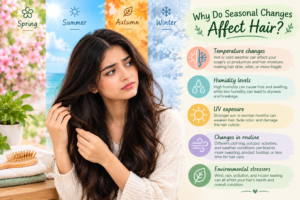
For example, humid weather can make hair swell and become frizzy, while cold and dry conditions can leave the scalp and hair feeling drier. Hot weather may also increase sweating, making the scalp feel oily or uncomfortable.
Common seasonal effects include:
- Dry or rough-feeling hair
- Increased frizz
- Oily or sweaty scalp
- Scalp dryness or irritation
- More tangling and breakage
- Changes in hair texture and manageability
- Temporary increases in hair shedding
Not everyone experiences these changes in the same way. Your hair type, scalp condition, lifestyle, and local climate all matter.
Common Seasonal Hair Problems and Hair Care by Season
Different seasons can bring different challenges. Understanding the likely problem makes it easier to adjust your routine without overcomplicating it.
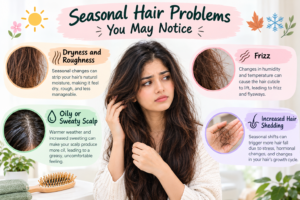
Dryness and Roughness
Cold air, low humidity, frequent hot showers, and indoor heating can contribute to dry-feeling hair. Washing with very hot water can also strip some of the oils that help keep the hair and scalp comfortable.
Frizz
Humidity can cause the hair shaft to absorb moisture from the surrounding air. This can make some hair types swell and become harder to manage.
People with wavy, curly, or porous hair may notice this particularly strongly.
Oily or Sweaty Scalp
Hot weather can increase sweating. Combined with natural scalp oil and product residue, this may make the roots feel greasy more quickly.
That doesn’t automatically mean you need to shampoo every day. Your washing frequency should depend on your scalp, hair type, activity level, and personal comfort.
Increased Hair Shedding
Some people notice more hair shedding during certain times of the year. However, significant or persistent hair loss shouldn’t automatically be blamed on seasonal changes.
Hair shedding can also be associated with stress, illness, nutritional deficiencies, hormonal changes, medications, or other conditions. If shedding is sudden, severe, or continues for a long time, it’s worth speaking with a healthcare professional or dermatologist.
How to Care for Your Hair During Seasonal Changes
The easiest way to manage seasonal changes is to keep a consistent foundation and make small adjustments when your hair or scalp needs them.
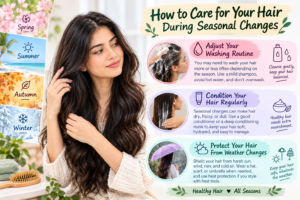
1. Adjust Your Washing Routine
You don’t necessarily need a completely different shampoo for every season.
Instead, pay attention to how your scalp feels.
If your scalp becomes sweatier or oilier in warm weather, you may need to wash more frequently. During colder or drier periods, you may prefer less frequent washing if your scalp remains comfortable.
Choose a gentle shampoo that cleans your scalp without leaving your hair excessively dry.
A simple approach:
- Wash when your scalp needs cleansing.
- Focus shampoo mainly on the scalp.
- Allow the lather to clean the lengths as it rinses through.
- Avoid aggressively scrubbing the hair.
- Use lukewarm rather than very hot water.
Your scalp—not a calendar—should guide your washing routine.
2. Condition Your Hair Regularly
Conditioner helps improve manageability and reduces friction between hair fibers.
This becomes especially useful when seasonal weather makes your hair feel dry, rough, tangled, or difficult to comb.
Apply conditioner mainly to the mid-lengths and ends if your roots become oily easily. Leave it on according to the product instructions, then rinse thoroughly.
For particularly dry hair, an occasional deep-conditioning treatment may provide additional conditioning.
3. Protect Your Hair From Weather Changes
Weather can be hard on exposed hair, especially when you’re outside for long periods.
In hot and sunny weather
Consider:
- Wearing a hat when appropriate
- Limiting prolonged direct sun exposure
- Using hair products designed to provide UV protection if useful for your hair
- Rinsing hair after swimming
- Keeping the scalp clean after heavy sweating
In cold or windy weather
Try to:
- Protect your hair from strong wind
- Avoid very hot showers
- Use conditioner consistently
- Reduce unnecessary heat styling
- Cover your hair when needed
The goal isn’t to completely shield your hair from the environment. It’s to reduce unnecessary stress on it.
Seasonal Hair Care Tips for Different Seasons
Your routine can stay relatively simple throughout the year. What changes is the emphasis.
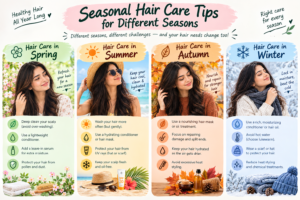
Hair Care in Spring
Spring often brings changes in temperature and humidity. For some people, this means hair can shift between feeling dry and becoming more prone to frizz.
Try these seasonal hair care tips:
- Keep conditioning consistent.
- Watch for increased frizz as humidity rises.
- Avoid suddenly adding several new products.
- Keep your scalp clean.
- Trim damaged ends when necessary.
- Protect hair from strong sun exposure.
Spring is a good time to reassess your routine rather than completely replace it.
Hair Care in Summer
Summer heat can bring sweat, humidity, stronger sun exposure, and more frequent swimming.
These conditions may make the scalp feel oily while the hair lengths become dry or tangled.
Helpful habits include:
- Wash your scalp as needed after sweating.
- Rinse hair after swimming.
- Condition the lengths and ends.
- Avoid excessive heat styling.
- Protect your hair from prolonged sun exposure.
- Keep hairstyles comfortable rather than very tight.
If you swim regularly, rinsing your hair with fresh water afterward can help remove chlorine or saltwater residue.
Hair Care in Autumn
As temperatures begin to fall, your hair and scalp may start responding to drier conditions.
This is a good time to check whether your existing routine is still providing enough conditioning.
Focus on:
- Regular conditioning
- Gentle detangling
- Reducing unnecessary heat
- Protecting hair from wind
- Monitoring scalp dryness
- Avoiding very hot water
If your hair feels rougher than usual, improving conditioning may be more useful than adding multiple styling products.
Hair Care in Winter
Cold, dry weather can make hair feel less flexible and more prone to tangling and breakage. Indoor heating can further reduce humidity.
Winter hair care tips:
- Use lukewarm water instead of very hot water.
- Condition after shampooing.
- Avoid excessive blow-drying and heat styling.
- Handle wet hair gently.
- Protect hair from harsh wind.
- Consider a richer conditioning product if your hair is very dry.
- Keep your scalp comfortable without excessive oiling or product buildup.
A dry scalp and dry hair aren’t necessarily the same problem. If your scalp is persistently itchy, flaky, painful, or inflamed, consider getting professional advice instead of assuming it is simply winter dryness.
How to Prevent Seasonal Hair Fall
Seasonal changes may coincide with periods when you notice more hair shedding, but it’s important not to assume that every increase in shedding is caused by the weather.
To support healthy hair growth and minimize avoidable breakage:
- Eat a balanced diet with adequate protein and nutrients.
- Avoid very tight hairstyles.
- Handle wet hair gently.
- Limit excessive heat styling.
- Avoid aggressive brushing or combing.
- Keep your scalp clean and comfortable.
- Manage stress as well as you can.
- Get enough sleep.
- Avoid unnecessary chemical treatments when your hair is already damaged.
When should you take hair fall seriously?
Talk to a dermatologist or healthcare professional if you notice:
- Sudden or severe shedding
- Clearly visible thinning
- Bald patches
- Persistent scalp itching or inflammation
- Hair loss that continues for months
- Hair loss accompanied by other unexplained symptoms
These signs may have causes unrelated to seasonal weather.
Build a Hair Care Routine for Every Season
You don’t need four completely different routines.
A better strategy is to create a basic hair care routine for every season and make small changes based on your environment.
Your basic routine can include:
Cleanse: Wash your scalp according to its needs.
Condition: Condition the lengths and ends regularly.
Protect: Reduce exposure to excessive heat, sun, wind, and harsh environmental conditions.
Detangle gently: Use appropriate tools and avoid forceful pulling.
Maintain: Trim damaged ends when needed and monitor changes in your scalp and hair.
Adjust: Increase or decrease conditioning, washing, or protection depending on the season.
This approach is usually more practical than constantly buying new products.
How to Protect Different Hair Types During Weather Changes
Different hair types can respond differently to the same weather.
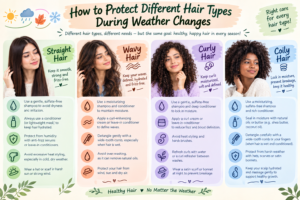
Straight Hair
Straight hair may show oiliness at the roots quickly, particularly in hot weather.
Focus on:
- Keeping the scalp clean
- Avoiding heavy products near the roots
- Conditioning the ends
- Protecting hair from excessive heat
Wavy Hair
Humidity can make waves look less defined or more frizzy.
Try:
- Gentle cleansing
- Consistent conditioning
- Avoiding excessive brushing when dry
- Using lightweight styling products if needed
Curly Hair
Curly hair often benefits from consistent moisture and gentle handling.
Focus on:
- Regular conditioning
- Gentle detangling
- Minimizing unnecessary heat
- Protecting curls from excessive dryness
Coily Hair
Coily hair can be particularly vulnerable to dryness and breakage because of its structure.
Helpful habits include:
- Regular conditioning
- Gentle detangling
- Minimizing harsh manipulation
- Protecting hair during sleep
- Avoiding excessive heat
Regardless of hair type, your scalp and hair should guide your routine more than a generic seasonal checklist.
Common Mistakes During Seasonal Hair Care
Changing weather can tempt people to make too many changes at once. That can create new problems.
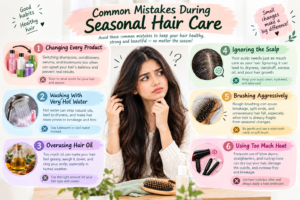
1. Changing Every Product
You don’t need to replace your entire routine every time the weather changes.
If your shampoo and conditioner work well, keep them and adjust only what needs changing.
2. Washing With Very Hot Water
Hot water can leave some people’s scalp and hair feeling dry and irritated.
Lukewarm water is generally a better choice.
3. Overusing Hair Oil
Hair oil can make hair feel smoother, but using excessive amounts doesn’t necessarily make hair healthier.
Too much oil can also make cleansing more difficult or contribute to buildup for some people.
4. Ignoring the Scalp
Healthy-looking hair starts with paying attention to the scalp.
Persistent itching, scaling, pain, or inflammation deserves attention rather than simply adding more hair products.
5. Brushing Aggressively
Trying to quickly remove seasonal tangles can cause unnecessary breakage.
Detangle gently, starting from the ends and gradually working upward.
6. Using Too Much Heat
Blow dryers, straighteners, and curling tools can contribute to hair damage when used excessively or at high temperatures.
Use heat carefully and follow appropriate heat-protection practices.
Simple Ways to Keep Your Hair Healthy in Every Season
You don’t need a complicated routine to maintain healthy-looking hair.
Keep these habits consistent:
- Wash your scalp when it needs cleansing.
- Condition regularly.
- Avoid excessive heat.
- Protect your hair from intense environmental exposure.
- Don’t pull or tug on tangled hair.
- Avoid hairstyles that cause repeated tension.
- Eat a balanced diet.
- Pay attention to changes in your scalp.
- Adjust your routine gradually when the weather changes.
- Seek professional advice for persistent or unusual hair loss.
Small, consistent habits usually matter more than constantly changing products.
Key Takeaways
- Seasonal weather can change how your hair and scalp feel and behave.
- Humidity may increase frizz, while dry conditions can make hair feel rougher.
- Hot weather can increase sweating and scalp oiliness.
- Keep a basic routine throughout the year and make small seasonal adjustments.
- Regular cleansing and conditioning are important in every season.
- Protect hair from excessive heat, sun, wind, and environmental exposure.
- Don’t assume significant hair loss is caused by seasonal changes.
- Persistent shedding, bald patches, or scalp problems should be professionally evaluated.
- Your hair type, scalp condition, lifestyle, and local climate should guide your routine.
Frequently Asked Questions
Does weather change cause hair fall?
Weather changes may coincide with periods of increased hair shedding for some people, but not every episode of hair fall is caused by seasonal changes. Significant or persistent shedding can have many other causes and should be evaluated when it becomes concerning.
How often should I wash my hair when the seasons change?
There is no universal schedule. Wash your hair based on your scalp’s needs. You may need more frequent washing during hot, sweaty periods and less frequent washing when your scalp becomes dry.
How can I prevent seasonal hair fall?
Focus on gentle hair care, a balanced diet, adequate protein and nutrients, good scalp hygiene, limited heat damage, and avoiding tight hairstyles. If shedding is sudden or persistent, seek professional advice.
Why does my hair become frizzy when the weather changes?
Humidity can affect how water interacts with the hair fiber, causing some hair types to swell and become more frizzy. Consistent conditioning and gentle hair care can help improve manageability.
Should I use different shampoo in every season?
Not necessarily. If your shampoo works well throughout the year, there’s no need to change it simply because the season changes. Consider adjusting your routine only when your scalp or hair needs something different.
Is it okay to oil my hair during seasonal changes?
Hair oil can be part of a personal hair care routine, but more isn’t always better. Use an amount that suits your hair and scalp, and wash it out appropriately. If oiling causes irritation or buildup, reduce or stop it.
How can I protect my hair in winter?
Use lukewarm water, condition regularly, reduce excessive heat styling, handle wet hair gently, and protect your hair from cold, dry wind. If your scalp becomes persistently irritated or flaky, consider professional advice.
Can hot weather damage hair?
Hot weather itself isn’t necessarily damaging, but intense sun exposure, sweating, swimming, humidity, and frequent heat styling can make hair harder to manage and contribute to dryness or damage.
Should my hair care routine change every season?
Only slightly. A consistent basic routine is usually more practical than having four completely different routines. Adjust cleansing, conditioning, styling, and protection according to your hair and scalp needs.
When should I see a dermatologist about seasonal hair problems?
Consider professional advice if you experience persistent or severe hair loss, bald patches, significant scalp irritation, pain, unusual scaling, or other changes that don’t improve with basic care.
Final Thoughts
Seasonal hair care doesn’t have to be complicated. Your hair may respond differently to heat, humidity, cold, wind, and changes in daily habits, but you can usually manage these changes with a simple and flexible routine.
Keep the basics consistent: cleanse the scalp, condition the hair, minimize unnecessary damage, protect your hair from harsh conditions, and pay attention to changes in your scalp or shedding.
Most importantly, don’t assume every hair problem is caused by the weather. If hair loss or scalp symptoms are persistent or unusual, getting professional advice can help identify the real cause and the right treatment.