
Dry, tight, or rough body skin often needs more than a quick layer of moisturizer. Natural oils can help soften the skin, reduce moisture loss, and leave the body feeling smoother. Some oils are especially useful for dry skin, while others work better for normal or sensitive skin. The best choice depends on your skin type, the oil’s properties, and how you use it.
What Are Natural Oils for Body Moisturizing?
Natural oils for body moisturizing are plant-derived oils used to soften the skin and help reduce water loss from its outer layer. They are commonly made from seeds, nuts, or fruits and contain varying amounts of fatty acids and other naturally occurring compounds.
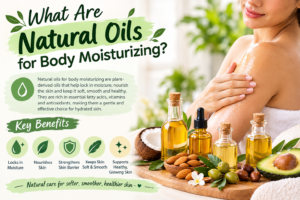
Unlike a water-based lotion, most pure oils don’t add much water to the skin. Instead, they mainly work by forming a protective layer that helps slow moisture loss. This is why body oil often works particularly well when applied after bathing while the skin is still slightly damp.
Some oils are lightweight and absorb relatively quickly, while others are richer and leave a more noticeable protective layer.
How Do Body Oils Moisturize the Skin?
Skin naturally loses water throughout the day. This process can become more noticeable when the skin barrier is dry, irritated, or exposed to cold air, hot water, or harsh cleansers.

Body oils can help by:
- Reducing water loss from the skin’s surface.
- Smoothing rough areas by coating the outer layer of skin.
- Supporting a comfortable skin barrier by supplying lipids.
- Improving softness and reducing the feeling of tightness.
- Adding a healthy-looking sheen to the skin.
One important distinction is that oils are not the same as humectants. Ingredients such as glycerin attract water, while oils mainly help slow its evaporation. For very dry skin, using a moisturizer and then adding a thin layer of oil can be more useful than relying on oil alone.
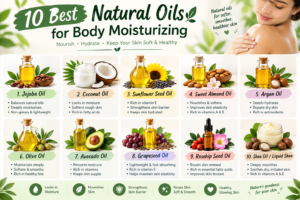
10 Best Natural Oils for Body Moisturizing
Different oils have different textures and fatty-acid profiles. Here are some of the most useful options for body care.
1. Jojoba Oil
Jojoba oil is a lightweight choice that works well for people who dislike the heavy feeling of traditional body oils.
Technically, jojoba is a liquid wax rather than a conventional vegetable oil. Its texture makes it useful for body care, especially when you want something that spreads easily.
Benefits of jojoba oil
- Lightweight texture
- Helps soften dry skin
- Spreads easily over large areas
- Useful for normal and dry skin
- Can be used on rough areas such as elbows and knees
Jojoba oil can also be mixed with a fragrance-free body lotion if you prefer a less oily finish.
2. Coconut Oil
Coconut oil is one of the most familiar natural body oils. It has a rich texture and can be particularly useful for dry, rough areas.
It contains a high proportion of saturated fatty acids, including lauric acid, and can help reduce the feeling of dryness by creating a protective layer over the skin.
Benefits of coconut oil for the body
- Helps soften dry skin
- Useful for rough areas
- Creates a richer protective layer
- Easy to spread
- Works well as an occasional body treatment
Coconut oil may feel too heavy for some people, particularly in hot or humid weather. It can also cause clogged pores for some individuals, so people who are prone to body breakouts may prefer a lighter option.
3. Sunflower Seed Oil
Sunflower seed oil is a useful option for people looking for a lighter natural oil for dry skin.
It contains linoleic acid and vitamin E and is commonly used in skin-care formulations because of its skin-conditioning properties.
Why consider sunflower oil?
- Lightweight feel
- Helps condition dry skin
- Suitable for everyday body care
- Can be useful for maintaining a comfortable skin barrier
For sensitive skin, choose a simple, fragrance-free product rather than an oil blended with essential oils or perfume.
4. Sweet Almond Oil
Sweet almond oil has a smooth texture and is commonly used in body-care products.
It’s particularly popular for massage because it spreads easily and provides good slip without feeling as heavy as some richer oils.
Benefits
- Helps soften rough skin
- Comfortable for body massage
- Suitable for normal to dry skin
- Leaves skin feeling smooth
- Easy to blend with other carrier oils
Anyone with a known almond or tree-nut allergy should avoid sweet almond oil unless a healthcare professional has advised that a particular product is safe.
5. Argan Oil
Argan oil is made from the kernels of the argan tree and contains fatty acids and vitamin E.
It’s generally lighter than some heavy body oils, making it a good option when you want conditioning without an extremely greasy finish.
Argan oil may help:
- Soften dry skin
- Improve the feel of rough areas
- Provide a smooth finish
- Condition the skin after bathing
Because argan oil is relatively lightweight, it’s also easy to mix with a body lotion.
6. Olive Oil
Olive oil is widely available and contains a variety of fatty acids and antioxidant compounds.
Although it can soften the skin, it isn’t necessarily the best choice for everyone. Some research suggests that frequent use of high-oleic oils on already damaged skin may not be ideal for maintaining the skin barrier.
For that reason, people with very sensitive or eczema-prone skin may want to choose a product specifically formulated for their skin rather than assuming kitchen olive oil is the best body moisturizer.
Best use
Olive oil may work better as an occasional body-care option for people who tolerate it well rather than as a universal recommendation.
7. Avocado Oil
Avocado oil is richer and heavier than many lightweight plant oils.
It can be useful for very dry areas where you want a more substantial layer of conditioning.
Benefits of avocado oil
- Rich texture
- Helps soften dry skin
- Useful for elbows, knees, and heels
- Suitable for people who prefer heavier body oils
If you don’t like a greasy finish, avocado oil may be better used at night or mixed with a fragrance-free body lotion.
8. Grapeseed Oil
Grapeseed oil has a relatively light texture and is often chosen by people who don’t enjoy heavy body products.
It contains a high proportion of linoleic acid and can provide a smooth, lightweight feel.
Why use grapeseed oil?
- Lightweight texture
- Spreads easily
- Suitable for everyday body care
- Comfortable in warmer weather
- Useful for normal to slightly dry skin
Because it feels lighter than coconut or avocado oil, it can be a good choice when you want hydration support without a thick coating.
9. Rosehip Seed Oil
Rosehip seed oil is a plant oil containing essential fatty acids and naturally occurring compounds such as carotenoids.
It’s often used in facial and body-care products, particularly when people want an oil with a lighter texture.
Potential benefits
- Helps soften dry skin
- Provides conditioning lipids
- Can give the skin a smoother appearance
- Useful as part of a nighttime body-care routine
Rosehip oil can be more expensive than common oils such as sunflower or coconut oil, and it isn’t necessary for basic body moisturizing.
10. Shea Oil or Liquid Shea
Shea-derived oils and liquid forms of shea can provide a richer conditioning effect than many lightweight plant oils.
They can be useful for very dry areas, especially during colder months.
Best for:
- Very dry skin
- Rough elbows and knees
- Dry hands
- Dry legs
- Nighttime body care
For extremely dry skin, a body cream containing shea butter may provide longer-lasting comfort than using a thin oil alone.
Which Natural Oil Is Best for Dry Skin?
The best natural body oil for dry skin depends on how dry your skin is and how heavy a product you prefer.
| Oil | Texture | Best For |
|---|---|---|
| Jojoba | Lightweight | Normal to dry skin |
| Coconut | Rich | Dry, rough areas |
| Sunflower | Lightweight | Dry and sensitive-feeling skin |
| Sweet almond | Medium | Dry skin and massage |
| Argan | Lightweight-medium | Dry skin |
| Avocado | Rich | Very dry areas |
| Grapeseed | Lightweight | Normal to slightly dry skin |
| Rosehip | Lightweight | Conditioning body care |
| Olive | Medium-rich | People who tolerate it well |
| Shea-derived oil | Rich | Very dry skin |
There isn’t one oil that is universally “best.” Skin type, climate, personal preference, and tolerance all matter.
Best Natural Oils for Different Skin Types

For Dry Skin
Choose richer or medium-weight oils such as:
- Coconut oil
- Sweet almond oil
- Avocado oil
- Argan oil
- Shea-derived oil
These can provide a more noticeable protective layer.
For Normal Skin
Normal skin usually has more flexibility. Lightweight options such as jojoba, sunflower, or grapeseed oil may provide enough conditioning without feeling heavy.
For Sensitive Skin
Keep the ingredient list simple.
Jojoba and sunflower oil can be reasonable options, but individual tolerance varies. Avoid assuming that an oil is safe simply because it is natural.
Fragrance-free products are generally a better starting point than heavily scented body oils.
For Rough Areas
For elbows, knees, heels, and other rough areas, richer oils such as coconut or avocado may be useful.
For very rough skin, however, an oil alone may not be enough. A cream containing ingredients such as urea or lactic acid may be more effective for certain types of roughness.
How to Use Natural Body Oil Correctly
Using body oil properly can make a noticeable difference in how comfortable your skin feels.
Step 1: Take a Warm, Not Hot, Shower
Very hot water can leave dry skin feeling worse. Use comfortably warm water instead.
Step 2: Use a Gentle Cleanser
You don’t need to aggressively scrub the entire body every day. A mild cleanser can help remove sweat and dirt without unnecessarily stripping the skin.
Step 3: Pat Your Skin Dry
Don’t completely dry your skin if you’re planning to use body oil immediately.
Leave it slightly damp.
Step 4: Apply a Small Amount of Oil
Place a small amount in your palms and spread it over the body.
Start with less than you think you need. You can always add more.
Step 5: Focus on Dry Areas
Pay extra attention to:
- Shins
- Elbows
- Knees
- Hands
- Feet
- Heels
Step 6: Let It Absorb
Give the oil a few minutes before getting dressed.
If your skin still feels dry, try applying a fragrance-free moisturizer first and then a small amount of oil over it.
Body Oil vs. Body Lotion: Which Is Better?
Both can be useful, but they work differently.
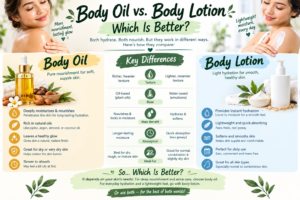
Body lotion usually contains water along with humectants, emollients, and occlusive ingredients. It can provide both water and barrier support.
Body oil is primarily oil-based and mainly helps condition the skin and reduce moisture loss.
For dry skin, you don’t necessarily have to choose one.
A simple routine can be:
Damp skin → body lotion → thin layer of body oil
This approach can be especially useful when the skin feels very dry.
Can Body Oil Make Your Skin Glow?
Yes, body oil can temporarily make skin look more radiant.
Oil smooths the surface of the skin and reflects light, which can create a soft, healthy-looking sheen.  This is different from permanently changing your skin tone or producing a long-term “glow.”
For a natural-looking finish, apply a small amount to damp skin rather than coating the body with a thick layer.
Can Natural Oils Help With Very Dry Skin?
They can help, but very dry skin may need more than oil.
If the skin is severely dry, flaky, cracked, itchy, or irritated, a thick fragrance-free cream or ointment may provide better barrier support than a lightweight oil.
For persistent symptoms, especially redness, pain, bleeding, or significant itching, consider speaking with a dermatologist or other qualified healthcare professional. Dryness can sometimes be related to an underlying skin condition.
Are Natural Oils Safe for Sensitive Skin?
Not automatically.
“Natural” describes the source of an ingredient, not whether it will be gentle for everyone. Essential oils, botanical extracts, and fragrances can trigger irritation or allergic reactions in some people.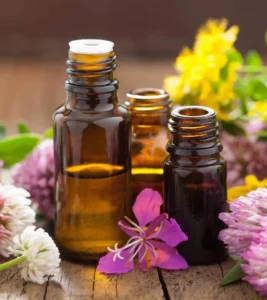
If your skin is sensitive:
- Choose fragrance-free products.
- Start with a simple formula.
- Test a small area first.
- Stop if you develop burning, itching, redness, or swelling.
- Avoid applying new oils to already irritated or broken skin.
If you have a diagnosed skin condition, follow the treatment plan recommended by your healthcare professional.
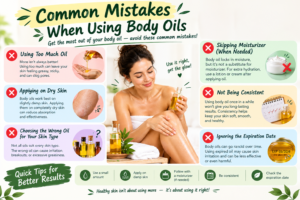
Common Mistakes When Using Body Oils
1. Applying Too Much
More oil doesn’t necessarily mean more moisturization. A thick layer can feel uncomfortable and transfer onto clothing.
2. Using Oil on Completely Dry Skin
Oil can help reduce moisture loss, but it doesn’t provide the same water content as a moisturizer.
Applying it to slightly damp skin can be more effective for maintaining that hydrated feeling.
3. Choosing an Oil Because It’s “Natural”
Natural doesn’t guarantee that an ingredient will suit your skin.
4. Adding Essential Oils Without Understanding the Risks
Essential oils are highly concentrated and can irritate the skin. They shouldn’t be treated like ordinary carrier oils.
5. Using Heavily Fragranced Products on Sensitive Skin
Fragrance can be a common source of irritation for sensitive individuals.
6. Ignoring Body Breakouts
Some people develop clogged pores or acne-like bumps from certain oils or rich products. If you notice this, switch to a lighter, simpler formulation.
7. Expecting Oil to Solve Every Skin Problem
Body oil can soften and condition skin, but it isn’t a treatment for every skin concern.
How to Choose the Best Natural Body Oil
Before choosing an oil, consider these factors:
Your Skin Type
Dry skin may benefit from richer oils, while normal skin may prefer lighter options.
Texture
Do you like a silky finish or a rich, protective feel?
Ingredients
Look for simple formulas if you’re prone to irritation.
Fragrance
If your skin is sensitive, fragrance-free is usually the safer starting point.
Allergies
Check the ingredient list carefully if you have known food or plant allergies.
Climate
In hot and humid weather, lightweight oils may feel more comfortable than thick ones.
How You Plan to Use It
An oil for everyday moisturizing may need a different texture from an oil intended for nighttime use or massage.
Best Practices for Natural Body Moisturizing
For consistently soft and comfortable skin, keep your routine simple.
- Take shorter, warm showers.
- Avoid harsh scrubbing.
- Use a gentle cleanser.
- Moisturize shortly after bathing.
- Apply body oil while skin is slightly damp.
- Use richer products on particularly dry areas.
- Avoid unnecessary fragrance if your skin is sensitive.
- Patch-test unfamiliar products.
- Adjust your routine according to the season.
A consistent basic routine is usually more useful than constantly switching between different oils.
When Should You Apply Body Oil?
The best time is usually after bathing, when the skin is still slightly damp.
This gives the oil a better opportunity to help slow moisture loss.
You can also use body oil:
- Before bed
- After hand washing if your hands are dry
- On rough elbows and knees
- After shaving if your skin tolerates it
- During colder, drier weather
If you apply oil after sunscreen during the daytime, be careful not to disturb the sunscreen layer.
How Often Should You Use Body Oil?
There’s no universal schedule.
Many people can use body oil once a day, particularly after bathing. Others may need it only on dry areas or during certain seasons.
If your skin becomes greasy, itchy, irritated, or develops bumps, reduce use or try a different product.
The goal is comfortable, well-conditioned skin—not an oily coating.
Natural Oils for Body Moisturizing
The best natural oils for body moisturizing include jojoba, coconut, sunflower, sweet almond, argan, avocado, grapeseed, rosehip, olive, and shea-derived oils.
Each has a different texture and may suit different needs.
For everyday use, lightweight oils such as jojoba, sunflower, and grapeseed can be comfortable choices. For very dry areas, richer options such as coconut, avocado, or shea-derived oils may feel more protective.
Remember that body oil mainly helps reduce moisture loss. If your skin is very dry, combining an oil with a good fragrance-free moisturizer may work better than using oil alone.
Frequently Asked Questions
1. What is the best natural oil for body moisturizing?
There isn’t one best oil for everyone. Jojoba, sunflower, coconut, sweet almond, and argan oils are popular choices, but the right option depends on your skin type, texture preference, and individual tolerance.
2. Which oil is best for extremely dry skin?
Richer oils such as coconut, avocado, and shea-derived oils may work well for very dry areas. However, severely dry skin may benefit more from a thick cream or ointment that contains both moisturizing and barrier-supporting ingredients.
3. Is coconut oil good for body moisturizing?
Coconut oil can soften dry skin and create a protective layer. However, it may feel heavy and can cause clogged pores for some people. It isn’t necessarily the best choice for everyone.
4. Is jojoba oil good for dry body skin?
Yes. Jojoba oil has a lightweight texture and can help soften and condition dry skin. It’s particularly useful for people who prefer body oils that don’t feel overly greasy.
5. Can I use body oil every day?
Many people can use body oil daily, especially after bathing. If you experience irritation, excessive greasiness, or body breakouts, reduce how often you use it or choose a different oil.
6. Should I apply body oil before or after lotion?
For dry skin, applying lotion first and a thin layer of oil afterward can work well. The lotion provides water and moisturizing ingredients, while the oil helps reduce moisture loss.
7. Can natural oils make the skin glow?
Yes. Oils can make the skin appear smoother and more radiant by conditioning the surface and reflecting light. This effect is mainly cosmetic and doesn’t mean the oil permanently changes your skin.
8. Are natural oils safe for sensitive skin?
Some can be, but natural doesn’t automatically mean gentle. Fragrance and essential oils may irritate sensitive skin. Choose simple, fragrance-free products and patch-test new ingredients.
9. Can I use cooking oils on my skin?
Some edible plant oils are also used in skin care, but a cooking oil isn’t automatically the best choice for your skin. Cosmetic formulations may be purified, stabilized, and formulated specifically for topical use.
10. Is body oil better than body lotion?
Neither is universally better. Lotion usually provides water and moisturizing ingredients, while oil mainly helps soften the skin and reduce moisture loss. Dry skin may benefit from using both.
Final Thoughts
Natural body oils can be a simple way to make dry skin feel softer, smoother, and more comfortable. Jojoba, sunflower, coconut, sweet almond, argan, avocado, and other plant oils each offer different textures and benefits.
The most important step is choosing an oil that matches your skin and using it correctly. Apply a small amount to slightly damp skin, avoid unnecessary fragrance if you’re sensitive, and remember that very dry or irritated skin may need a proper moisturizer or medical care rather than oil alone.
A simple, consistent body-care routine usually matters more than finding a single “perfect” oil.