
Simple daily self-care tips can help you feel fresh, clean, and confident every day without spending hours on a beauty routine. Habits such as showering regularly, wearing clean clothes, drinking enough water, getting adequate sleep, and caring for your skin and hair can support good personal hygiene and overall well-being.
Whether you’re getting ready for work, managing a busy household, studying, or spending time outdoors, these easy self-care habits can help you feel comfortable and refreshed throughout the day.
What Are Simple Daily Self-Care Habits?
Simple daily self-care habits are small, regular actions that help you maintain personal hygiene, physical comfort, and emotional well-being. They include bathing, brushing your teeth, washing your face, changing into clean clothes, eating balanced meals, staying hydrated, and taking time to rest.
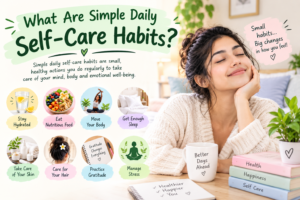
These habits don’t need to be complicated. A few consistent actions each morning and evening can help you feel more prepared for the day and more relaxed at night.
Self-care also means paying attention to your needs. For example, you might wash your hair when your scalp feels oily, apply moisturizer when your skin feels dry, or take a short break when you’re mentally exhausted.
The goal isn’t to look perfect every day. It’s to feel clean, comfortable, and confident in your own skin.
Why Is Daily Self-Care Important?
Daily self-care supports more than your appearance. It helps you maintain hygiene, protect your skin and teeth, manage daily stress, and create a healthier balance between responsibilities and personal needs.
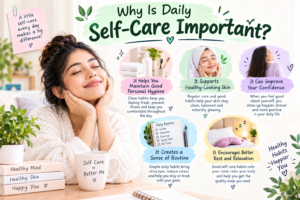
Here are some practical benefits.
1. It Helps You Maintain Good Personal Hygiene
Regular bathing, handwashing, oral care, and wearing clean clothes help manage sweat, dirt, and body odor. These habits are especially useful in hot or humid weather, when sweating may increase.
You don’t need an elaborate routine. Consistent, gentle cleaning is usually more useful than repeatedly washing or scrubbing your skin.
2. It Supports Healthy-Looking Skin
Cleansing your face gently, applying a suitable moisturizer, and using sunscreen during the day can help keep your skin comfortable and protect it from sun damage.
Using too many products or washing your face excessively may irritate your skin. A simple routine that suits your skin type is often easier to maintain.
3. It Can Improve Your Confidence
When you feel clean, your clothes are comfortable, and your hair is manageable, getting ready for the day can feel less stressful.
Confidence doesn’t depend on having flawless skin, wearing makeup, or following beauty trends. It’s more closely connected to feeling comfortable with yourself and taking care of your needs.
4. It Creates a Sense of Routine
A regular morning and evening routine can reduce the number of small decisions you make throughout the day.
For example, keeping your toothbrush, face cleanser, moisturizer, and everyday clothes organized makes it easier to get ready without rushing.
5. It Encourages Better Rest and Relaxation
Simple evening habits, such as washing your face, changing into comfortable clothes, limiting stimulating activities before bed, and following a consistent sleep schedule, can help you wind down.
Good sleep supports energy, mood, and general well-being. Most adults need at least seven hours of sleep per night, although individual needs vary.
10 Simple Self-Care Habits That Help You Feel Fresh Every Day
You don’t have to adopt every habit at once. Start with the ones that address your current needs, then add others as they become part of your routine.
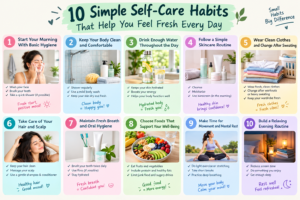
1. Start Your Morning With Basic Hygiene
A fresh morning begins with a few simple hygiene habits. Brush your teeth with fluoride toothpaste, wash your face if needed, and freshen up before putting on clean clothes.
You can take a shower in the morning if it helps you feel more awake or comfortable. However, showering twice a day isn’t necessary for everyone. Your climate, activity level, skin type, and personal preferences all influence how often you need to bathe.
Try this simple morning routine:
- Brush your teeth and clean your tongue gently if desired.
- Wash your face with a mild cleanser or lukewarm water, depending on your skin’s needs.
- Apply moisturizer if your skin needs it.
- Use broad-spectrum sunscreen with SPF 30 or higher on exposed skin.
- Put on clean, breathable clothes.
These small steps help you feel ready for the day without spending too much time in front of the mirror.
2. Keep Your Body Clean and Comfortable
Bathing helps remove sweat, dirt, and some odor-causing substances from your skin. Pay attention to areas that tend to sweat more, such as your underarms, feet, and skin folds.
Use a gentle cleanser where needed, rinse thoroughly, and dry your skin carefully, especially between your toes and in areas where moisture collects.
If you exercise, spend time outdoors, or sweat heavily in hot weather, you may need to shower or change clothes afterward.
Avoid harsh scrubbing and strongly fragranced products if they irritate your skin. Cleanliness should leave your skin comfortable, not tight, sore, or itchy.
3. Drink Enough Water Throughout the Day
Hydration supports normal body functions and helps replace fluids lost through sweating and other daily activities.
Keep water nearby and drink regularly, especially during hot weather, exercise, or long periods outdoors. Your fluid needs depend on your activity level, diet, climate, and health.
Water is an excellent everyday choice, but you don’t need to force yourself to drink excessive amounts. Thirst, urine color, activity, and environmental conditions can help guide your intake.
Although drinking water is important for general health, it isn’t a guaranteed treatment for acne, dull skin, or other beauty concerns. Healthy-looking skin also depends on factors such as genetics, sun exposure, skincare, and overall health.
4. Follow a Simple Skincare Routine
A complicated skincare routine can be difficult to maintain. For everyday care, focus on three basics: gentle cleansing, moisturizing, and sun protection.
Morning:
- Cleanse your face gently.
- Apply moisturizer suited to your skin type.
- Finish with broad-spectrum SPF 30 or higher sunscreen on exposed skin.
Evening:
- Remove makeup and sunscreen.
- Cleanse away sweat, dirt, and excess oil.
- Apply moisturizer to help maintain your skin’s moisture barrier.
If your skin is sensitive, introduce new products one at a time and patch-test them before regular use. Avoid adding multiple exfoliants or strong active ingredients just because they are popular.
Remember that healthy skin doesn’t need to look perfectly smooth or shine-free. A routine should support your skin’s comfort rather than make you worry about every small mark or texture change.
5. Wear Clean Clothes and Change After Sweating
Fresh clothing can make a noticeable difference in how comfortable you feel throughout the day.
Choose breathable fabrics when possible, especially in hot and humid conditions. Cotton and other comfortable, moisture-managing fabrics may help reduce discomfort, depending on the garment and activity.
Change out of sweaty clothing after exercise or heavy sweating. Wash underwear, socks, and workout clothes regularly, and allow damp items to dry fully before storing them.
Pay attention to your footwear, too. Alternating shoes when practical and allowing them to dry can help reduce persistent moisture and odor.
You don’t need a large wardrobe to maintain a fresh feeling. A few clean, comfortable outfits that suit your daily activities are enough to build a practical routine.
6. Take Care of Your Hair and Scalp
Your hair care routine should reflect your scalp condition, hair texture, and lifestyle.
If your scalp becomes oily quickly, you may need to shampoo more often. If your hair is dry, curly, or chemically treated, you might benefit from gentler cleansing and regular conditioner use.
Useful everyday hair care habits include:
- Wash your hair as often as your scalp needs.
- Apply shampoo mainly to the scalp and massage gently.
- Use conditioner on the lengths and ends when appropriate.
- Detangle gently, starting at the ends.
- Limit excessive heat styling.
- Avoid tight hairstyles that repeatedly pull on the hair.
You don’t need to wash your hair every day unless it suits your needs. The right frequency depends on oil production, exercise, climate, and hair type.
A clean, comfortable scalp and manageable hair can help you feel fresher without relying on numerous styling products.
7. Maintain Fresh Breath and Oral Hygiene
Fresh breath starts with good oral care rather than chewing gum or using mouth fresheners throughout the day.
Brush your teeth twice daily with fluoride toothpaste and clean between your teeth every day using floss or another suitable interdental cleaner.
Clean your tongue gently if you find that it helps reduce coating or odor. Drink water regularly, particularly when your mouth feels dry.
If you use mouthwash, choose one that suits your needs. It should complement brushing and interdental cleaning rather than replace them.
Persistent bad breath may be related to dental problems, dry mouth, certain foods, or other health conditions. If it continues despite good oral hygiene, arrange a dental checkup instead of trying to cover the odor with stronger fragrances.
8. Choose Foods That Support Your Well-Being
Your daily food choices affect energy, digestion, and overall health. A balanced eating pattern can help you feel better throughout the day.
Try to include a variety of:
- Fruits and vegetables.
- Protein sources such as eggs, beans, lentils, fish, or poultry.
- Whole grains and other fiber-rich foods.
- Healthy fat sources, including nuts, seeds, and suitable vegetable oils.
Eat regular meals that fit your schedule and appetite. If you have a busy morning, preparing breakfast the night before may make it easier to avoid skipping meals.
No single food can guarantee glowing skin or prevent all beauty concerns. A varied, balanced diet is more helpful than restrictive eating plans or unproven beauty drinks.
9. Make Time for Movement and Mental Rest
Self-care includes how you feel mentally and physically, not just how you look.
Walking, stretching, dancing, cycling, or doing another activity you enjoy can help you stay active. You don’t need an intense workout every day to benefit from movement.
Short breaks also matter. If you’ve spent hours working, studying, or managing household responsibilities, pause for a few minutes, stretch, breathe slowly, or step outside when possible.
You can also try simple relaxation habits such as journaling, reading, listening to calming music, or speaking with someone you trust.
The best routine is one you can realistically maintain. If you’re exhausted, rest may be more useful than adding another task to your self-care checklist.
10. Build a Relaxing Evening Routine
An evening routine helps you prepare for rest and avoid carrying the day’s stress into bedtime.
Start by removing makeup and sunscreen, cleansing your face, brushing your teeth, and changing into clean sleepwear.
You can then prepare for the next morning by setting out clothes, organizing your essentials, and filling a water bottle if you find that helpful.
Try to keep your bedtime reasonably consistent and give yourself time to wind down. Reducing bright light and stimulating activities before bed may make it easier to relax.
You don’t need a long nighttime ritual. Even 10–20 minutes of simple personal care can help you close the day with a sense of order.
How to Feel Fresh All Day Naturally
Staying fresh from morning to evening requires a little planning, especially when you’re working, commuting, exercising, or spending time in humid weather.
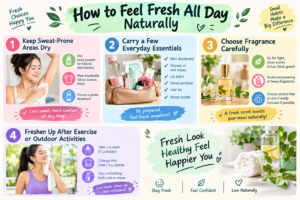
These practical habits can help you stay comfortable without repeatedly applying perfume or using unnecessary products.
Keep Sweat-Prone Areas Dry
After washing, dry your underarms, feet, and skin folds carefully. Change damp clothing when possible.
If you sweat heavily, a suitable antiperspirant may help reduce sweat. Deodorants mainly help control or mask odor, while antiperspirants reduce sweat production. Choose products according to your needs and skin tolerance.
Carry a Few Everyday Essentials
You don’t need a large personal care bag. A small pouch may contain:
- Tissues or a clean handkerchief.
- A travel toothbrush and toothpaste if needed.
- Lip balm.
- A small moisturizer.
- A spare pair of socks when you expect heavy sweating.
- Period products, if relevant to your needs.
Choose items based on your day rather than carrying products you rarely use.
Choose Fragrance Carefully
A light fragrance can be enjoyable, but perfume doesn’t replace bathing, clean clothes, or oral hygiene.
If you have sensitive skin, asthma triggered by fragrance, or fragrance-related headaches, consider fragrance-free alternatives. Avoid spraying perfume on irritated skin or intimate areas.
Freshen Up After Exercise or Outdoor Activities
Sweat itself is often not the main source of body odor. Odor can develop when skin bacteria break down substances in sweat, particularly in areas such as the underarms.
After exercising, change out of sweaty clothes, wash when practical, and dry your skin. If a shower isn’t immediately available, changing into clean clothing and gently cleaning sweat-prone areas can help until you can wash properly.
Easy Self-Care Tips for Women With Busy Schedules
You don’t need a perfect morning or evening to take care of yourself. A realistic routine can fit around work, family, education, and other responsibilities.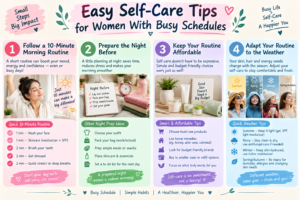
Follow a 10-Minute Morning Routine
If mornings are rushed, focus on the essentials:
- Brush your teeth.
- Wash your face as needed.
- Apply moisturizer and sunscreen.
- Freshen up and put on clean clothes.
- Drink water and have breakfast when possible.
Adjust the order and timing to suit your needs. The point is to make the basics easy rather than to follow a strict schedule.
Prepare the Night Before
A few minutes of preparation can reduce morning stress. Choose your clothes, pack your bag, organize personal care items, and plan breakfast if necessary.
This is especially useful if you leave home early or have several responsibilities to manage.
Keep Your Routine Affordable
Self-care doesn’t require expensive skincare, salon treatments, or a separate product for every concern.
Prioritize basic hygiene supplies, fluoride toothpaste, a suitable cleanser, moisturizer if needed, and sunscreen for daytime protection. Add other products only when they address a specific need.
Avoid buying products solely because they’re trending online. More products don’t automatically produce better results.
Adapt Your Routine to the Weather
Hot, humid weather may call for more frequent clothing changes, careful drying of sweat-prone areas, and a lightweight moisturizer that feels comfortable on your skin.
In cooler or dry weather, you may need a richer moisturizer and gentler bathing habits to reduce dryness.
Your routine can also change with exercise, travel, hormonal changes, or other life circumstances. Flexibility is part of effective self-care.
Common Self-Care Mistakes to Avoid
Some habits that seem helpful can make personal care more difficult or irritate your skin.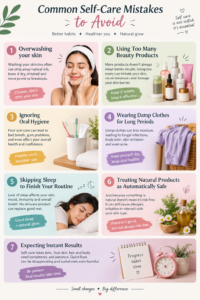
Overwashing Your Skin
Washing repeatedly or using harsh soaps can remove protective oils and leave skin dry or irritated. Clean your skin as needed and choose gentle products.
Using Too Many Beauty Products
Combining several exfoliants, fragrances, or active ingredients can increase the risk of irritation. Keep your routine simple and introduce new products gradually.
Ignoring Oral Hygiene
Mints and mouthwash may temporarily improve breath, but they don’t replace brushing twice daily and cleaning between your teeth.
Wearing Damp Clothes for Long Periods
Staying in sweaty clothing can cause discomfort and may contribute to skin irritation. Change when practical and let damp garments dry properly.
Skipping Sleep to Finish Your Routine
A long beauty ritual isn’t worth sacrificing adequate sleep. Choose a shorter routine when you’re tired and prioritize rest.
Treating Natural Products as Automatically Safe
Natural ingredients can still irritate the skin or trigger allergies. Lemon juice, undiluted essential oils, and abrasive DIY scrubs can cause problems when applied to the skin. Use products cautiously and avoid harsh home remedies.
Expecting Instant Results
Self-care is about maintaining comfort and well-being over time. A routine won’t necessarily eliminate acne, body odor, hair loss, or other persistent concerns.
If you notice a sudden change in body odor, persistent bad breath, unexplained skin irritation, or unusual hair shedding, seek appropriate professional advice instead of relying only on home remedies.
A Simple Daily Personal Care Routine at a Glance
You can use this checklist as a starting point and adapt it to your lifestyle.
| Time | Simple habit | Why it helps |
|---|---|---|
| Morning | Brush teeth and freshen up | Supports oral and personal hygiene |
| Morning | Moisturize and apply sunscreen | Supports skin comfort and sun protection |
| Morning | Wear clean clothes | Helps you stay comfortable |
| Throughout the day | Drink water regularly | Supports normal body functions |
| Throughout the day | Eat balanced meals | Helps support energy and general health |
| After sweating | Change damp clothes and wash when practical | Helps manage odor and discomfort |
| Evening | Cleanse your face and brush your teeth | Removes daily buildup and supports oral health |
| Evening | Relax and prepare for bed | Helps you wind down |
| Night | Get adequate sleep | Supports physical and mental well-being |
Remember that this is a flexible guide, not a list of rules you must complete perfectly every day.
Frequently Asked Questions
1. What are the best simple self-care habits for everyday life?
The most useful habits include regular bathing, brushing your teeth twice daily, wearing clean clothes, washing your hands, caring for your skin, eating balanced meals, staying hydrated, moving regularly, and getting enough sleep. Start with the habits that meet your most important needs.
2. How can I feel fresh every day without using many products?
Focus on consistent hygiene rather than a large collection of products. Bathe as needed, wear clean clothes, maintain oral hygiene, keep sweat-prone areas dry, and use a simple skincare routine. A deodorant or antiperspirant may help if body odor or sweating is a concern.
3. How can I stay fresh all day in hot and humid weather?
Wear breathable clothing, drink water regularly, change out of sweaty clothes, and dry your skin thoroughly after bathing. Clean sweat-prone areas when needed and choose a suitable deodorant or antiperspirant if helpful. Adjust your routine according to your activity level and comfort.
4. What should a basic morning self-care routine include?
A basic morning routine can include brushing your teeth, washing your face as needed, applying moisturizer and sunscreen, freshening up, and wearing clean clothes. You can add breakfast, light movement, or a few quiet minutes if your schedule allows.
5. How can I create a personal care routine on a budget?
Start with essentials rather than buying products for every beauty concern. Prioritize soap or a suitable cleanser, fluoride toothpaste, a toothbrush, basic hair care products, moisturizer if needed, and sunscreen. Use products consistently and replace them when necessary instead of buying every new trend.
6. Does drinking more water make your skin glow?
Drinking enough water supports normal body functions and helps prevent dehydration. However, drinking extra water beyond your needs doesn’t guarantee glowing skin or treat specific skin conditions. Skincare, sun protection, nutrition, sleep, and individual skin characteristics also matter.
7. How often should I shower to stay clean?
Showering frequency depends on your activity level, climate, skin type, and personal needs. Many people shower daily, while others may need less frequent bathing. Shower after heavy sweating when practical, clean areas that need attention, and avoid excessive washing if it causes dryness or irritation.
8. What is the easiest nighttime self-care routine?
Remove makeup and sunscreen, cleanse your face, brush your teeth, change into comfortable sleepwear, and allow yourself time to relax. You can prepare clothes or essentials for the next morning if that reduces stress. Keep the routine short enough to maintain consistently.
9. How can I feel more confident through self-care?
Choose habits that make you feel comfortable and prepared, such as maintaining personal hygiene, wearing clothes that fit well, caring for your hair, and allowing time for rest. Confidence doesn’t require perfect skin, makeup, or a particular body shape. Focus on your well-being rather than comparing yourself with others.
10. Can simple self-care habits improve overall well-being?
Yes. Regular hygiene, balanced nutrition, physical activity, adequate sleep, and time for relaxation can support general health and daily comfort. However, self-care isn’t a substitute for professional treatment when a health concern persists or affects your quality of life.
Key Takeaways
- Keep it simple: Consistent personal care is more useful than an unnecessarily complicated beauty routine.
- Prioritize hygiene: Regular bathing, oral care, clean clothing, and handwashing help you maintain cleanliness.
- Care for your skin and hair: Choose gentle products and adjust your routine to your individual needs.
- Support your overall health: Stay hydrated, eat balanced meals, move regularly, and get adequate sleep.
- Adapt to your environment: Hot weather, exercise, and humidity may require extra attention to sweat and clothing.
- Make self-care realistic: Choose habits that fit your time, budget, and lifestyle.
Final Thoughts
Simple self-care habits that help you feel fresh every day don’t have to take up much time or cost a lot of money. A clean body, fresh clothes, healthy oral hygiene, a manageable skincare routine, and enough rest provide a practical foundation for everyday well-being.
Start with two or three habits that feel manageable, then build from there. Some days will be busier than others, and that’s completely normal. What matters is finding a routine that supports your comfort, health, and confidence without turning self-care into another source of pressure.
Remember: You don’t need to do everything perfectly to take good care of yourself. Small, consistent steps can make everyday life feel cleaner, calmer, and more comfortable.